Average response time: under 24 hours
Choose a 5-inch grinder for edges, corners, small patches, and overhead work where control matters; choose a 7-inch grinder when you need material removal rate and smoother large flat areas. The 7-inch disc removes roughly twice the material per pass and covers more floor per minute, but the 5-inch is lighter, easier to control, and reaches tight spots. Many contractors keep both and switch by the task.
Disc size is the diameter of the grinding disc the machine accepts: 5-inch (125 mm) and 7-inch (180 mm) are the common angle-grinder sizes. The larger disc contacts more surface and spins a bigger circumference at the same RPM, so it removes material faster and leaves fewer lines. The smaller machine is lighter and its smaller head fits into corners, against edges, and under pipes that a 7-inch head cannot reach.
A 7-inch disc with the same grit removes roughly twice the concrete per pass as a 5-inch disc because the contact patch is larger. For a full floor, that difference adds up to minutes saved per square metre. The 7-inch machine also runs lower RPM for the same motor, which can reduce burning on hard concrete when matched with the right bond. On small spots, the 5-inch is faster in practice because you can move it precisely and it is easier to keep flat on a small area.
| Factor | 5-inch (125 mm) | 7-inch (180 mm) |
|---|---|---|
| Material removal | Lower per pass | ~2x per pass |
| Weight | 2-3 kg | 4-5.5 kg |
| Edges and corners | Excellent | Poor |
| Overhead / walls | Easier | Tiring |
| Large flat floors | Slower | Faster |
Most 5-inch grinders run 1 000-1 400 W at 10 000-12 000 RPM; most 7-inch grinders run 1 400-2 000 W at 6 000-8 500 RPM. The 7-inch needs more torque to spin the larger disc, so it has a heavier motor. Check that the disc you use is rated for the machine's no-load RPM. For grinding concrete, a variable-speed machine is worth the extra cost on both sizes: it lets you slow down for dense concrete and speed up for soft concrete, and it makes grinding discs last longer.
The 5-inch machine is significantly easier to hold flat and keep moving, which matters for feathering edges and finishing passes. The 7-inch machine vibrates less at the handle for the same cut because it is heavier, but it is more tiring on overhead and wall work. For polishing sequences with pads, many operators prefer the 7-inch for the flats and a 5-inch for the perimeter, running the same pad grits on both so the finish matches.
If you do mostly floor patches, stairs, edges, and occasional walls, the 5-inch is the better single tool. If you grind large slabs or prep whole floors regularly, buy the 7-inch first, or a floor grinder if the area is very large. If your jobs mix both, own both and standardise on the same diamond tool supplier so discs and pads interchange between machines where possible. Rent the size you do not own for one-off jobs before committing.
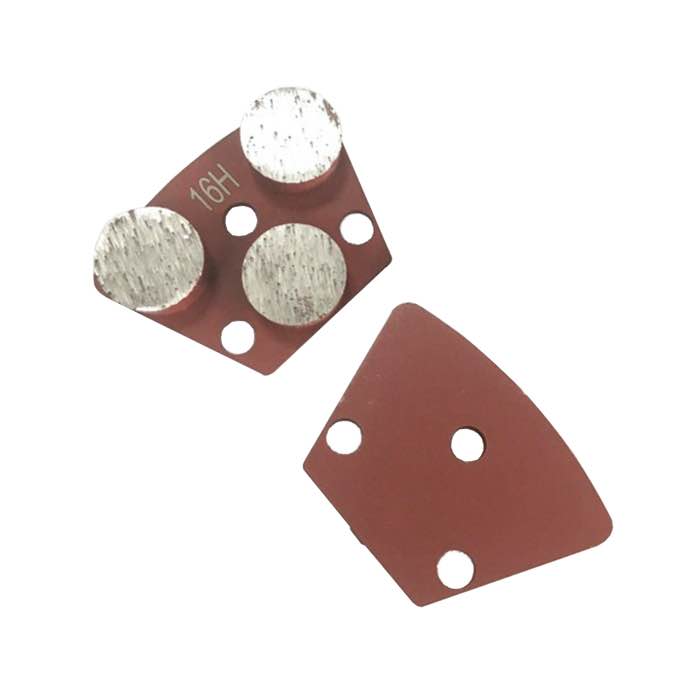
For dependable concrete grinding, equip your machine with a diamond trapezoid grinding disc matched to the concrete hardness.
Written and reviewed by JOY TECH — an SGS & BV audited, CE/RoHS certified diamond tools manufacturer founded in 2004, exporting to 50+ countries.
Our factory and QMS are audited by SGS and Bureau Veritas. Products meet CE/RoHS requirements and every piece is 100% inspected before packing.
Verified Certificates
