Average response time: under 24 hours
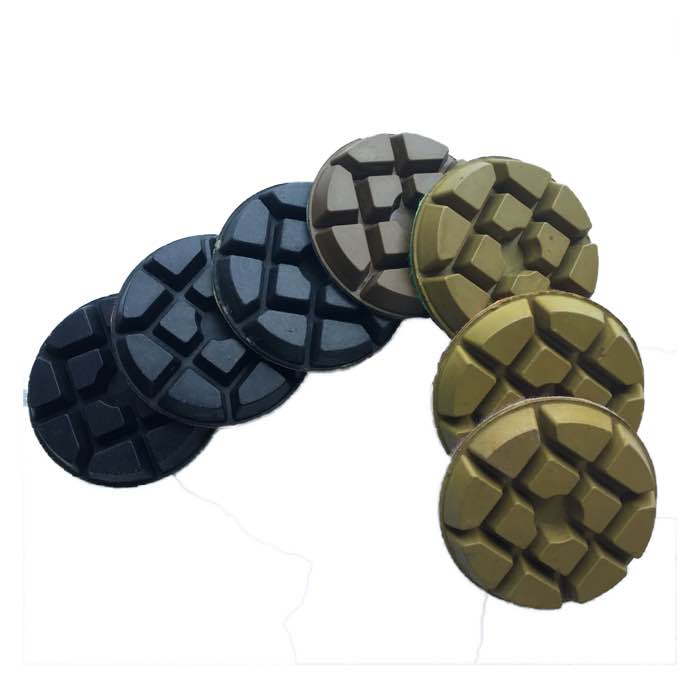
Private label diamond tools - grinding discs, polishing pads, saw blades and core bits sold under your own brand - benefit your business far beyond a single margin uplift. The long-term financial case is a setup cost that typically pays back in 6-18 months (indicative), a recurring stream of repeat orders because consumables get burned and reordered, pricing power that generic resellers do not have, and brand equity that raises the value of your business when you later sell it or renegotiate distribution rights. Compared with reselling someone else's brand, you keep the margin on every reorder and you own the customer relationship.
The investment to launch a private label line is small compared with most business investments, but it is real. Indicative setup costs for a tool distributor or contractor supplier:
Payback arrives when the margin you keep on your own branded stock exceeds the setup cost. As an illustrative model, a distributor moving 500 pieces per month and capturing $2 per piece as a private labeler versus $0.50 per piece as a reseller recovers a $5,000 setup in well under a year. The heavier the consumable turnover, the faster the payback.
Diamond tools are consumables: grinding shoes and polishing pads are spent on every job, blades get dulled, core bits wear out. That means a customer who adopts your branded disc on Monday is a repeat order on a 30-90 day cycle, not a one-off sale. When the brand on the tool is yours, the reorder comes to you - not to the manufacturer whose tool you used to resell. This converts a transactional resale business into a recurring revenue base, which is exactly what buyers and investors value most when they appraise a distribution company.
Resellers of other people's brands compete on whoever can discount the deepest, because the customer can buy the identical tool from any of them. Your own brand removes that comparison: the customer buys your disc, with your consistent bond, your packaging and your support. In practice that lets you price at a 15-35% premium (illustrative) over generic alternatives while still undercutting the major tool brands - because you bought at factory cost and kept the margin chain that a distributor network would otherwise take.
| Metric (illustrative) | Reselling others' brands | Private label, Year 1 | Private label, Year 3 |
|---|---|---|---|
| Typical unit cost to you | $3.00 | $1.60 | $1.40 |
| Price you can sell at | $4.00 (price-taker) | $4.50 | $5.50 |
| Gross margin per unit | $1.00 | $2.90 | $4.10 |
| Repeat-order rate | Low (customer shops around) | 40-50% | 65-80% |
| Value of the customer book | Distributor resale, low multiple | Brand equity starting to build | Recognized brand, higher multiple |
These figures are illustrative only, built to show the direction of travel - every business's numbers depend on volume, category and market. The pattern is what matters: unit cost falls as factory volume rises, sell price rises as the brand becomes known, and the repeat rate compounds year over year.
When a tool distribution business is sold, buyers pay for customers who will keep reordering, not for inventory. A private label installed base - contractors asking for your disc by name - is exactly that. The same principle applies to renegotiating territory or distribution rights: if the market knows your brand, you negotiate from strength rather than being one reseller among many. Over the years, the logo printed on the first container becomes an asset with measurable, growing value.
There is also a defensive side. Reselling a supplier's brand leaves you exposed: that supplier can raise prices, appoint another distributor in your territory, or stop selling to you. A private label line produced by a direct factory such as JOY TECH (Xiamen Joy Technology Co., Ltd.) inverts the dependency - the brand belongs to you, and the factory competes only on price, quality and service. Direct factory relationships also let you standardize on proven SKUs - for example the Diamond Trapezoid Grinding Disc (JOY-TP-R3), the Diamond Resin Polishing Pads for Concrete Terrazzo Floor (JOY-RFP-01) and the Diamond Core Drill Bit (Wet) - JOY-DCB-W - so price volatility and supply shocks hit your margin less than a rebrand-and-resell model would.
A: Most programs start at a few hundred pieces per SKU. You do not need container-level volume to begin; many factories, including JOY TECH, combine several tool types in one shipment so your first stock order stays practical.
A: As an indicative range, 6-18 months for a distributor with steady consumable turnover. Payback is fastest where customers burn tools every month - grinding shoes, polishing pads and core bits - and slowest for slow-moving items like large saw blades.
A: Yes. Most private labelers lead with their own brand on the repeat, standardized consumables and keep a few name brands for price-sensitive or one-off customers - your own brand is where you steer the reorders.
A: The brand logo, packaging and customer relationships are yours. The tool specification (bond, grit, segment layout) is portable - keep the written spec and QC records from your first-article approval, and any capable factory can reproduce it.
The benefits of private label diamond tools are not just a margin today: they are payback in months, a recurring reorder base that grows with every jobsite, pricing power instead of price-taking, and a brand asset that raises the value of your whole business when you later sell or expand. Start with your two fastest-moving consumables, fix the spec once, and let the repeat orders compound. Contact JOY TECH for a private label quote - send your tool list and monthly quantities, and the factory will propose a branded line with samples so you can verify the quality before the first stock order.
Written and reviewed by JOY TECH — an SGS & BV audited, CE/RoHS certified diamond tools manufacturer founded in 2004, exporting to 50+ countries.
Our factory and QMS are audited by SGS and Bureau Veritas. Products meet CE/RoHS requirements and every piece is 100% inspected before packing.
Verified Certificates
