Average response time: under 24 hours
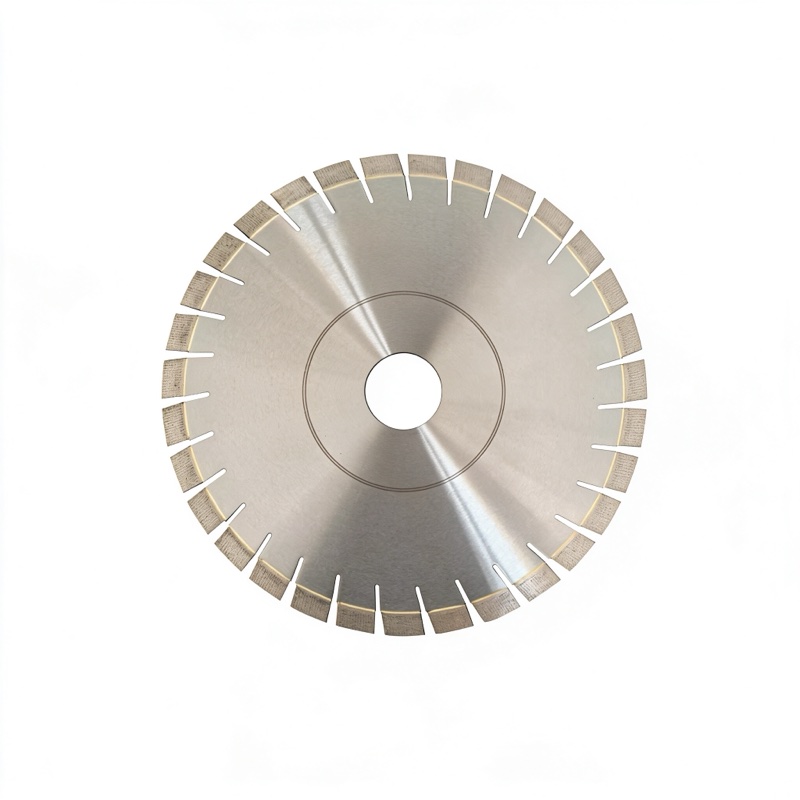
The best blade for cutting concrete pavers, bricks and blocks cleanly without chipping is a thin-kerf turbo or continuous-rim diamond blade in 115-125 mm diameter for angle grinders, or 300-350 mm for table saws. A turbo blade such as the Arix ordered-segment blade or a general-purpose diamond saw blade cuts pavers faster and leaves a sharper edge than an abrasive disc. Run the saw at the correct RPM, score the cut line first, and cut with the paver face-up so the chip-out happens on the unseen back face. For heavy volumes on a paver laying crew, a 350 mm table saw with a water tray is the fastest, cleanest setup.
Resin-bonded abrasive cut-off wheels are cheap per disc but they cut slowly, load up, wear in minutes, and produce ragged, burnt edges on concrete pavers. They also throw a shower of sparks and hot grit — a fire hazard on a laying yard. A diamond blade costs 5-10× more per disc but lasts 200-500× longer, cuts cool, and leaves an edge that does not need dressing. On a commercial paver crew, the diamond blade is cheaper on day one and dramatically cheaper by week two.
Pavers are compressed concrete — sometimes with a face layer of exposed aggregate. You need a blade that cuts fast on the body but does not chip the decorative face. Three styles dominate:
| Blade style | Kerf | Chipping | Best for |
|---|---|---|---|
| Turbo / continuous rim | Thin (2-2.5 mm) | Low | Face-up paver cuts, decorative edges |
| Segmented (general concrete) | Wide (3.0-3.5 mm) | Medium-high | Concrete blocks, heavy pavers, fast rough cuts |
| Arix / ordered segment | Thin, smooth | Very low | High-end paving, granite-looking pavers |
Match the blade to the tool. For a handheld 115/125 mm angle grinder on a paver laying truck, a 125 mm turbo blade at 12 000 RPM is standard. For a walk-behind table saw on the yard, a 300-350 mm blade at 4 000-5 000 RPM cuts two rows of pavers in a single pass. Never run a blade above its rated max RPM — check the label. An over-spun blade warps and segments can come off. If you are cutting large volumes, the high-frequency welded concrete blade in 350 mm is a durable choice for table saws on pavers and block.
Chipping is mostly technique, not blade. Lay the paver face-up on the saw table, score a 2-3 mm deep groove along the cut line, then make the full-depth cut. The score line keeps the diamond from grabbing on entry. If you are using an angle grinder freehand, mark the cut with a pencil, run the saw along the line, and let the blade do the work — do not twist. Cut with the decorative face up so any breakout happens on the unseen bottom. For very thin decorative pavers, use a continuous-rim turbo blade and wet-cut.
On a paving contract with 5 000+ pavers to trim, a mobile table saw on the truck is the right setup. One operator feeds pavers, another lays them. Use a 350 mm water-cooled diamond blade and collect the slurry in a tray. For odd cuts on site (around manhole covers, tree pits), use a 125 mm angle grinder with a turbo blade. The range of diamond saw blades covers both setups from 115 mm to 500 mm.
No. Porcelain needs a thin-kerf continuous-rim or turbo mesh blade designed for tile, not a general concrete blade. A concrete blade will chip porcelain badly. Use a hot-pressed turbo mesh blade for porcelain.
Typically 800-2 000 cuts on 50-80 mm concrete pavers, depending on aggregate hardness. An abrasive disc lasts 20-40 cuts. The economics favour diamond immediately.
On a table saw, yes — water extends blade life and controls silica dust. On a handheld angle grinder, dry cutting is acceptable outdoors with PPE, but wet cutting indoors or in enclosed yards is required by silica regulations.
Usually the feed is too aggressive, the paver face is cut-down instead of face-up, or the blade has too wide a kerf for a thin decorative paver. Switch to a thin-kerf turbo blade and score the cut line first.
The best blade for concrete pavers is a thin-kerf turbo or Arix-style diamond blade, matched to your saw diameter and RPM, run wet on a table saw or dry with a score-line on an angle grinder. Ditch the abrasive discs — they cost more, cut slower, and leave ragged edges that you end up dressing by hand anyway.
Written and reviewed by JOY TECH — an SGS & BV audited, CE/RoHS certified diamond tools manufacturer founded in 2004, exporting to 50+ countries.
Our factory and QMS are audited by SGS and Bureau Veritas. Products meet CE/RoHS requirements and every piece is 100% inspected before packing.
Verified Certificates
