Average response time: under 24 hours
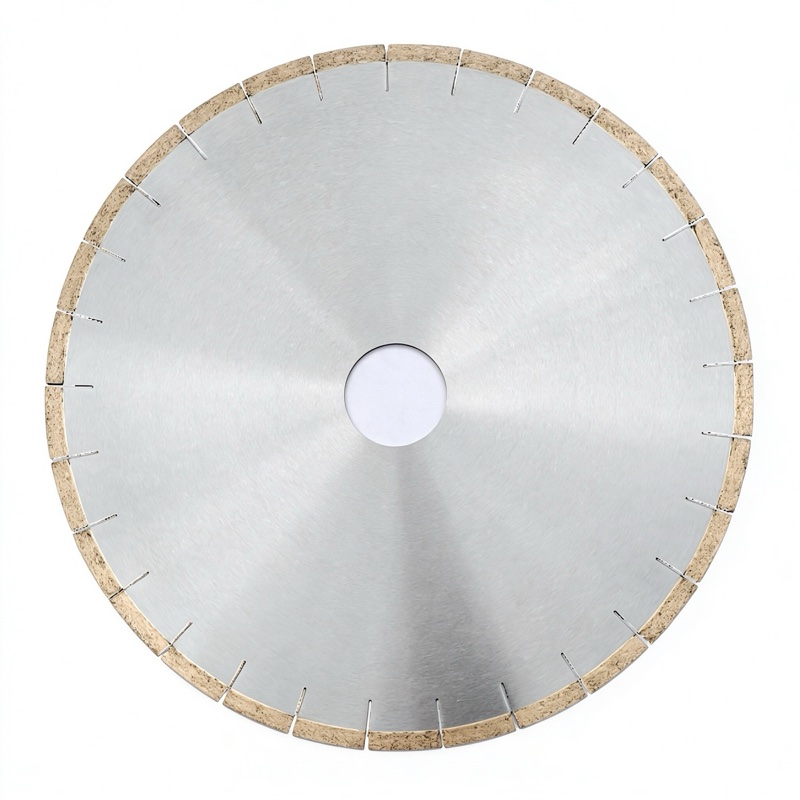
For green concrete cut within 4 to 12 hours of finishing, use a blade with a segment height of 10 mm to 12 mm and a soft to medium bond. A taller 15 mm segment wastes money on early cuts because you will wear it out before the concrete reaches its design strength. Cut as soon as the slab can bear the saw without raveling, keep depth at 25 to 35 mm per pass, and never chase a joint that already curled or cracked: that damage is done and the blade will not bring it back.
Green concrete has not yet developed full hydration. The cement paste is soft and gummy, but the aggregate inside is already hard. A blade tuned for mature concrete will glaze because the soft paste loads the bond and stops the diamonds from opening up. A blade tuned for green concrete uses a softer bond that wears fast enough to expose fresh diamonds, even while the paste is still plastic.
Contractors call it the sawing window: the period after finishing when the slab will support a walk-behind saw but before random cracking starts. That window is usually 4 to 12 hours in warm, dry weather and can stretch to 24 hours or more in cool, humid conditions. Miss the window and the slab cracks on its own; cut too early and you ravel the edge, pull aggregate out of the kerf, and leave a joint that has to be repaired later. Pouring a 200 m slab in the morning means the saw crew should be on site by the end of the afternoon, not waiting for the next day.
A 10 mm to 12 mm segment is the sweet spot for green concrete. It carries enough diamonds to cut a full production day across a large slab, but it is not so tall that you are paying for segment life you will never use. A 350 mm walk-behind saw fitted with a JOY CA-HF high-frequency welded blade in the 10 mm segment height class is a common setup for commercial slab sawing.
A 15 mm or taller segment is built for mature concrete and asphalt, where the blade has to last through hard aggregate and occasional rebar. Running that tall a segment on green concrete is wasteful: the soft paste wears the bond unevenly, the tall segment flexes, and you throw away height before the slab has even cured. Save the tall segments for dowel cutting, bridge deck sawing, or road work later in the project.
Bond hardness matters as much as segment height on green concrete. A soft bond opens diamonds fast, which is what you want when the paste is still plastic. If the blade glazes and stops cutting after the first few cuts, the bond is too hard for the mix and you should step down to a softer variant. If the segment wears down to the core in a single day, the bond is too soft and you are throwing money away; the diamond saw blade range lists bond grades for early-age versus cured concrete so you can pick the right one.
Cut the joint to roughly one quarter of the slab thickness. For a 150 mm slab, that means a 38 mm to 40 mm deep joint; in practice most walk-behind saws take 25 mm to 35 mm per pass, so you will finish the joint in one pass if the blade reaches that depth. Walk the saw at a steady pace, around 3 to 5 metres per minute on green concrete, and never stop mid-cut. A stopped blade in green concrete melts paste around the rim and leaves a ragged spot in the joint. If the saw bogs down, slow the walk rather than forcing the blade deeper; forcing overloads the diamonds and shortens segment life on every joint.
Most green concrete sawing is done dry, because the slab is not yet cured enough to accept large volumes of water without raveling the edge. If you are working in very hot weather, when the slab surface dries out within an hour of finishing, a light mist on the cut line can keep the blade from overheating without washing the paste out. Do not flood the cut; a heavy water stream will pull fresh cement paste out of the kerf and leave a raveled edge that has to be ground later.
If you are sawing a large pour or a mix with unusual cement content, it is worth confirming the bond grade with the supplier before mobilizing the saw crew. The team at JOY TECH support can recommend a segment height and bond that matches the pour schedule, the ambient temperature and the slab thickness so the first day of sawing goes without surprises.
Written and reviewed by JOY TECH — an SGS & BV audited, CE/RoHS certified diamond tools manufacturer founded in 2004, exporting to 50+ countries.
Our factory and QMS are audited by SGS and Bureau Veritas. Products meet CE/RoHS requirements and every piece is 100% inspected before packing.
Verified Certificates
