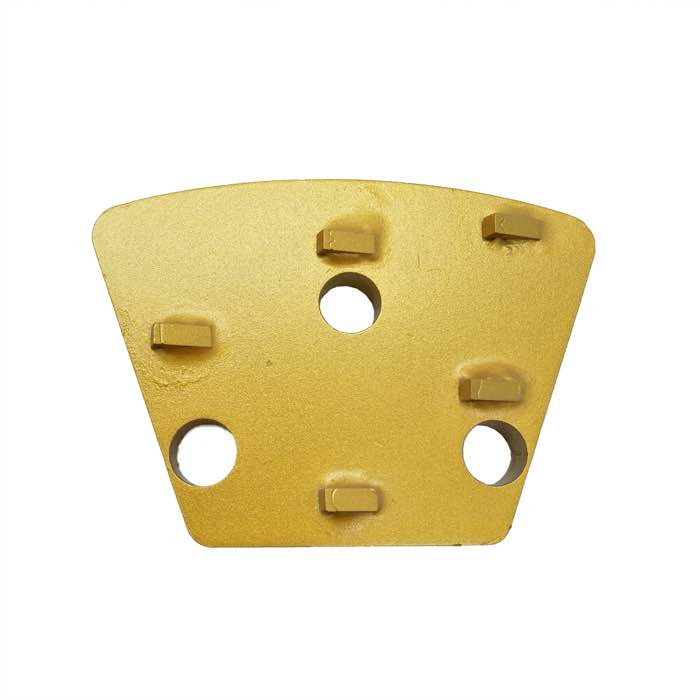
For a consistent salt-and-pepper aggregate look, choose a bond matched to the concrete paste hardness — medium soft for hard concrete, harder for soft concrete — and finish with hybrid or resin pads. The bond controls how evenly the paste wears away relative to the aggregate, which is what creates the uniform exposure.
The salt-and-pepper finish appears when grinding wears the cement paste down evenly, leaving fine aggregate dots at a consistent level. If the bond is too soft, the paste is removed too fast and the aggregate sits too high (rough, pitted). If the bond is too hard, the paste stays high and the aggregate never shows. The bond must match the paste so both wear at similar rates.
| Concrete / Paste Hardness | Recommended Bond | Result |
|---|---|---|
| Hard, dense concrete | Soft-medium bond | Even paste wear, exposed fines |
| Medium concrete | Medium bond | Balanced salt-and-pepper |
| Soft, sandy concrete | Hard bond | Prevents over-wear of the paste |
When in doubt, start medium and adjust after one test pass. The test area shows immediately whether the paste is wearing too fast or too slow relative to the aggregate.
Using PCD tooling for the first pass on hard concrete helps expose the aggregate without tearing the paste.
A>It requires the cement paste to wear down evenly to the level of the fine aggregate. The bond and the grit sequence control this, not the aggregate size itself.
A>Most concrete works, but the aggregate content matters. Very hard, dense concrete with little fine aggregate may show less pronounced exposure; a slightly softer bond helps.
A>Re-grind the uneven areas at the same grit, keep passes even, and check the bond is uniform across the tooling set. Patchiness is usually uneven pressure or a bond mismatch.
A>Yes — a densifier or sealer stabilizes the exposed surface and makes the finish consistent and low-maintenance. Apply at the correct temperature and cure time.
A uniform salt-and-pepper aggregate finish comes from matching the bond to the concrete paste hardness and following a clean grit sequence. Start with a medium bond, test a small area, and adjust before committing the whole floor — then finish with JOY metal-bond or PCD trapezoid discs for an even, professional exposure.
