Average response time: under 24 hours
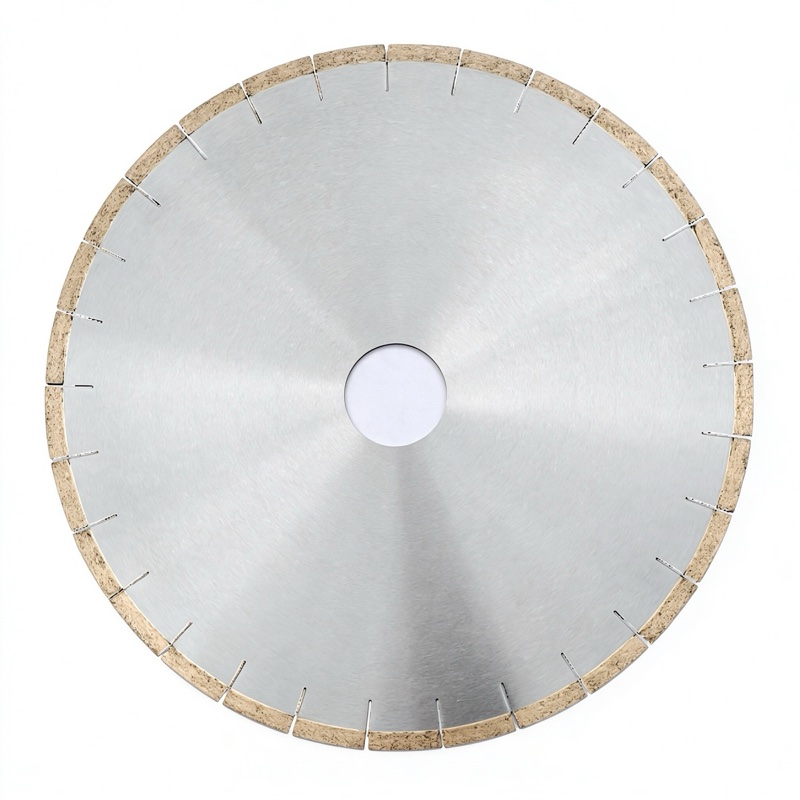
For tile and soft to medium-hard natural stone, choose a cold-pressed sintered blade with a continuous or narrow turbo rim, a thin kerf between 1.6 mm and 2.2 mm, and a segment height matched to intermittent work. Cold-pressed blades bite fast and leave a clean edge on porcelain, ceramic, marble and travertine, but they wear quicker than hot-pressed blades and should not be pushed into hard reinforced concrete. Plan on 1 to 2 square metres of cut per millimetre of segment height on tile, and stop as soon as the rim turns blue or starts to glaze.
A cold-pressed blade is made by mixing diamond grit with a metal bond powder and pressing the mix into a segment at room temperature under high pressure. The resulting green compact is then fed into a tunnel furnace, where it is sintered in stages without additional pressure. This is different from hot pressing, where the segment is heated and pressed at the same time, which drives the bond to a higher density and locks the diamonds in more aggressively.
Because the bond is slightly less dense, the diamonds are held a little more loosely. The upside is that the blade cuts fast from the first minute, releases new diamonds quickly, and runs cooler in thin materials. The downside is that under heavy load the bond wears faster and diamonds can fall out before they are fully used. That trade-off is fine on tile and stone, where cuts are thin and intermittent, but it is a real limitation on hard aggregate or continuous dry cutting.
Porcelain tile, ceramic, marble, travertine, slate and soft limestone all cut best with a sharp, free-cutting rim. A cold-pressed sintered rim presents fresh diamonds on every pass, which keeps the edge clean and avoids the chipping that a glazed or over-hard blade leaves behind. The JOY MS-ST straight-slot marble blade is built around this idea: a thin, well-supported rim tuned for stone and tile rather than structural concrete.
On tile, every extra millimetre of kerf means more chip-out risk and more wasted material. A 1.6 mm to 2.0 mm kerf gives the cleanest look on wall tile, floor porcelain and vanity cuts. If you are cutting 12 mm porcelain for a wall, a thin kerf blade reduces tear-out on the back face, which means less grinding and less touch-up work after install. On marble, a wide kerf also drags the saw off the chalk line and leaves a ragged bevel along the edge.
Match the rim to the job rather than buying one blade for everything. A continuous rim gives the smoothest edge on porcelain and ceramic but cuts slower. A narrow turbo rim adds speed while still leaving a clean edge on marble and granite. A segmented rim is faster but will chip tile, so reserve it for rough cuts or stone where edge finish is not critical.
For tile work, look for a segment height of 8 mm to 10 mm on a 110 mm to 125 mm blade. That height is enough for a few hundred square metres of cuts on a typical bathroom or kitchen remodel without wasting material. Keep the kerf between 1.6 mm and 2.2 mm; anything wider chips tile and pulls the saw off the line. If you are doing large-format porcelain on a rail saw, step up to a 200 mm blade with a continuous rim for straighter cuts.
Check the maximum RPM on the blade and compare it with your saw's no-load speed. A 110 mm tile saw usually runs at 12,000 to 14,000 rpm; a 230 mm angle grinder sits around 6,500 rpm. Running a blade slower than its rated speed lowers the cut rate and glazes the diamonds; running it faster shortens life and raises the risk of segment failure. If you are unsure which diameter fits your saw, the full diamond saw blade range lists arbor sizes and speed ratings for each variant.
Cold-pressed blades fail in predictable ways once you know what to look for. Stop and inspect the blade at the first sign of the following symptoms rather than pushing through and ruining the cut:
If you are cutting mixed loads, such as porcelain one day and hard granite the next, it is worth asking the blade supplier which bond grade fits your actual mix rather than guessing. The team behind JOY TECH support can point you to a tile and stone variant or explain when a laser-welded blade is the better choice for concrete or masonry work.
Written and reviewed by JOY TECH — an SGS & BV audited, CE/RoHS certified diamond tools manufacturer founded in 2004, exporting to 50+ countries.
Our factory and QMS are audited by SGS and Bureau Veritas. Products meet CE/RoHS requirements and every piece is 100% inspected before packing.
Verified Certificates
