Average response time: under 24 hours
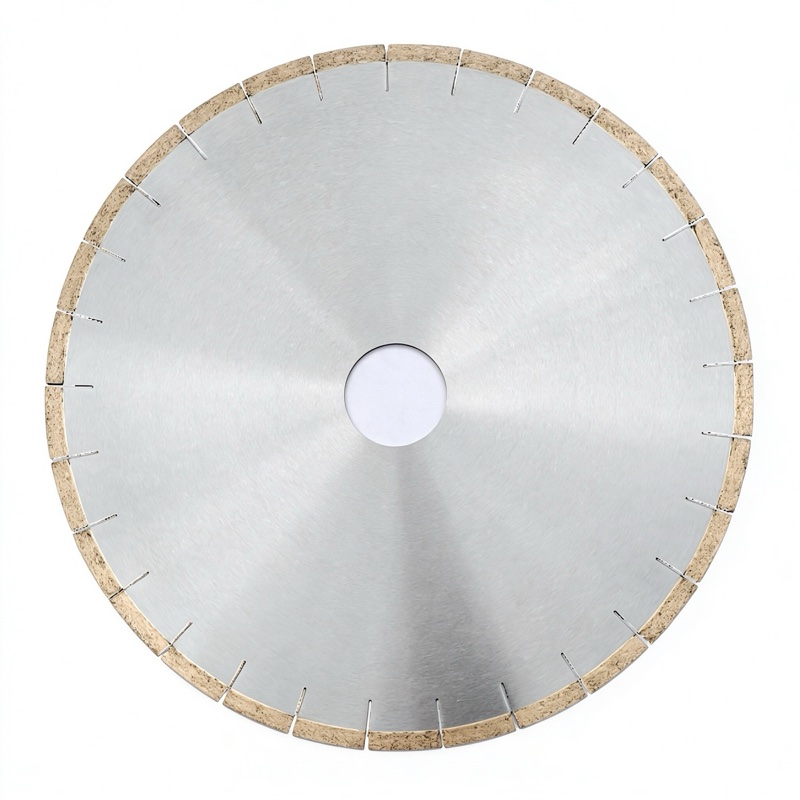
Cold-pressed diamond segments start with a higher apparent cutting speed because the lower-density bond exposes fresh diamonds quickly. The open, porous bond means new grit reaches the cutting edge on the first cuts, which makes the blade feel sharp and fast. That advantage fades fast: after 20 to 40 meters of cutting, the bond wears down faster than the diamonds, the segment goes blunt, and the saw slows down. On hard aggregate, cutting speed can drop by 50 percent or more within the first segment life. Plan for a fast break-in, a steady middle, and a sharp drop-off at the end, and match the blade to light, intermittent work rather than production slab cutting.
Segment density describes how compact the metal bond is inside the segment. A hot-pressed segment reaches near-theoretical density because pressure is applied while the powder is hot. A cold-pressed segment is compacted at room temperature and sintered without pressure, so the final segment has small pores and lower density. Lower density means the bond wears faster under load, which has two consequences: new diamonds are exposed quickly, but existing diamonds are also released quickly.
The first 5 to 10 meters of a cold-pressed blade are usually the fastest cuts it will ever make. The open bond stands the diamonds up, and the saw bites easily. After that, the bond wears down, the diamonds drop out, and the segment goes through a cycle of sharp, then blunt, then sharp again as fresh grit is exposed. Operators describe this as a saw that "cuts in bursts," and it is the signature of a cold-pressed segment on the edge of its working range.
Track the cut rate on a cold-pressed blade and you will see a clear pattern:
If you time your cuts on the first 10 meters, you will overpromise on production. Wait until the blade has cut about 20 percent of its expected life, then time a 5-meter stretch. That number is the real production rate. Treat 60 percent of the opening speed as the working number for planning, and you will not set the crew up for a let-down.
Cold-pressed bonds are more sensitive to heat than hot-pressed bonds. If the saw runs dry on a long cut, the segment heats up, the bond softens, and diamonds drop out even faster. This is why cold-pressed blades belong on intermittent, water-cooled work, not on dry walk-behind marathon cuts. On a hot saw, slow down, let the blade cool for a minute, and check the segment; pushing through heat just collapses the speed curve faster.
This is different from a hot-pressed blade, which starts slower, runs at a steady rate for most of its life, and then slows gradually. If you time cuts on a cold-pressed blade and see the rate falling off after the first 20 meters, that is normal; it is not a sign that the blade is broken. It is a sign that you have matched the blade to a light job.
The fast break-in is a real benefit on short, intermittent jobs:
The JOY MS-ST marble blade is a typical cold-pressed segment: it comes out of the box sharp, leaves a clean edge on marble, and does not need a long break-in. For tile setters and stone fabricators, that fast start matters more than all-day endurance. The diamond saw blade catalog separates cold-pressed from hot-pressed segments so you can pick the speed profile that matches the job, not just the diameter. Treat first-cut sharpness as the headline benefit of cold pressing, and plan around its short duration.
On production concrete cutting, the cold-pressed speed curve works against you. You start fast, the crew sets its feed pace to the opening speed, and then the blade slows. The crew pushes harder to keep pace, which overheats the segment and accelerates diamond loss. By the end of the first hour, the blade is half worn and the job is behind schedule. This is why walk-behind saws on slab jobs usually run hot-pressed segments even though they cost more: the steady, predictable speed keeps the crew on pace for the whole shift.
If you have chosen a cold-pressed blade for the right job, manage the speed curve on purpose:
If you find that the job is turning into continuous slab cutting, or the aggregate is harder than expected, step up to a hot-pressed blade rather than fighting the cold-pressed one. For help matching segment density to aggregate and workload, contact the JOY TECH application team with the material type and expected meters of cut. The right blade shows up as a steady cut rate, not a fast start followed by a slow finish.
Written and reviewed by JOY TECH — an SGS & BV audited, CE/RoHS certified diamond tools manufacturer founded in 2004, exporting to 50+ countries.
Our factory and QMS are audited by SGS and Bureau Veritas. Products meet CE/RoHS requirements and every piece is 100% inspected before packing.
Verified Certificates
