Average response time: under 24 hours
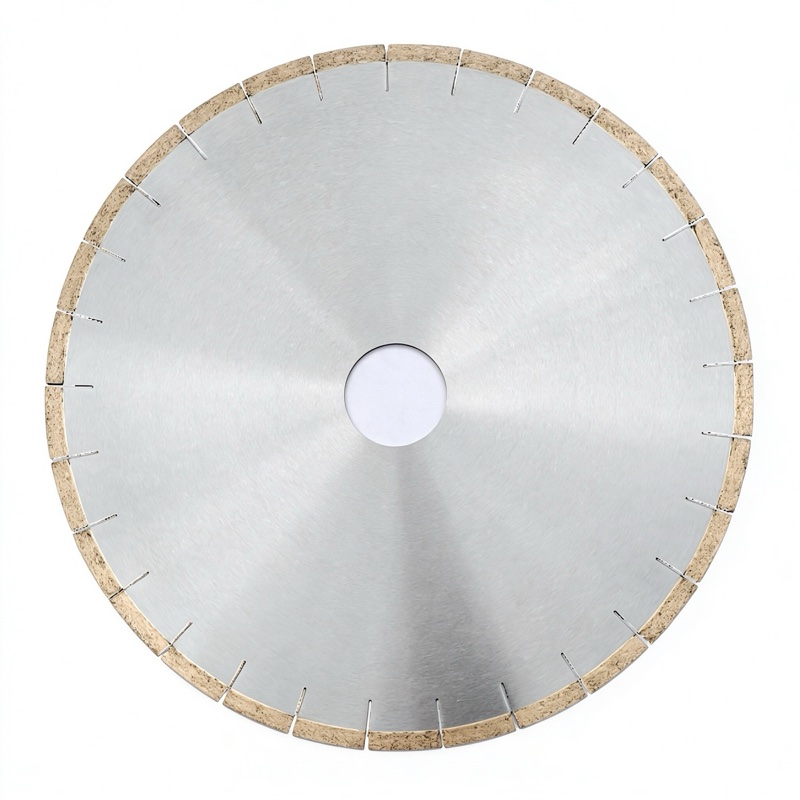
Cold-pressed and hot-pressed are two ways of making the diamond segment on a saw blade. In cold pressing, diamond grit and metal powder are pressed into a green compact at room temperature and then sintered in a tunnel furnace. In hot pressing, the powder is heated and pressed at the same time inside a graphite mold, which gives a denser, better-bonded segment. Cold-pressed blades cut sharper on the first cuts and cost less, but they wear faster and lose diamonds early on hard aggregate. Hot-pressed blades last longer on reinforced or hard concrete but cost more per blade. Choose cold-pressed for tile, soft stone, and light, intermittent work; choose hot-pressed for daily concrete, rebar, and continuous cutting.
In cold pressing, diamond grit is mixed with metal bond powder, usually bronze or cobalt-tin blends, and loaded into a steel die. A hydraulic press compacts the powder at room temperature into a shaped segment called a green compact. The green segment is then fed through a tunnel furnace where it is sintered at about 700 to 800 C. Because pressure is not applied during sintering, the final segment is less dense and the diamonds sit in a slightly softer, more open bond. The JOY MS-ST marble blade is built on this route: it comes in sharp, cuts easily, and is priced for tile and stone fabricators who run light jobs.
In hot pressing, the same powder mix goes into a graphite mold, and the mold itself is heated while pressure is applied. Sintering and densification happen at the same time, so the segment reaches near-theoretical density. The diamonds are fully encased in the bond and held more aggressively. Hot-pressed segments carry taller diamond dosage and tolerate higher heat, which is why they are the default for structural concrete, curbs, and floor sawing.
The trade-off between the two processes shows up in four measurable ways:
Cold-pressed blades feel faster on the first cuts because the bond is slightly more open and the diamonds protrude a little more. Operators often like this on tile and soft limestone. The trade-off is that the open bond wears down quickly, so the advantage fades after the first 20 to 30 meters of cutting. Hot-pressed blades feel slower out of the box but hold their cut rate for the whole segment life.
Hot-pressed segments tolerate sustained heat better because the denser bond conducts heat away from the diamond crystal. On a walk-behind saw running a full 450 mm blade for hours, the cold-pressed segment will glaze or burn before the hot-pressed one does. This is why floor crews on high-volume jobs almost always spec hot-pressed blades even though the upfront price is higher.
Cold-pressed is the correct choice when the work matches what the process does well:
For these jobs, the JOY MS-ST straight-slot marble blade is a typical cold-pressed segment: it starts sharp, leaves a clean edge on marble, and costs less than a hot-pressed equivalent. The catalog of diamond saw blades lists each segment by bond and process, so you can match the blade to the material rather than buying by diameter alone.
Do not compare blades by unit price. A cold-pressed blade that costs 30 percent less but wears 50 percent faster on hard concrete is the more expensive choice on a per-meter basis. On soft materials the math flips: a cold-pressed blade that lasts the same number of cuts as a hot-pressed one wins on price. Track the meters you cut per blade on your own material for a week, and the right process becomes obvious. Treat cost per linear meter as the decision metric, not the sticker price on the shelf.
Do not use a cold-pressed blade on hard, dense, or reinforced concrete for production work. The bond will wear too fast, diamonds will drop out early, and you will burn through blades faster than you would have spent on a more expensive hot-pressed unit. If you are cutting bridge decks, heavy rebar slabs, or 30 MPa-plus concrete all day, step up to a hot-pressed laser-welded blade. If you are unsure which bond matches your aggregate, talk to the JOY TECH application team before ordering; sending a small aggregate sample is the fastest way to get the right segment. Match the process to the workload, and the per-meter cutting cost drops even when the blade price is higher. As a rule of thumb, if a cold-pressed blade goes through more than two blades per shift on the same job, the workload has outgrown the process.
Written and reviewed by JOY TECH — an SGS & BV audited, CE/RoHS certified diamond tools manufacturer founded in 2004, exporting to 50+ countries.
Our factory and QMS are audited by SGS and Bureau Veritas. Products meet CE/RoHS requirements and every piece is 100% inspected before packing.
Verified Certificates
