Average response time: under 24 hours
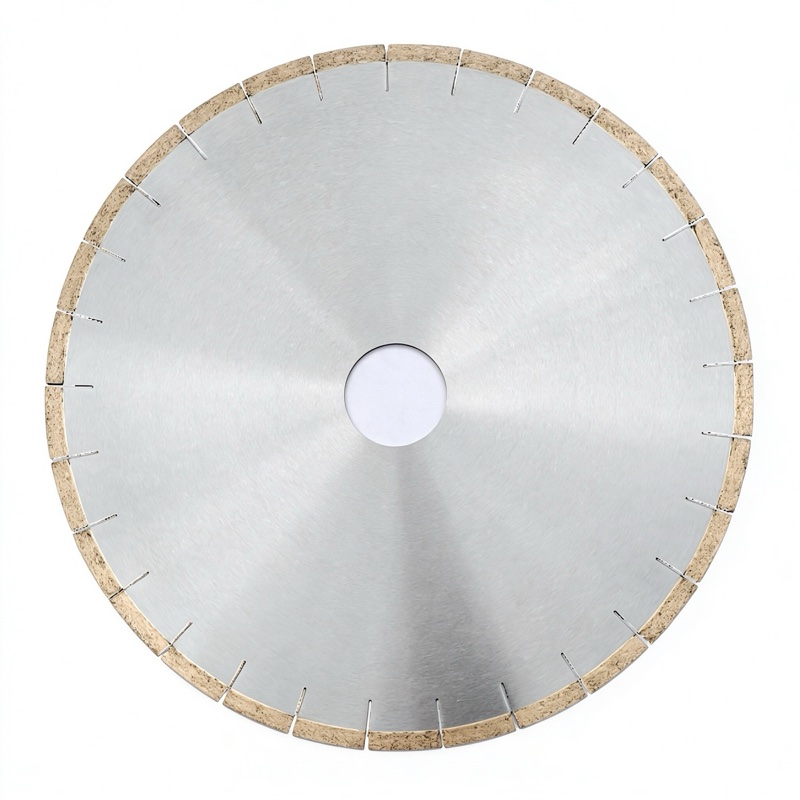
Use a concrete chainsaw (demolition saw) when you need a deep, straight cut in thick slabs, foundations, or curbs up to 300-450 mm deep in one pass. Use a ring saw when you need to start a cut in the middle of a surface, make a plunge cut, or chase a wall around rebar and pipes with a smaller cutting footprint. The chainsaw cuts deeper but leaves a wider kerf and pulls more power; the ring saw cuts shallower but starts anywhere and follows curves. For slab and floor work the chainsaw wins, and for wall chasing and interior openings the ring saw wins.
A concrete chainsaw, also called a demolition saw or cut-off saw, runs a diamond chain around a long guide bar. It is the workhorse of slab, curb, and foundation cutting. The chain wraps around a 300-400 mm bar, which lets you cut deeper than any flat-blade saw of the same engine size. It can cut through reinforced concrete, block, and natural stone, and it runs wet or dry depending on the model. Choose a laser-welded diamond blade when the cut is mostly straight and the slab is over 200 mm thick, because the welded segments stand up to the load of deep cuts and occasional rebar hits without losing segments.
A ring saw uses a full circular diamond blade with the center ring open, so the blade can plunge into the middle of a surface without a pilot hole. It cuts to about 120-160 mm depth with a 350 mm ring and handles tight corners, arcs, and chase work where a chainsaw bar would bind or hit a low ceiling. It is the tool of choice for electricians and plumbers chasing walls, cutting openings around pipes, and trimming holes in the middle of a floor or wall slab where you cannot start at an outside edge.
Depth is the single biggest difference between the two tools. A typical 4 kW chainsaw with a 350 mm diamond chain cuts to 320 mm in one pass. The same engine size running a 350 mm ring saw cuts to about 120 mm. If your slab is 250 mm thick and you need a full-depth cut, the chainsaw is the only option without flipping the piece and cutting from both sides. A shallow first pass plus a deep second pass is standard practice on either tool and prevents the chain from binding in a wide kerf.
If you are sawing an expansion joint, removing a 200 mm sidewalk section, or cutting a foundation footing, plan around depth first. A ring saw can cut from both sides, but that doubles the work and leaves a ragged middle zone where the two kerfs meet. A chainsaw that reaches full depth in one pass saves time and produces a cleaner, more vertical cut line on the joint, which matters when the two slabs must sit flush afterward.
Both tools need water on most jobs. Dry cutting is allowed only with a vacuum-rated saw and a HEPA dust extractor, and even then it shortens blade life by roughly 30 percent because the diamonds glaze over without cooling. Match the blade bond to the concrete: soft bond for hard dense aggregate, hard bond for abrasive sandy mixes. Browse the full diamond saw blade lineup before you rent or buy, because the wrong bond cuts slow, overheats the core, and burns out segments long before the diamond layer is worn.
For a joint that must sit flush, the chainsaw produces a straighter, more vertical kerf. The ring saw, with its open center, can follow a curved line and start inside a panel, but the cut edge is slightly less uniform because the blade flexes under side load. If you need a visual edge on an exposed-aggregate slab, score the line first with a shallow pass on either tool, then take the depth pass in the same direction. Never cross the scored line from the other side, or you will chip the paste along the edge. The difference in finish shows up most on slabs that will be left exposed rather than covered by tile or carpet.
Use the chainsaw for full-depth straight cuts, curb and foundation work, and thick slabs over 200 mm. Use the ring saw for wall chasing, openings, plunge cuts, and any job where the tool cannot start at the edge. When you are unsure which blade bond or chain spec fits your concrete, talk to the JOY TECH team with your aggregate type, slab age, and depth target. They will point you to the right blade and the right tool for the cut.
Written and reviewed by JOY TECH — an SGS & BV audited, CE/RoHS certified diamond tools manufacturer founded in 2004, exporting to 50+ countries.
Our factory and QMS are audited by SGS and Bureau Veritas. Products meet CE/RoHS requirements and every piece is 100% inspected before packing.
Verified Certificates
