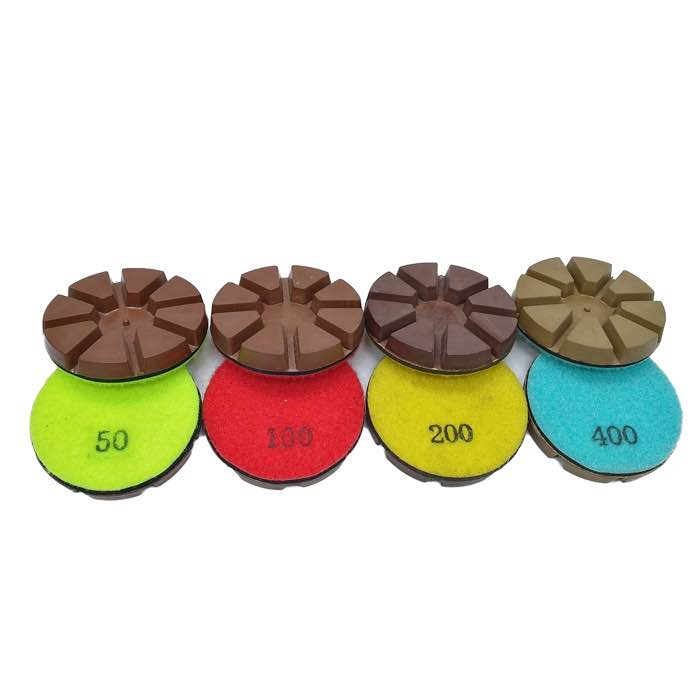
Apply concrete densifier after the floor has been ground to about 150-300 grit and cleaned, but before you run the high-grit resin pads (800 and above). This timing lets the silicate penetrate the open pores, react with free lime, and harden the cream so later polishing produces a true shine. Applying it too early wastes it on thick laitance; too late and the surface is already sealed shut.
Densifier is a silicate (lithium, sodium or potassium) liquid that reacts with calcium hydroxide in concrete to form additional C-S-H gel. This fills micro-pores, hardens the surface, stops dusting, and raises abrasion resistance. It also makes the floor take a polish because hardened cream reflects light instead of absorbing it.
| Stage | Densify? | Reason |
|---|---|---|
| After 30/60 metal grind | No | Too open, wastes product |
| After 150-300 grit | Yes | Pores open, paste exposed |
| After 800 grit | Usually no | Surface too closed; poor penetration |
| On existing polished floor | Rare | For restoration only |
After densifier cures (lithium 1-4 h; sodium overnight), continue with resin pads. Many contractors use a transitional copper-bond pad like copper-bond transitional pads to bridge the metal-to-resin step right after densifying.
Lithium densifier typically covers 3-7 m² per liter on porous concrete, less on dense concrete. Buy 10-20% extra. Too little and the surface stays unevenly hardened; too much and unreacted liquid dries white on the floor.
White bloom after densifier is unreacted salts. Do not panic — buff it off with a damp resin pad at 800 grit. Prevent it by wiping the surface after the dwell time and not letting densifier dry on top. Rinse and mop if residue persists.
New concrete has more free lime and reacts readily. Old, already-dusted concrete is porous and drinks densifier fast — apply two thin coats rather than one heavy one. On existing polished floors, densifier is rarely needed; burnishing restores shine.
More densifier is not better. Puddles leave white residue that must be buffed off. Apply thin, even coats and brom in. Follow the manufacturer's coverage rate — it exists for a reason.
Densified concrete resists stains but is not stain-proof. Wipe spills promptly. Acidic spills etch. For high-traffic commercial floors, add a topical guard after polishing for extra protection.
Lithium is the modern favorite: low residue, fast cure. Sodium is cheaper but needs rinsing. Potassium sits between. For interior work, lithium simplifies the job.
Store densifier above freezing. It has a shelf life of about a year. Do not buy more than you need for the job.
Clean and dry the floor. Spray densifier evenly. Bro in with a broom. Keep wet 20-40 minutes. Wipe off puddles. Let cure (lithium hours, sodium overnight). Buff residue. Continue polishing. Do not over-apply — thin coats work better than puddles.
Keep above freezing. Use within a year. Do not mix products from different manufacturers.
Densifier at 150-300 grit is the step that turns dusty concrete into a durable polished floor. Apply thin, bro in, and polish after cure.
Densifier is permanent. Apply it evenly, follow coverage rates, and let it cure. A second coat cannot fix a missed spot.
For commercial floors, re-check densifier coverage annually. A healthy floor needs no reapplication.
If you see white bloom, buff it off with a damp 800-grit pad and continue.
When in doubt, apply slightly less rather than more; residue is harder to fix than a thin coat.
A: It will not penetrate well and may leave haze. Apply before high-grit resin.
A: It hardens; shine comes from the resin pads and burnishing run after it.
Permanent — it chemically reacts with the concrete.
A: Unreacted salts. Buff with a damp pad and then 800 grit.
Timing is everything: densify at 150-300 grit, let it cure, then polish. It is the step that turns a dusty slab into a durable, glossy floor. Contact JOY TECH for transitional and resin pads to run after densification.
