Average response time: under 24 hours
Use hammer mode for drilling into concrete, brick, stone, and block; use pure rotary mode for wood, metal, plastic, and tile; use drill-only with screwdriver bits for driving screws. On a standard SDS-plus rotary hammer, "drill only" (rotary) spins the bit without percussive force, "hammer drill" combines rotation with rapid forward strikes, and "hammer only" (chisel) is for chipping. Choosing the wrong mode wastes time, overheats the bit, or cracks the material you are drilling.
Pure rotation, no percussive hits. This is the classic drill-driver mode. Use it for twist drill bits in steel, brad point bits in wood, spade bits, hole saws in wood, and screwdriver bits. In masonry, rotary mode with a carbide-tipped bit cuts slowly through soft brick or mortar but is not efficient on solid concrete.
Rotation combined with 40,000-50,000 small impacts per minute through a cam or piston mechanism. The percussive energy fractures concrete while the rotation clears dust. This mode is what makes drilling concrete feasible with a standard drill. Use it on concrete, natural stone, concrete block, and hard brick.
Often confused with hammer drill, but a rotary hammer uses a piston air-cushion mechanism and delivers much larger impact energy (joules). It is for holes over 10 mm in solid concrete, anchor bolts, and core holes. The mode selector on an SDS drill marks this "hammer with rotation."
No rotation, just percussive hits. Use with a flat, pointed, or gouge chisel for chasing conduit, removing tile, chipping concrete, or breaking up mortar. Never run a twist bit in hammer-only mode.
In hammer mode, lower RPM (800-1500) is better; high RPM reduces impact energy per strike and overheats the bit tip. In rotary mode for metal, run 1000-2500 RPM depending on bit diameter; for wood, 1500-3000 RPM. Most drills have a speed selector on the top: gear 1 for high-torque hammer work, gear 2 for high-speed rotary work.
Hammer mode requires bits with a carbide tip and a shank designed to take percussive force. Standard twist drill bits cannot handle hammer mode; the tip will break off. SDS-plus and SDS-max shanks are built for rotary hammers. If your drill has a keyless chuck rather than an SDS chuck, you can still use hammer-drill mode (the common "hammer drill" found in hardware stores), but not a heavy rotary hammer.
Hammering in the wrong situation causes real damage:
Rotary mode wins whenever percussion is wasted: in soft wood, thin metal, plastic, and when using hole saws, Forstner bits, or countersinks. If you are drilling through a stud, switch out of hammer mode before crossing the interface, or you will burn through the stud and overheat the bit.
A standard 18V hammer drill (keyless chuck) handles 5-10 mm holes in concrete up to 60 mm deep and is enough for wall anchors. An SDS-plus rotary hammer handles 10-32 mm holes and core bits up to 82 mm. An SDS-max rotary hammer handles structural drilling over 32 mm. Match the tool to the job; using a hammer drill on a 25 mm concrete hole is slow and wears out both tool and bit.
It is common to switch modes on the same hole, especially when drilling through a wall assembly. For example, start in hammer mode through the exterior concrete block, switch to rotary-only when you break into the wall cavity, then switch back to hammer to drill the interior drywall layer. Always stop the drill, change the mode selector, and let the bit stop before restarting. Do not toggle the mode while the bit is spinning under load; that damages the clutch.
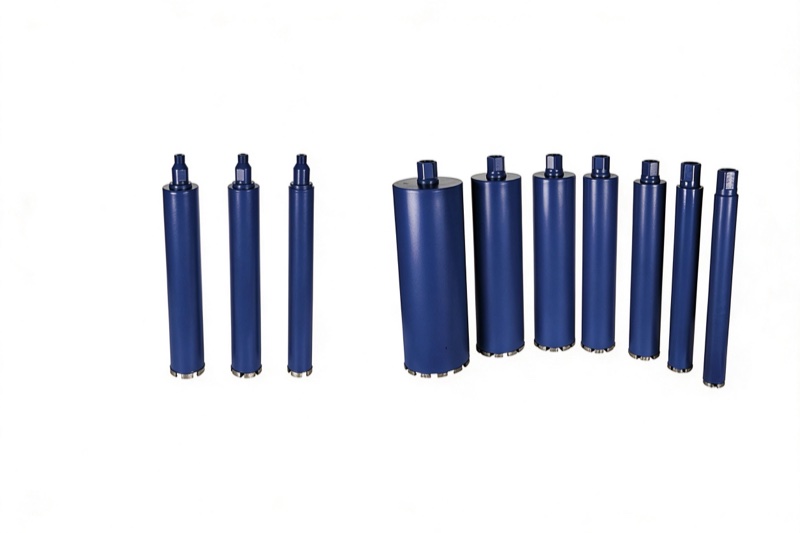
For concrete drilling, pair the correct mode with a diamond or carbide core bit sized to the hole.
Written and reviewed by JOY TECH — an SGS & BV audited, CE/RoHS certified diamond tools manufacturer founded in 2004, exporting to 50+ countries.
Our factory and QMS are audited by SGS and Bureau Veritas. Products meet CE/RoHS requirements and every piece is 100% inspected before packing.
Verified Certificates
