Average response time: under 24 hours
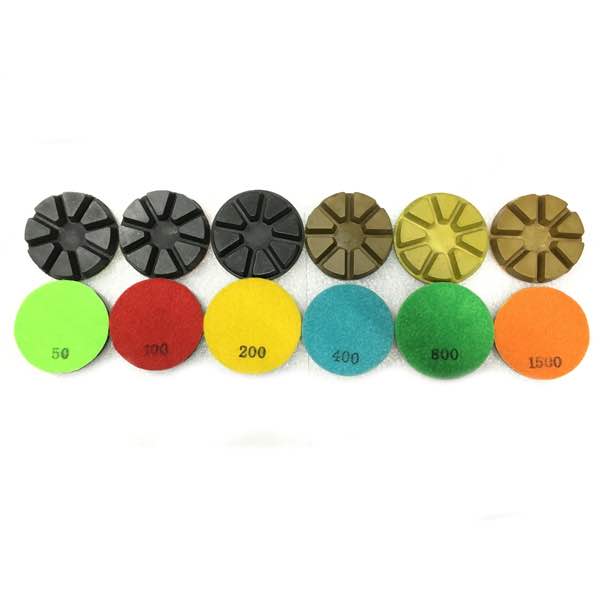
Dry polishing with a HEPA-filtered planetary grinder is the industry default for most B2B jobs: it is faster, leaves the floor ready same-day, and meets OSHA silica rules when paired with a HEPA extractor. Wet polishing uses water to suppress dust and produces the deepest, clearest mirror gloss — but requires slurry containment, pumping, and 24-48 hours of drying before coating. Choose dry for warehouses, retail, and time-sensitive renovations; choose wet for white-cement decorative floors, museums, showrooms, or where dust risk is extreme. Use the same resin polishing pads for both methods; only the water feed and vacuum change.
In dry polishing, a planetary floor grinder runs over the slab with resin-bond diamond pads, and a HEPA extractor pulls the fines into a sealed bin. In wet polishing, the same machine floods the surface with a thin film of water (0.5-2 L/min per head). The water lubricates the pads, cools the diamonds, suspends the concrete fines, and prevents the fine dust from becoming airborne. A slurry pump or wet-dry vac collects the milky water at the end of each grit step.
| Factor | Dry polishing | Wet polishing |
|---|---|---|
| Dust control | HEPA extractor required | Near-zero airborne dust |
| Finish clarity | Good, satin-to-gloss | Deepest, clearest gloss |
| Same-day coating | Yes | No, 24-48 h drying |
| Slurry disposal | Dry waste bag, landfill OK | Must be collected and disposed per local rules |
| Equipment cost | HEPA extractor | Water feed, slurry pump, vacuum |
| Best for | Industrial, warehouses, retrofits | Decorative, white cement, high-end retail |
Dry polishing is the default for 90% of commercial work. It is faster (no water setup, no drying), it meets OSHA Table 1 with a correctly rated HEPA extractor, and the floor is ready for traffic, densifier or guard the same afternoon. Use dry polishing in occupied buildings, warehouses, parking garages, and any job where you cannot afford 48 hours of drying. Tooling choice is identical: start with metal-bond trapezoid shoes, transition through resin floor polishing pads at 50/100, 200, 400, 800 grit, and finish with a fine pad at 1500-3000.
Wet polishing delivers the deepest, most uniform clarity, especially on white-cement or light-coloured decorative floors. The water removes heat and micro-scratches that dry pads leave behind, producing a mirror-like reflection that dry polishing cannot match. It is also the only viable method in dust-sensitive environments such as operating theatres, clean rooms, or historic buildings where HEPA vacuums are not enough. The trade-off is slurry: you must contain it, pump it out, and dispose of it as concrete wastewater — never let it run into storm drains.
A common misconception is that wet and dry use different pads. In practice, high-quality resin-bond pads such as our spiral resin polishing pads are designed to work both wet and dry. What changes is the machine setup: add a water feed and sight gauge for wet work, and route the extractor to a wet-capable vacuum or slurry pump. Using a dry-only HEPA extractor for wet work will damage the filter and void the warranty.
Wet polishing produces 50-150 L of alkaline slurry per 100 m², depending on the slab. You cannot hose it into the sewer — concrete slurry is pH 12-13 and clogs drains. Collect it with a vacuum, let it settle in a sump, decant the clear water, and send the thickened mud to licensed concrete-waste disposal. Factor this cost into your quote; it is the reason many contractors default to dry even when wet would look better.
Yes, when you use a correctly rated HEPA H13/H14 extractor matched to the grinder airflow. A standard shop vacuum is not sufficient. With proper extraction, dry polishing meets OSHA 1926.1153 Table 1.
Wet polishing at 3000 grit followed by high-speed burnish gives the deepest, clearest reflection. Dry polishing at the same grit looks slightly duller because of micro-scratches.
Yes, but you must let the surface dry fully (24-48 h) before switching to dry resin pads. Mixing water into dry steps causes pad loading and blotchy results.
At 20 °C and 50% RH, plan on 24 hours. At lower temperatures or higher humidity, 48 hours. Test with a moisture meter before applying guard or sealer.
Dry polishing is the workhorse for B2B commercial floors — fast, compliant, and same-day usable. Wet polishing is the premium choice for decorative white-cement floors and dust-critical environments. Either way, the resin pads, grit sequence and densifier steps are the same; only the water feed, slurry handling and drying time change.
Written and reviewed by JOY TECH — an SGS & BV audited, CE/RoHS certified diamond tools manufacturer founded in 2004, exporting to 50+ countries.
Our factory and QMS are audited by SGS and Bureau Veritas. Products meet CE/RoHS requirements and every piece is 100% inspected before packing.
Verified Certificates
