Average response time: under 24 hours
A concrete grinder overheats most often because cooling vents are clogged with dust, the diamond tooling is dull, or the extension cord is too long and thin, causing voltage drop under load. Stop the machine, let it cool, then clean the vents with compressed air, inspect the tooling for glazing, and use a 12 AWG cord shorter than 15 m on a 110 V grinder. If the motor trips the thermal protector repeatedly, you are running the tooling too dull or pressing down too hard; both force the motor to draw far more current than it was designed for.
An overheating motor loses RPM under load, smells hot, and trips the thermal switch after 10-20 minutes. The housing gets too hot to rest your hand on, and the grinding action slows even though you are pressing normally. A few minutes of overheating shorten the brush life permanently; repeated trips will fail the armature winding or the field coils. Treat it as a fault, not a normal part of the job, because a grinder that runs hot on day one will run hot on every job and cut slower each shift.
Concrete dust is fine and oily. It packs into the motor vents within hours of grinding without a vacuum. The fan cannot pull air through, and the motor cooks itself. Blow out the vents with compressed air at the start of every shift and after every 4 hours of runtime. A clean vent cuts operating temperature by 15-20°C, which is often enough to stop the thermal trips completely.
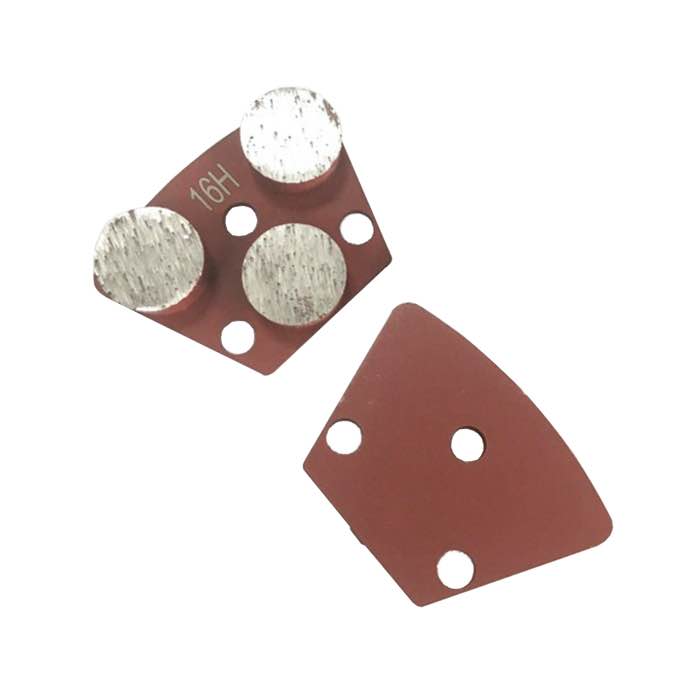
When the diamond segments glaze, the grinder has to push harder to bite the slab. The motor draws extra current and heats up. A double-row cup wheel that has worn below its segment height should be replaced, not forced to keep grinding. If the tooling looks shiny or glassy on the cutting face, dress it on a concrete block or swap it for a fresh disc before you restart.
An extension cord under 12 AWG on a 110 V grinder over 15 m drops voltage by 10-15 percent under load. The motor compensates by drawing more current, which is exactly what overheats it. Use the shortest cord possible, and check the cord rating against the grinder amperage before you start. The grinding tooling catalog lists typical amperages so you can match the cord gauge to the machine.
New operators lean on the grinder because the floor seems to cut slowly. That extra weight jams the segments into the slab, the motor stalls, and the current spikes. The correct setting is the weight of the machine plus a light touch; if the floor is not removing, change the grit or the bond rather than pressing harder. Most overheating calls on job sites come back to this single mistake. Operators learn to press harder because the tooling looks dull, but the real fix is a fresh disc or a coarser grit.
Clean the vents every shift. Check the brushes every 50 hours of runtime. Replace the tooling before it glazes. Run the grinder at rated RPM and let the weight of the machine do the work, not extra down-pressure. A grinder that stays cool cuts faster, lasts longer, and trips the thermal protector far less often. A hot motor also loses RPM under load, which means you grind slower and burn more tooling per square meter. Keep a log of runtime and trips, so you can see whether a new fault is a one-off or a pattern. Run the grinder under no load for 30 seconds after each job to cool the motor before you set it down, and coil the cord loosely so the conductors do not overheat at the reel.
If the motor trips repeatedly even after cleaning vents, fresh tooling, and a proper cord, the windings or bearings are already damaged. Replacement is cheaper than a rebuild on most handheld grinders. If you are unsure whether to repair or replace, contact the JOY TECH team with your model and the symptoms, and they will point you to the right replacement tooling or grinder. Always keep the receipt and runtime log with the machine, so any warranty claim on the motor is backed by real data.
Written and reviewed by JOY TECH — an SGS & BV audited, CE/RoHS certified diamond tools manufacturer founded in 2004, exporting to 50+ countries.
Our factory and QMS are audited by SGS and Bureau Veritas. Products meet CE/RoHS requirements and every piece is 100% inspected before packing.
Verified Certificates
