Average response time: under 24 hours
Run a diamond cup wheel at 115 mm at about 10,000 RPM no-load (5,000-7,000 RPM under load), a 250 mm grinding plate at about 1,500-1,800 RPM, and resin polishing pads at 1,500-3,000 RPM depending on grit. Running tooling above its rated speed glazes diamonds, burns resin, and shortens disc life; running too slow leaves swirls and low stock removal.
Every diamond and resin disc is engineered for a surface speed measured in meters per second. Too fast, and the diamonds heat up, lose bond, or glaze; too slow, and the tool rubs rather than cuts, loading up with slurry. The correct RPM depends on disc diameter: small discs spin faster to hit the same surface speed as large discs. Always check the tooling label; the numbers below are typical ranges for general concrete work.
No-load speed: 10,000-11,000 RPM. Under load: around 6,000-8,000 RPM. Most 115 mm angle grinders are fixed-speed and match this by design. If you have a variable-speed grinder, do not slow it down below 8,000 RPM no-load; the cup wheel will cut poorly.
No-load speed: about 8,000 RPM. Under load: 4,500-6,500 RPM. Use a high-speed grinder rated for this size; a low-speed polisher will not spin the wheel fast enough.
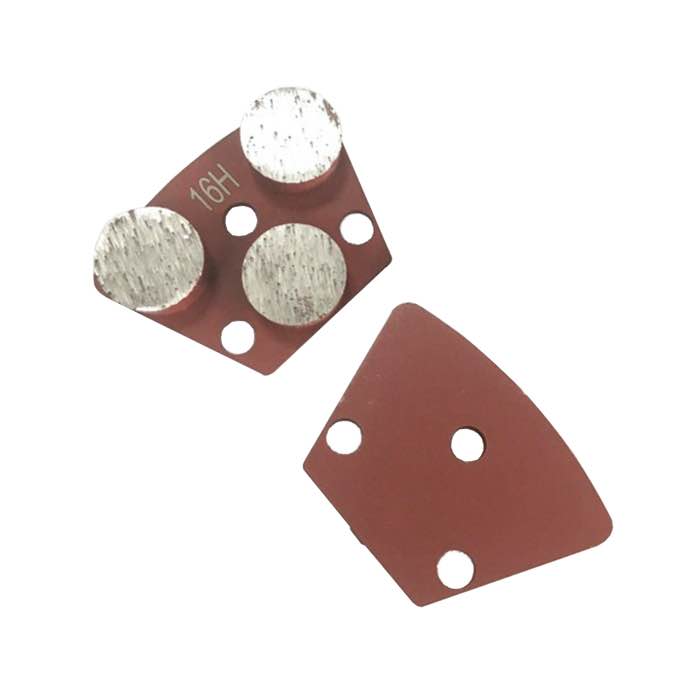
No-load speed: 1,300-1,800 RPM. Under load: 1,000-1,500 RPM. These are planetary or single-disc floor grinders. The plate carries 3-10 diamond segments or puck tools. Running at the upper end removes material faster but wears segments quicker; use mid-range for normal concrete.
Plate speed: about 600-1,000 RPM, with planetary satellites spinning faster (1,200-1,800 RPM). These machines are set up by the manufacturer; operators rarely change speed.
Speed: 1,500-3,500 RPM. Coarse grits (30-100) run at the higher end; fine grits (400-3000) run at 1,500-2,000 to avoid burning the resin. Most polishers are variable-speed; start low and raise as grit increases.
Speed: 2,500-4,500 RPM. Diamond hybrid pads can handle higher speeds than pure resin pads but still burn if run too fast on fine grits.
The cup wheel or plate glazes, stops cutting, and produces a burning smell. Diamond segments wear unevenly at the leading edge. Resin pads turn brown, heat up, and smear. Reduce speed and dress the glaze on a soft block.
The machine leaves swirl marks, does not remove material, and loads up with slurry. The tool rubs instead of cutting. Increase speed; if the grinder is already at max, check that the disc size matches the machine rating.
If the grinder vibrates heavily, the disc may be running at a resonant speed, or the segments are unevenly worn. Back off speed and inspect the wheel.
No-load RPM is on the label; under-load RPM is what matters. A 110V 115 mm grinder on a long extension cord can sag under load, dropping RPM and cutting poorly. Use the shortest, heaviest extension cord possible (12 AWG for 115 mm tools). For walk-behind grinders, a voltage drop under heavy load will stall the planetary drive; plug directly into a dedicated circuit.
When the grinder bogs down, lift it off the surface to let it recover. Do not keep pushing; you will burn the motor and glaze the tooling.
Every diamond disc is stamped with a maximum RPM. Never exceed it. A 115 mm cup wheel rated at 12,200 RPM on a grinder that spins 11,000 is fine; the same wheel on a 12,000 RPM grinder is close to the limit. If the grinder label and tooling label disagree, the tooling label wins. For walk-behind plates, match the plate RPM range to the machine spec; mixing speeds voids most warranties and is unsafe.
Use these as starting points; always follow the tooling label and adjust based on cut performance on the actual concrete mix. When in doubt, start low and raise speed gradually; a cup wheel that cuts cleanly without burning is at the right setting, whatever the gauge says.
A common shop mistake is running a 180 mm cup wheel on a polisher rated for 100 mm pads. The polisher spins too slowly for the larger wheel, and the cup rubs instead of cutting. Conversely, running a 100 mm resin pad on a high-speed 115 mm angle grinder burns the pad in minutes. Match disc diameter to machine rating, and use the machine's variable-speed dial only within the tooling label's recommended range.
Written and reviewed by JOY TECH — an SGS & BV audited, CE/RoHS certified diamond tools manufacturer founded in 2004, exporting to 50+ countries.
Our factory and QMS are audited by SGS and Bureau Veritas. Products meet CE/RoHS requirements and every piece is 100% inspected before packing.
Verified Certificates
