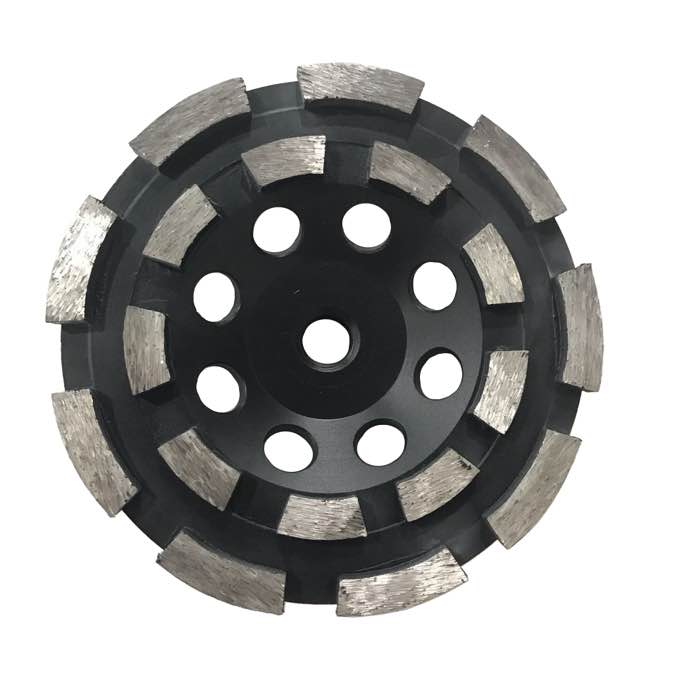
The best indoor dust control is dry grinding paired with a HEPA-filtered dust extractor and a tight-fitting dust shroud on your grinder. Wet grinding suppresses dust at the source but creates slurry that must be collected and disposed of. For angle grinders, use a shrouded cup wheel such as the double-row cup wheel connected to a vacuum. Never grind indoors without extraction — crystalline silica dust causes silicosis and is regulated by OSHA.
Cutting or grinding concrete releases respirable crystalline silica (RCS), particles under 4 microns that bypass the nose and throat and lodge in the lungs. OSHA's Table 1 requires either wet methods or HEPA ventilation, plus PPE. A simple paper mask is not enough; you need an N95/P100 respirator on top of engineering controls.
| Method | Dust capture | Pros | Cons |
|---|---|---|---|
| Dry + HEPA vacuum | 95-99% | Clean, fast, floor stays dry | Needs good extractor |
| Wet grinding | ~95% at source | No airborne dust, cooler tooling | Slurry mess, disposal |
| Dry + no extraction | Poor | Cheap | Illegal indoors, hazardous |
Connect the grinder's outlet to a HEPA-rated dust extractor (minimum 250 CFM for a 230 mm grinder; larger for walk-behind machines). Use a shroud with a flexible brush skirt that seals to the floor. On walk-behind grinders, the integrated shroud is usually adequate; on angle grinders, fit a dedicated dust shroud and use a shrouded cup wheel like the 5-inch L-segment cup wheel.
Wet grinding feeds a slow trickle of water to the segment, trapping dust as slurry. Use GFCI-protected power tools, a water feed with a flow control, and wet/dry slurry pumps. This method is common for stone and edge work where vacuum shrouds do not seal. Collect slurry in trays; it cannot go straight down the drain because it is alkaline and silty.
Not every HEPA vacuum is a concrete vacuum. You need a tool-rated extractor with at least 250 CFM for a 230 mm grinder, 600+ CFM for a walk-behind. Look for automatic filter cleaning — without it, the filter clogs in 20 minutes and suction dies. Budget machines leak fine dust past the seal; spend the money on a certified industrial unit.
For walk-behind grinders, the factory shroud with a brush skirt is usually sufficient. For angle grinders, a dedicated dust shroud with a flexible rim captures 90% of dust but leaves the wall edge unshrouded — plan for that strip to be wet-ground or accepted as a controlled release. Seal doorways with plastic and negative air pressure so dust does not migrate to finished rooms.
Engineering controls (wet or HEPA) are the first line; PPE is backup. Even with a vacuum, wear a P100 respirator. Change filters per the manufacturer, and never blow dust off clothes with compressed air — that re-suspends silica. Wash work clothes separately from household laundry.
On indoor jobs, seal HVAC vents, cover doorways with plastic sheeting, and run a negative-air machine to keep dust contained. Clean up at the end of each day, not at the end of the project. Dust that settles on shelves and corners gets disturbed later and re-enters the air. Bag vacuum filters while wearing a respirator.
For wet grinding, fit the grinder with a water feed and a splash ring. A wet/dry slurry pump collects runoff into a settling drum. Plan where the water goes — on a slab-on-grade, containment dams are needed. Do not let slurry run into drains.
A: No — ordinary shop vacs leak fine particles. Use a HEPA-rated industrial dust extractor certified for silica.
A: Yes, but use GFCI power, control the water flow, and plan for slurry cleanup.
A: When suction drops or the vacuum auto-clean cycles constantly. Tap/air-blow filters daily on large jobs.
A: It actually cools the segment and extends life on hard materials, but the bond choice should be suited to wet use.
Dust control is not optional — it is the control that keeps you legal and healthy. Pair the right shroud and HEPA extraction with the correct cup wheel, and reserve wet grinding for jobs where vacuum cannot seal. Contact JOY TECH for shroud-compatible cup wheels and disc sets.
