Average response time: under 24 hours
For a single-head handheld grinder, you need a vacuum rated at least 150 CFM at the hood with a HEPA filter; for a walk-behind 2-head or 3-head grinder, plan on 300 to 500 CFM. Use a 38 mm hose for a handheld unit and a 50 mm hose for a floor grinder, and never use a shop vacuum without a HEPA filter on concrete dust. The filter must be rated for silica and cleaned or changed every 4 to 8 hours; a clogged filter drops suction so fast that the grinder throws dust out of the hood within minutes.
A concrete grinder throws out a plume of fine dust the moment the diamond tooling bites the slab. If the vacuum does not capture that plume at the hood, the dust settles on every surface in the room and becomes airborne again the moment you walk through it. The dust from grinding is finer than saw dust: much of it is under 2 micrometers, which is exactly the respirable fraction that causes silicosis. A good vacuum setup is not a convenience, it is the primary exposure control.
Suction is measured in CFM (cubic feet per minute) at the tool, not at the vacuum inlet. Hose friction, filter loading, and hood leakage all reduce the number by the time the air reaches the hood. A shop vac rated at 150 CFM at the inlet may deliver 60 CFM at the hood after a clogged filter, which is nowhere near enough for a grinder.
A 180 mm angle grinder with a diamond cup wheel throws dust out sideways and downward. A vacuum hood mounted to the grinder needs about 100 to 150 CFM to keep the plume captured. Most 20 L-class HEPA shop vacuums deliver about 130 CFM and are adequate for occasional use. For daily use, a dedicated dust extractor with automatic filter cleaning is worth the upgrade.
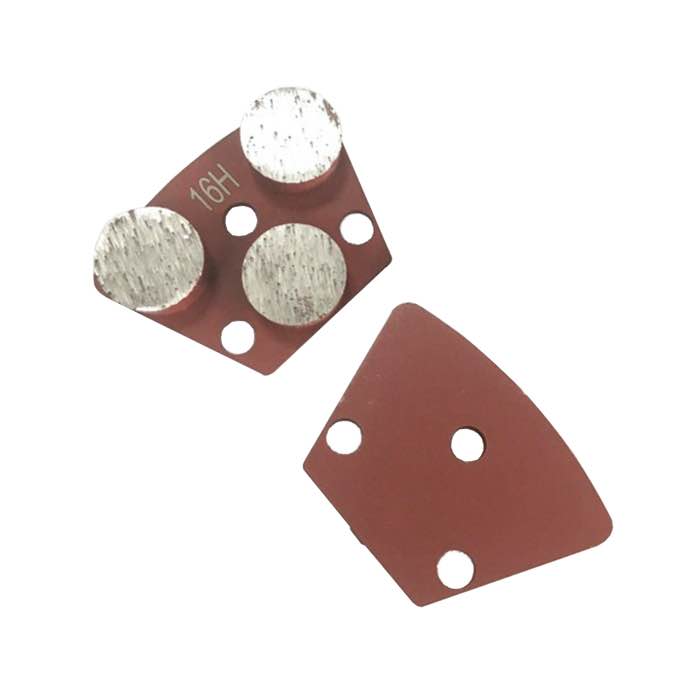
A 2-head or 3-head planetary floor grinder covers a wider path and throws more dust. Plan on 300 to 500 CFM, depending on the head width. A 250 mm single-head machine needs about 250 CFM; a 600 mm grinder needs 500 CFM or more. The JOY TP-R3 triple-segment trapezoid disc is an aggressive tooling that produces more dust than a soft-bond puck, so match the vacuum to the tooling, not just to the machine.
Hose diameter matters because suction drops fast in narrow hoses. Use a 38 mm (1.5 inch) hose for handheld grinders and a 50 mm (2 inch) hose for floor grinders. Long hoses reduce CFM; keep the total hose run under 5 meters if possible. A 7.5 m hose on a 150 CFM extractor can drop suction by 30 percent.
The hood is as important as the vacuum. A handheld grinder hood that does not seal against the slab leaks around the edges and pulls in shop air instead of dust. A floor grinder hood needs a flexible skirt that follows the slab; worn skirts are the most common reason a vacuum setup looks good on paper but fails in practice. Inspect the skirt every day and replace it when it loses contact with the floor.
Concrete dust destroys ordinary filters. A standard shop vac filter clogs in under an hour on a grinder and then passes dust straight through into the motor. Use a HEPA filter rated at 99.97 percent efficiency at 0.3 micrometers. For continuous work, use a vacuum with an automatic shaker or reverse-air cleaning cycle; this keeps the filter open and the CFM stable. The JOY CW-DR double-row cup wheel on an angle grinder generates a steady fine dust stream, and a filter that is not cleaned within 4 hours will stop capturing it.
Change or shake the primary filter every 4 to 8 hours of grinding. Empty the bin when it is half full; a full bin increases the air path through the filter and drops suction. Always use a disposable filter bag inside the bin so you can dump the dust without kicking up a cloud.
Another mistake is mixing grinding and dry cutting on the same vacuum. A saw blade throws chips and chunks that a HEPA filter cannot handle; use a separate pre-separator for saw work, or dedicate a different vacuum. Browse the full grinding tooling category for puck styles and cup wheels that match your machine, and size the vacuum to the most aggressive tooling you plan to run.
For a 50 m² floor prep job with a 2-head grinder, plan on a 400 CFM HEPA extractor with a 50 mm hose, a clean filter at the start of the day, and a spare filter on hand. Connect the hose to the grinder hood before you start, check suction by holding your hand at the hood opening, and confirm the skirt seals. If you can feel a strong pull without seeing dust escape, the setup is right. If dust leaks from the back of the hood, do not start grinding; fix the leakage first, because the dust you see is only a fraction of the dust you breathe.
Written and reviewed by JOY TECH — an SGS & BV audited, CE/RoHS certified diamond tools manufacturer founded in 2004, exporting to 50+ countries.
Our factory and QMS are audited by SGS and Bureau Veritas. Products meet CE/RoHS requirements and every piece is 100% inspected before packing.
Verified Certificates
