Average response time: under 24 hours
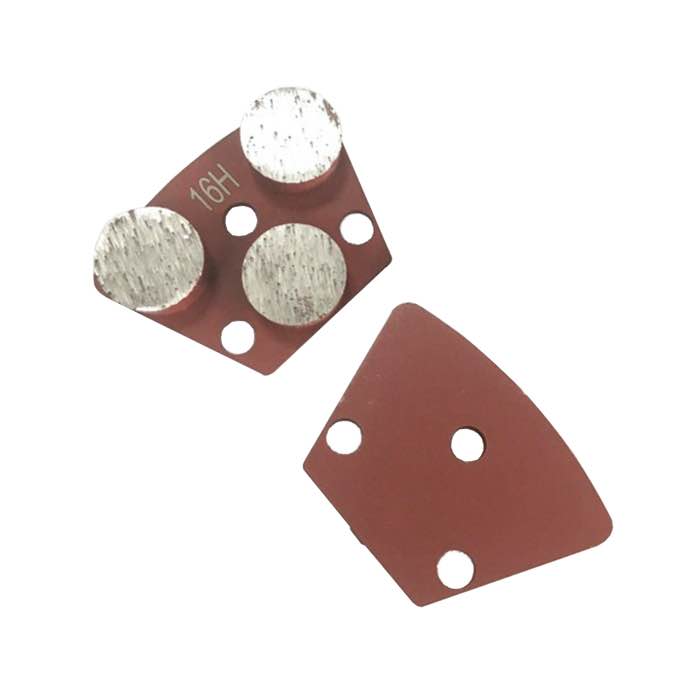
Glazing happens when the bond holding a diamond segment cannot wear away fast enough to expose fresh grit, so the segment face polishes smooth and stops cutting. On hard, dense slabs such as old industrial floors and high-strength mix designs, this is a tooling problem solved with a softer bond, lighter pressure, and routine dressing. Expect the wheel to look shiny, throw fewer sparks, and cut at half its normal rate once glaze sets in. Dress it open on an abrasive brick or a rough patch, drop your feed pressure, and move to a softer bond before the whole set of segments burns out.
A diamond segment cuts on the edge of each exposed diamond crystal. As that edge blunts, the bond around it should wear down until the next diamond protrudes. Soft concrete abrades the bond at just this rate, which is why soft floors rarely glaze tooling. Hard concrete, around 4,000 PSI and up, barely abrades anything. The bond simply outlives its diamonds, the dull crystal rubs instead of cutting, and the friction heat softens and smears the bond surface into a glossy skin. Operators then press harder to recover the cut, which only raises the heat and seals the glaze tighter.
Each diamond is held like a nail in a block. When the exposed tip rounds off, contact pressure rises sharply over a tiny spot, and that spot can reach temperatures that discolor the steel bond. The polished skin does not hold new diamonds; it just slides. Once that happens, the wheel is burnishing the floor rather than grinding it, and the floor owner gets heat marks instead of a clean scratch pattern.
Glazing creeps in during a shift. The first passes bite like new tooling, then the same head takes noticeably longer across the same floor area. Crews usually blame dull diamonds or a weak machine before they look at the segment face. Start the day by noting your typical meters per hour, and recheck it after the first hour. A 30 percent drop with no change in slab or operator is the earliest warning.
A glazed segment face turns mirror shiny, often with a bluish or straw tint at the edge where heat concentrated. The floor scratch pattern fades into a uniform polish. Instead of throwing coarse, visible chips, the wheel expels an extremely fine dust. Inspect the face with a flashlight; a healthy cutting segment looks scratched and dull, never reflective.
Production falls first: you may grind 50 m² in the morning and 30 m² by the afternoon with the same head. Sparks from the diamond line shrink or disappear. The machine pushes with less effort, which feels easier but means nothing is being cut. Floor readings stay flat under a straight edge even after repeated passes, because the wheel is polishing rather than leveling.
Dressing wears the shiny skin back off the bond so sharp diamonds re-emerge. It buys time on tooling that is otherwise fine, and it is far cheaper than throwing away segments that have only glazed. A dressing brick, an abrasive block, or an old rough concrete patch all work. Run the wheel at working RPM, lean the head so the contact edge bites, and hold it steady until the face turns dull gray again.
Dressing treats the symptom. To keep the glaze from returning within an hour, change at least one of the root causes. Most crews start with pressure and surface speed, because those cost nothing. If the slab is genuinely hard, step the bond softer.
| Symptom | Typical cause | Field fix |
|---|---|---|
| Mirror-shiny segment face | Bond too hard for the slab | Move one bond grade softer |
| Cuts slow, sparks gone | Pressure too light | Increase downward weight |
| Dust packs around segments | Poor vacuum clearance | Check shroud and CFM |
If a wheel re-glazes within 20 m² after dressing, the bond is wrong for this slab and dressing is now a daily ritual you cannot afford. Segment life is measured in square meters of cut, not in appearances. Dress twice, then switch tooling; the third glaze means the softer bond you avoided is losing you money on every pass. Hard slabs want soft bonds, and there is no parameter trick that beats that.
The rule of thumb is inverse: hard slab, soft bond; soft slab, hard bond. A bond graded soft wears faster on hard concrete and keeps presenting new diamonds, at the cost of shorter segment life. On a soft slab, that same bond would wipe out in an hour. When you are between two grades, start with the harder one and drop a grade only if glaze returns. Keep a sample set of the softer grade in the truck for surprises.
How often should I dress a segment set? Dress it the moment the face turns shiny or production drops by a third, not after a full day of slow cutting. On hard slabs, that may mean dressing once per hour of aggressive grinding. Five minutes of dressing is cheaper than two hours of glazed passes.
Can I dress with another diamond tool? You can, but it is slower and can round off the new diamonds as well. A dedicated dressing brick or a rough patch of old concrete is kinder to the bond and costs almost nothing. JOY TECH metal-bond sets ship with a dress schedule printed on the pack, worth checking on day one.
Written and reviewed by JOY TECH — an SGS & BV audited, CE/RoHS certified diamond tools manufacturer founded in 2004, exporting to 50+ countries.
Our factory and QMS are audited by SGS and Bureau Veritas. Products meet CE/RoHS requirements and every piece is 100% inspected before packing.
Verified Certificates
