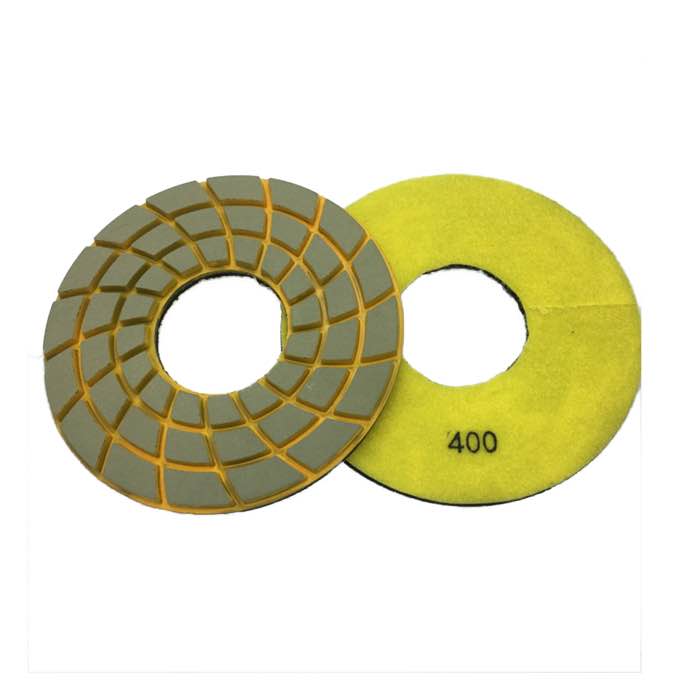
A hazy, cloudy or chalky white film on polished concrete is most often densifier residue that was not scrubbed and rinsed off before polishing continued, or efflorescence / salts rising through the slab. It can also come from loaded, glazed polishing pads depositing a smeared paste. The fix is to stop polishing, scrub the floor with a neutral cleaner and water, rinse thoroughly, let it dry, then re-open and re-polish through the affected grits with clean, sharp pads.
Polished concrete should reflect clearly. When it looks foggy, light is being scattered by a microscopic layer on the surface rather than by the concrete itself. Three sources dominate:
First, determine whether the haze sits on top or is inside the floor. Wipe a small area with a damp white towel: if the towel picks up white residue, it is surface contamination. If the haze stays even after cleaning and wetting the floor darkens it, the issue is deeper scratches or under-densified paste.
The best cure is process discipline. Spread densifier thinly, keep the surface wet with product for the recommended dwell time, and always scrub and rinse after the reaction window. Do not polish over a white densifier film. When efflorescence is the cause, find and stop the moisture source first; otherwise salts will return. For jobs where metal-to-resin transition haze is common, a copper-bond transitional pad such as our Copper Bond Transitional Polishing Pads removes the fine scratch pattern cleanly without leaving a smear.
| Appearance | Diagnosis | Treatment |
|---|---|---|
| Uniform cloudy film | Densifier residue | Scrub, rinse, re-polish from 400 |
| Patchy white powder | Efflorescence | Remove salts, fix moisture, densify |
| Swirly dull marks | Loaded / glazed pads | Replace pads, light pressure |
| Haze gone when wet | Surface residue only | Deep clean and dry burnish |
Before you re-polish, run the wet test: mist a hazy area with water and observe. If the haze disappears and the floor looks clear while wet, you are dealing with surface residue that will vanish once cleaned and dried. If the haze stays visible even when the concrete is soaked dark, it is trapped scratches or a soft, under-densified paste, and cleaning alone will not fix it. This single test saves hours of unnecessary re-grinding.
Another subtle cause is pad bleed. Low-quality resin pads can leave a faint colored film on light concrete as the resin wears. If your white or cream floor looks gray or streaky, switch to white-bond polishing pads, which are formulated not to stain light surfaces. Always buff out densifier residue within its recommended dwell window - letting it cure hard on the surface turns a simple rinse into an acid-free scrubbing job.
Prevention is cheaper than rework. Keep densifier dwell time controlled, scrub and rinse on schedule, and use clean water at every stage. When switching from wet to dry passes, let the slab dry completely. Finally, mark off the area while it cures so foot traffic does not drag dirty water across a fresh densifier coat. These small disciplines prevent the cloudy film from forming in the first place.
A: A burnisher will only smear and seal the residue in. You must scrub and remove it chemically first.
A: No. On freshly polished jobs it is usually densifier residue; efflorescence tends to appear weeks later and follows water paths.
A: Acid etches polished concrete and ruins the sheen. Use neutral cleaner and mechanical scrubbing instead.
Haze and white bloom are frustrating but almost always reversible once you identify surface residue versus true scratches. Scrub, rinse, dry, and re-polish with sharp, clean pads rather than chasing shine with higher grits. For reliable pad performance across the whole sequence, contact JOY TECH for a quote on resin, transitional and burnishing pads sized for your grinder.
