Average response time: under 24 hours
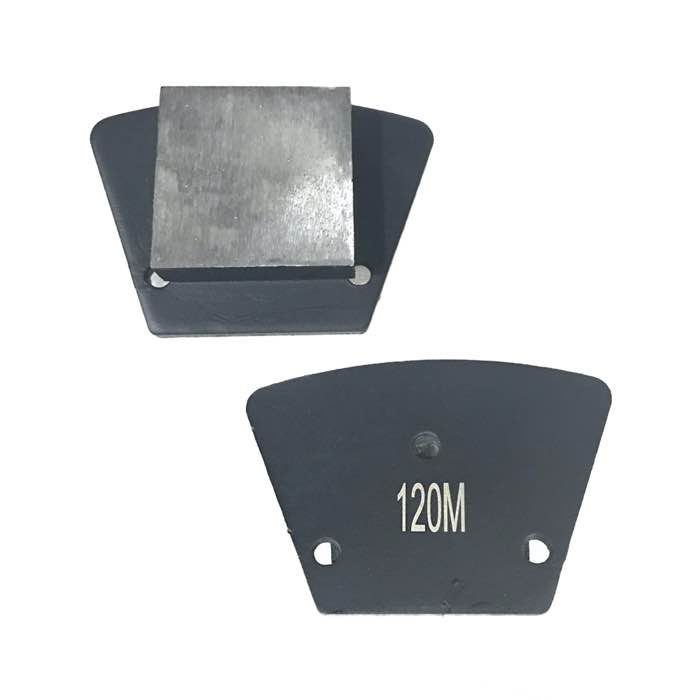
Concrete preparation for epoxy paint requires (1) testing for moisture and laitance, (2) removing all weak surface layer — either by shot-blasting or by diamond grinding with a trapezoid grinding disc on a planetary floor grinder, (3) producing a concrete surface profile CSP 3-5, (4) vacuuming the surface to ISO Class 8 cleanliness, and (5) applying the epoxy within 24 hours. Skipping the grind and painting over laitance is the number-one cause of epoxy delamination. For old coatings you must strip first with PCD coating-removal tooling, then regrind with metal-bond shoes before applying the new system.
Laitance is the weak, dusty cement paste that rises to the surface as water bleeds out of fresh concrete. It looks smooth and hard, but it is essentially a layer of chalk. Epoxy bonds to cement paste, not to dust — so if you paint over laitance, the film adheres to the weak layer and the whole coating peels off in sheets within 6-18 months. Mechanical prep (grinding or shot-blasting) removes laitance and opens the concrete pores so the resin can key in. This is why every epoxy manufacturer's TDS specifies a mechanical profile — you cannot acid-etch your way out of a bad prep on a commercial slab.
The International Concrete Repair Institute rates surface profiles from CSP 1 (acid etched, very light) to CSP 10 (heavy scarification). For self-leveling epoxy and broadcast systems, aim for CSP 3-5. For thin 2 mm epoxy coats, CSP 2-3. For heavy-duty urethane cement, CSP 5-7. A simple field test: rub the ground surface with a gloved hand; it should feel like 80-grit sandpaper, not smooth and not deeply gouged.
| Coating system | Target CSP | Recommended method |
|---|---|---|
| Thin epoxy (0.2-0.5 mm) | CSP 2-3 | Fine diamond grind, 80/100 grit |
| Self-leveling epoxy (2-3 mm) | CSP 3-4 | Metal-bond grind, 30/40 or 60/80 |
| Broadcast epoxy (3-5 mm) | CSP 4-5 | Shot-blast + 30/40 grind |
| Urethane cement / topping | CSP 5-7 | Scarifier + 16/20 grind |
Follow this sequence on every commercial job: (1) Sweep and remove all debris, grease and oil. (2) Test moisture — plastic sheet test (16 h) and calcium chloride or relative humidity test per ASTM F2170; RH must be below 75% at 40% depth. (3) Repair cracks, spalls and joints with epoxy mortar. (4) Strip old coatings if present using PCD tooling. (5) Diamond-grind with metal-bond shoes in the correct grit sequence. (6) Vacuum HEPA-clean, then wipe with a damp rag to check for residual dust. (7) Apply primer within 24 h, before the surface re-dusts or is contaminated.
For a single-disc or planetary floor grinder, trapezoid grinding plates are the standard. Start with 30/40 grit for aggressive laitance and coating removal, then 60/80 to smooth the pattern, then 120/150 if the topcoat is thin. The triple-round-segment trapezoid disc balances cut rate and scratch pattern. For handheld corner and edge work, use a double-row diamond cup wheel on an angle grinder with a vacuum shroud. Where an old epoxy or PU coating exists, switch to PCD tooling for coating removal — metal-bond diamonds will skate on the resin.
Even perfectly ground concrete fails if moisture moves up through the slab. Test RH per ASTM F2170 at 40% of slab thickness; read must be below 75% (some primers accept 85% with a moisture-tolerant epoxy). Surface temperature must be 3 °C above dew point during grinding and coating application. Oil, tyre marks and chemical stains must be scrubbed with a degreaser and grind-cut out; do not try to prime over them.
Acid etching is acceptable only for thin 0.2-0.5 mm epoxies on residential garages. For commercial and industrial slabs you must diamond-grind or shot-blast; acid etching leaves inconsistent CSP and trapped salts that ruin adhesion.
Within 24 hours, ideally within 4-8 hours. A freshly ground surface adsorbs airborne moisture and contamination quickly. If you wait longer, re-vac and wipe, or re-grind lightly.
Yes, unless the old film is fully intact and chemically compatible. Chipped or delaminated old coatings must be stripped with PCD tooling and the slab re-ground before the new system is applied.
Polished concrete does not typically receive epoxy. If you are sealing a polished slab with a penetrating sealer, CSP 2 is enough. If you are broadcasting epoxy onto a previously uncoated slab, aim for CSP 4-5.
Concrete preparation for epoxy paint is where the job is won or lost. Remove laitance mechanically, hit the correct CSP, control moisture, strip old coatings with PCD tooling, and apply the primer within 24 hours. The extra two days of prep will give you a floor that lasts 10-15 years instead of peeling at month 12.
Written and reviewed by JOY TECH — an SGS & BV audited, CE/RoHS certified diamond tools manufacturer founded in 2004, exporting to 50+ countries.
Our factory and QMS are audited by SGS and Bureau Veritas. Products meet CE/RoHS requirements and every piece is 100% inspected before packing.
Verified Certificates
