Average response time: under 24 hours
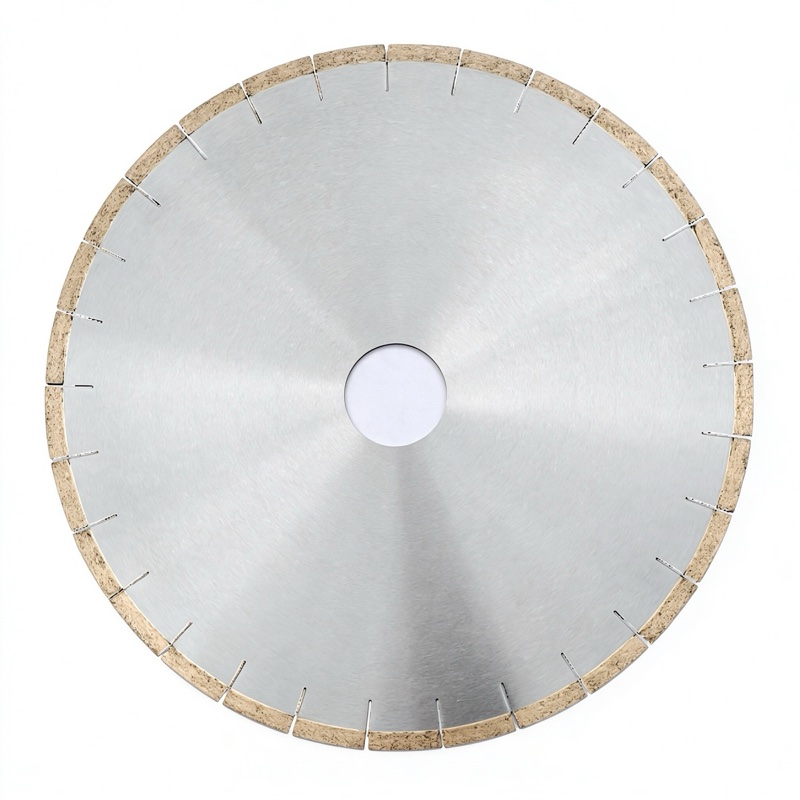
A diamond saw blade must spin so the cutting edge moves downward at the front of the cut, toward the material you are cutting. On handheld and bench saws that normally means the blade rotates clockwise when viewed from the cutting side, and the arrow printed on the blade must point in the direction of rotation. Mount the blade so the arrow matches the saw's spindle rotation, or the blade will not cut and can be dangerous.
Diamond segments cut by dragging across the material with the matrix edge leading. If the blade spins backward, the diamond segments are forced against the concrete in the wrong orientation: cut rate drops dramatically, the blade heats up, the bond wears unevenly, and the blade can kick or climb out of the cut. The arrow on the blade body is stamped at the factory to match the segment geometry, so it always points in the correct rotation direction.
Three quick checks confirm direction. First, read the arrow printed on the blade near the arbor hole; it must match the saw's spindle rotation arrow if the saw has one. Second, with the saw unplugged, spin the spindle by hand and note which way the flange rotates; the blade arrow must point the same way. Third, look at the teeth or segments: the leading face of each segment should be the one that hits the material first. On a standard right-side-mounted saw the blade spins counter-clockwise when viewed from the arbor side, which reads as clockwise from the cutting side.
| Check | Correct result |
|---|---|
| Arrow on blade | Points with spindle rotation |
| Hand spin test | Blade arrow matches rotation |
| Segment geometry | Leading face contacts material first |
| Sparks / dust | Thrown away from the operator |
Place the blade on the spindle with the printed side facing out, align the arbor hole with the shaft, and tighten the flange nut firmly. Never use a blade without the correct arbor size or bushing; a loose or offset blade runs out of true and can shatter. Check the flange faces are clean and flat, then spin the blade by hand before starting to confirm it is seated. Tighten to the torque the saw manufacturer specifies; an under-tightened blade slips, an over-tightened one can crack the arbor area.
The clearest sign is that the blade grinds rather than cuts, produces heavy friction heat, and throws sparks and dust toward the operator instead of forward. The cut edges may appear burned or glazed, and the segments wear flat with no visible cutting edge. If you see these signs, stop the saw, confirm the arrow direction against the spindle, and remount the blade. A quality blade such as a straight-slot diamond saw blade cuts fast and cool only when mounted in the correct direction.
Always disconnect power before changing or inspecting the blade. Wear eye protection and hearing protection, and use the guard supplied with the saw. Keep the blade sharp; a dull blade makes operators push harder, which increases kickback risk. Inspect the blade for cracks before each use, especially around the segments and the arbor hole, and replace any blade that shows damage. Follow the saw and blade manufacturer instructions for maximum RPM; never exceed the speed marked on the blade.
For clean, controlled cuts on concrete and masonry, pair your saw with a straight-slot diamond saw blade from a reliable diamond tool supplier.
Written and reviewed by JOY TECH — an SGS & BV audited, CE/RoHS certified diamond tools manufacturer founded in 2004, exporting to 50+ countries.
Our factory and QMS are audited by SGS and Bureau Veritas. Products meet CE/RoHS requirements and every piece is 100% inspected before packing.
Verified Certificates
