Average response time: under 24 hours
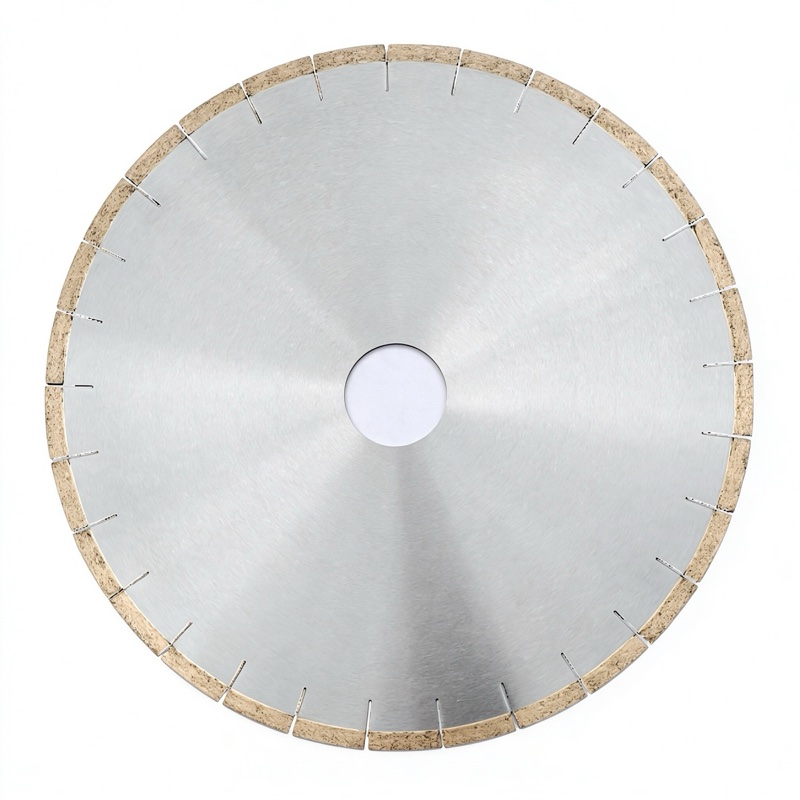
Replace a concrete saw blade when the remaining diamond segment drops below 5 mm, the cut speed falls by roughly a third, the blade glazes smooth, or the saw starts wandering. A new segment is usually 10 to 15 mm high and wears down evenly; once the weld seam under the segment is exposed, heat builds in the steel core and the blade can crack at the arbor. Measure segment height with a caliper at three spots around the rim, and retire the blade on a scheduled change instead of pushing through one more cut on a dying tool.
A diamond blade cuts because the metal bond around each abrasive diamond grit slowly wears away, exposing fresh sharp grit as the old grains dull. This is the design, not a defect. A healthy blade sheds worn diamonds and presents new ones automatically, which is why a good blade cuts steadily for hundreds of meters before it slows. Once the bond has worn almost down to the steel core, there is no metal left to expose new grit, and the blade stops cutting.
Uneven wear is the early warning. If one side of every segment is shorter, the blade is running out of square, the flange is dirty, or the saw feed is skewed. If segments wear faster on one end of the cut line, water is not reaching that side. Normal wear leaves a flat, uniform segment top; abnormal wear leaves hooked, grooved, or partially missing segments that predict segment loss.
When the time comes to swap, pick a blade whose bond matches the concrete you cut most often. Hard concrete needs a softer bond so the grit renews itself; soft, abrasive concrete needs a harder bond so the segment lasts. A general-purpose, laser-welded blade such as the JOY CA-LW laser-welded concrete blade covers most sidewalks, slabs, and footings and wears predictably, which makes replacement timing easier to forecast.
Inspect every blade at the start of the day and after every deep cut through reinforced concrete:
A quick finger test tells you a lot: run a finger sideways across the segment face. If it feels glassy and smooth instead of gritty, the blade is glazed and will not cut until you dress it on an abrasive block or retire it.
Treat 5 mm of remaining segment as the hard stop for most 10 mm new segments. Below that, the weld between segment and core is only a few millimeters from the cutting zone, and a hot core loses tension and wobbles. Manufacturers list a minimum segment height; if yours says 3 mm, use 5 mm anyway, because the last few millimeters wear much faster once the core heats up.
A 350 mm general-purpose blade on plain slab cuts roughly 400 to 700 running meters before it is done; on reinforced concrete with rebar, expect 200 to 400 meters. Track meters per blade on a small clipboard and the replacement date becomes a plan, not a surprise. Feed speed also betrays wear: a blade that used to walk at 0.8 meters per minute now stalls at 0.4, even with the same effort, and it is time to change.
Another quiet mistake is mixing new and worn segments in memory. Keep a log of segment height at install and at removal; after two or three blades you will know exactly how many meters you get from each bond type, and you can stock spares before the site runs out.
When you fit a fresh blade, torque the arbor nut to spec, run water at 4 to 8 liters per minute, and walk the saw at a steady feed. New blades need a short break-in: take two light passes before full depth so the segment seats evenly. Browse the full diamond saw blade range to match diameter and bond to your saw and your typical aggregate.
Keep one spare blade on every truck, and label worn blades with their meter count so you can learn from them. If you are unsure which bond fits your local aggregate, send a sample or describe the sand and cement mix through our contact page; matching the blade to the job is the cheapest way to extend segment life.
Written and reviewed by JOY TECH — an SGS & BV audited, CE/RoHS certified diamond tools manufacturer founded in 2004, exporting to 50+ countries.
Our factory and QMS are audited by SGS and Bureau Veritas. Products meet CE/RoHS requirements and every piece is 100% inspected before packing.
Verified Certificates
