Average response time: under 24 hours
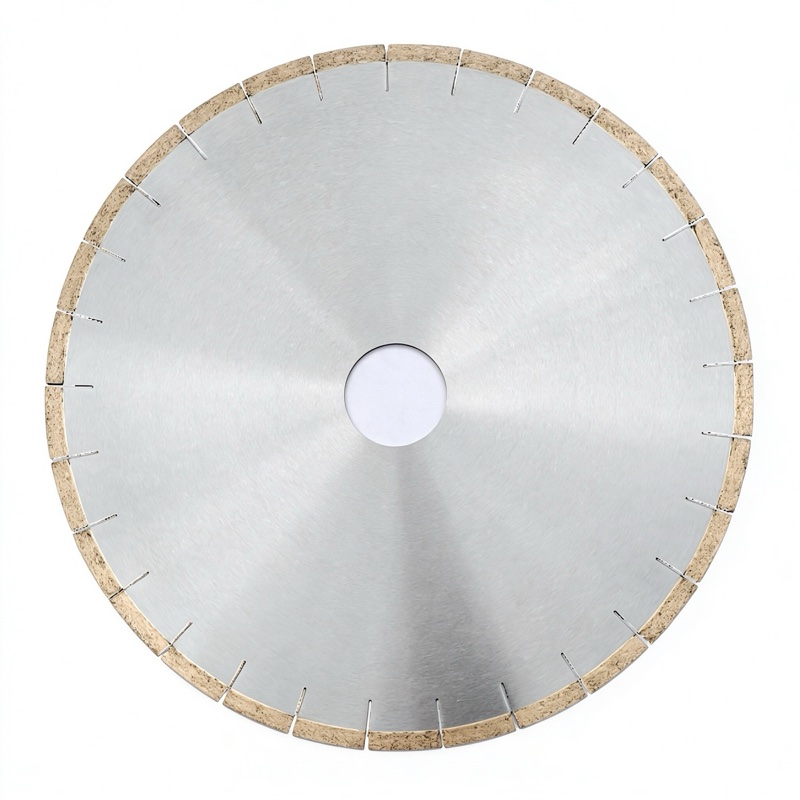
A concrete saw cuts to roughly one-third of the blade diameter in a single clean pass: a 350 mm blade reaches about 115-125 mm, a 450 mm blade about 150-160 mm, and a 500 mm blade about 170-190 mm. You cannot cut to the full blade radius because the blade collars, flanges, and saw body must clear the surface. For deeper cuts, cut from both sides or make multiple passes.
Many new operators assume a 350 mm blade can cut 175 mm deep. It cannot. The blade arbor nut and flange stick out 20-30 mm beyond the rim, and the saw guard or walk-behind chassis sits above the slab. Real usable depth is the distance from the surface to the deepest tooth position that does not hit the saw body. Manufacturers publish this figure in the spec sheet as maximum cutting depth; treat that number as the ceiling, not a target you hit on every job.
Wet cutting also limits depth slightly because the water feed must reach the teeth; shallow cuts run cooler and straighter than deep, struggling cuts.
Maximum depth: 25-40 mm. Typical use: expansion joints, shallow chasing for cable runs, window openings in thin block. You cannot cut a 100 mm slab with a 125 mm grinder; make several passes or use a larger saw.
Maximum depth: 100-125 mm. This is the standard saw for sidewalk repair, control joints, and small openings. A 350 mm diamond blade on a 4-stroke cut-off saw handles most residential slab work up to 125 mm thick.
Maximum depth: 145-190 mm. A 450 mm engine-driven saw reaches about 160 mm; a 500 mm blade reaches about 180 mm. For 200 mm industrial slabs you will need to cut from both sides or step down.
Maximum depth: 250-350 mm. These are used for bridge decks, highway pavement, and thick industrial floors. They are heavy, require a lift to move, and cut best with two operators.
Even when the saw can reach a given depth in one pass, it is often better to step down. Two shallow runs reduce blade load, keep the cut straight, and reduce the chance of the blade wandering or catching. As a rule of thumb: set depth to 80% of maximum for a single pass, or make two passes at 50% if the cut is long.
For control joints in a new slab, industry guidance is to cut to one-quarter of the slab thickness. A 150 mm slab gets a 38 mm joint, not a through cut. Early entry saws cut even shallower, 25-30 mm, within a few hours of finishing.
For a slab thicker than one pass can handle, mark the line on both faces. Cut to maximum depth from the top, then flip the material or access the underside and cut to depth from the back. The remaining core can be broken out with a hammer or removed with a smaller saw. This is how thick curbs, walls, and stair landings are cut cleanly.
Make a shallow full-depth cut with the largest blade, then run a smaller blade deeper along the same slot. The smaller blade clears the core and follows the straight reference already set. This works on walk-behind saws that accept multiple arbor sizes.
For openings deeper than 250 mm or inside rooms where a walk-behind saw cannot fit, drill a row of diamond core holes along the cut line and break out the web. It is slower but avoids trying to force a blade past its rated depth.
On hand-held cut-off saws, depth is set by adjusting the skid plate or pivot; on walk-behind saws it is set by a handwheel that lowers the blade guard. Always lock the setting before starting. Test depth on a scrap piece before the real cut, because the blade will flex slightly under load and cut a little shallower than the gauge shows.
For long cuts, re-check depth every 5-10 m. Blade wear reduces rim diameter by 1-2 mm per 100 hours of cutting, which lowers actual depth even if the gauge stays the same.
Deep cuts bind more easily. Pinched blades can kick back or shatter. Keep the cut line clear of rebar; if you hit steel, stop, locate it with a detector, and either cut the steel separately with an abrasive metal blade or route around it. Never force the blade deeper than the rated setting; the arbor, not the concrete, is the limiting factor.
Wear hearing protection, a visor, and cut-resistant gloves. Walk-behind saws throw water and slurry, so boots with steel toes and a waterproof apron are standard on wet jobs.
Use these as planning numbers; always confirm against the saw and blade spec sheet for the exact machine on site.
Written and reviewed by JOY TECH — an SGS & BV audited, CE/RoHS certified diamond tools manufacturer founded in 2004, exporting to 50+ countries.
Our factory and QMS are audited by SGS and Bureau Veritas. Products meet CE/RoHS requirements and every piece is 100% inspected before packing.
Verified Certificates
