Average response time: under 24 hours
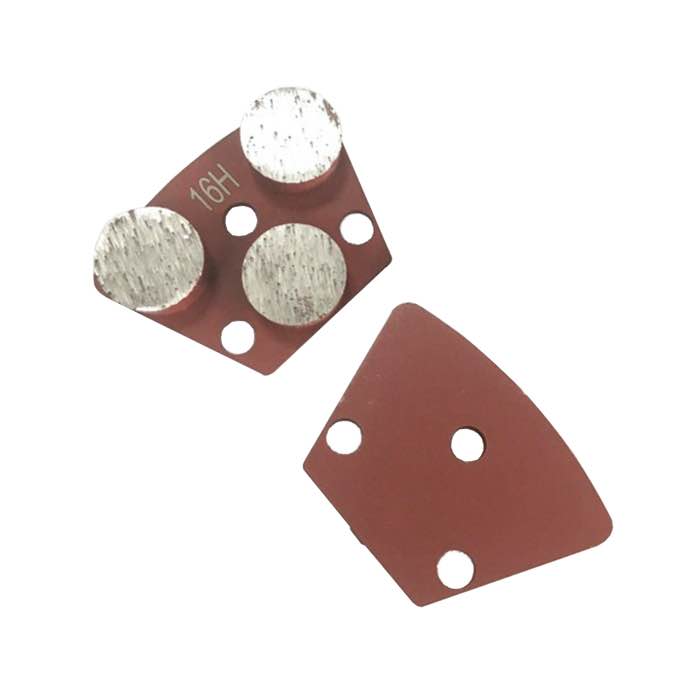
Concentration states how many carats of diamond sit in each cubic centimeter of the working crown, and it sets drill speed, crown life and grit exposure. For bits drilling concrete, masonry and stone 25 to 350 mm, bands run 20 to 80; the wrong band shows up as glazing, early pull-out, or 20 to 40 percent less depth per crown.
This guide serves factories, distributors and contractor procurement teams choosing core bits for hand-held and rig-mounted drills. It pairs materials with concentration and bond grades, reads wear on the same machine, and ends with stocking ratios and batch checks.
Concentration is the diamond volume share in the working layer, where full loading near 100 equals about one carat per cubic centimeter. Practical bands run 20, 30, 40, 50, 60, 70 and 80. Low concentration spaces grit wider apart and bites soft material faster; high concentration carries more edges per area, leaves a smoother wall and reserves more life, but feeds slower when slurry loads.
It does not act alone. Core-work mesh runs 30/40, 40/50 and 50/60, and bond hardness plus crown shape set the cut. A high-concentration soft-bond bit can still pull grit early; a low-concentration hard-bond bit can still glaze.
The table groups targets from soft brick to hard reinforced concrete, strength 15 to 45 MPa. Bond labels are relative: soft bond releases grit fast on hard bases, hard bond holds grit longer on soft bases.
| Material group | Base strength | Concentration | Bond |
|---|---|---|---|
| Brick, blockwork, limestone | 15–20 MPa, soft binder | 20–30 | Soft to medium |
| Medium concrete, plaster, sand | 20–30 MPa, quartz, no rebar | 30–45 | Medium |
| Hard concrete, precast, gravel | 30–40 MPa, minor rebar | 45–60 | Medium to hard |
| Reinforced concrete, abrasive stone | 35–45 MPa, rebar 10–20 mm | 60–80 | Hard, coarse mesh |
Bit diameter tilts the choice too. Hand-held bits 25 to 76 mm run 300 to 1,200 rpm and favor lower bands; rig bits 76 to 350 mm run 150 to 500 rpm and carry higher concentration for deep cores.
Low concentration spreads fewer crystals over the face, each carrying a higher load; feed is free on soft material, but wear accelerates on abrasive concrete. High concentration shares the load across more edges, the wall stays smooth and life extends, but feed drops 10 to 20 percent if slurry cannot escape.
Record the tradeoff per crown: depth in linear meters, diameter, material, water flow 3 to 8 L/min. On 25 to 30 MPa medium concrete a 30–45 crown drills 120 to 200 linear meters; the 45–60 band reaches 180 to 300 m. Rebar cuts 40 to 60 percent off the medium figures.
Keep the rig, rpm, water flow and material fixed; concentration alone changes wear. The list below reads wear after 50 m of depth on the same 30 MPa floor, to spot a mismatched band early.
Current draw and sound are the same-machine signals. A crown needing 15 to 25 percent more push than the matched band has glazed or run out of grit; pull it and inspect instead of forcing feed. Overload above 15 to 20 percent points to a dull crown, not a weak motor.
Self-sharpening means the bond wears just fast enough to release worn grit and expose fresh crystals. On crowns this keeps the face rough and speckled; check under 300 to 500 lux oblique light after every 20 to 30 m of depth. A flat shiny face has stopped cycling.
Three faults need separate fixes. Glazing: shiny smooth face, no pockets, no cut; bond too hard, correct with one grade softer. Pull-out: missing pockets, loose diamond in slurry, fast height loss; raise one band or harden the bond. Side wear, one flank lower, points to arbor runout or flange seating.
Compatibility starts with arbor thread and flange: common threads are 1/2 inch, 5/8–11, M16 and M22, and the crown must match drill class and rpm. On arrival check: label concentration matches the order; crown height within ±0.5 mm; mesh stamped legibly; no missing segment or cracked tube.
Keep a short lot record: supplier, lot number, material, depth per crown, fault note. Two to three jobs settle the right band for a repeat customer. If a new supplier quotes the same concentration 10 to 20 percent lower, check mesh and crown height first.
Before approval, line up five facts: base strength 15 to 45 MPa, aggregate abrasiveness and rebar, diameter 25 to 350 mm, rpm band wet or dry. Soft base plus hand-held drill points to 20–30; medium concrete to 30–45; hard precast to 45–60; reinforced concrete to 60–80.
Confirm the bond follows the inverse rule, mesh is coarse for rebar sections, water flow holds 3 to 8 L/min, and depth-per-crown figures come from the last lot, not the catalog. Approved crowns give predictable depth per unit and a stock line that turns without tying capital in slow-moving SKUs.
Written and reviewed by JOY TECH — an SGS & BV audited, CE/RoHS certified diamond tools manufacturer founded in 2004, exporting to 50+ countries.
Our factory and QMS are audited by SGS and Bureau Veritas. Products meet CE/RoHS requirements and every piece is 100% inspected before packing.
Verified Certificates
