Average response time: under 24 hours
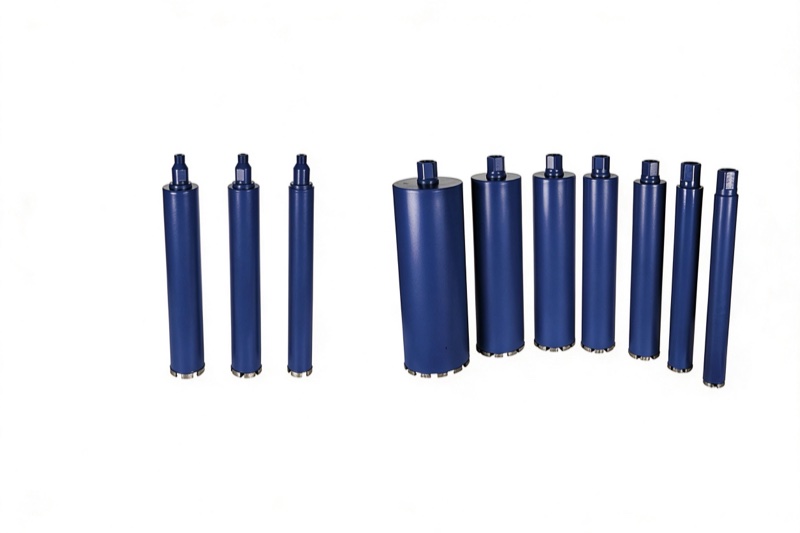
Penetrating a poured or block foundation wall for a sewer, water line, or HVAC sleeve requires a diamond core drill with a segmented barrel sized 1-2 inches larger than the pipe. Scan for rebar first, drill from the interior side outward, use wet cooling, and seal the annular gap with a hydraulic cement or rubber boot once the pipe is in. Skipping any of these steps risks cutting structural steel, flooding the crawl space, or creating a water leak path.
Foundation walls are not ordinary concrete. Poured foundations are usually 2500-4000 psi reinforced with vertical rebar at 16-24 inch spacing and horizontal bars near the top and footing. Block foundations are hollow cells filled with grout and rebar at intervals. Drilling blind into either is a good way to hit steel, nick a water line, or breach a waterproofing membrane on the exterior face.
Size the core hole for the pipe plus sleeve. A 4-inch sewer line needs a 6-inch core so a sleeve, insulation, and sealing boot all fit. A 1-inch water line can use a 2-1/2 to 3 inch core. Using a diamond core drill bit instead of a hole saw keeps the hole round and avoids cracking the wall as you break through the far side.
Locate the penetration on the interior elevation drawing. Rent a rebar/UTV scanner or hire a scanning contractor if the wall is structural. Mark any rebar, post-tension cable, or embedded pipe. If your chosen route crosses a rebar line, shift the hole a minimum of 4 inches; in load-bearing walls, consult a structural engineer before cutting near the footing or top of wall.
Plan the water and mess. Wet coring inside a basement means a slurry mess. Use a ring dam around the hole, a wet/dry vacuum, and a pump-fed water system with a water valve adapter so you can shut water off mid-cut. If the exterior side is unreachable, drill from the inside and let the core drop out into a trench or pit.
| Wall type | Bit | RPM | Cooling |
|---|---|---|---|
| Poured concrete (3000-4000 psi) | Turbo segmented diamond core | 400-800 | Wet |
| Block (CMU) unfilled | Segmented or dry core | 800-1400 | Dry with vacuum |
| Grouted block with rebar | Turbo segmented wet | 400-800 | Wet |
| Stone or rubble foundation | Soft-bond segmented | 500-900 | Wet |
For holes over 6 inches, use a rig-mounted core barrel rather than a handheld drill. Handheld coring a 6-inch wall pushes 100-plus Newton-meters of torque and can twist your wrist when the bit breaks through. A rig bolted to the wall with a vacuum stand or anchor keeps the bore perpendicular and safe. Use an exchange adapter to switch barrel diameters without re-setting the rig.
Start the cut slowly to center the bit. Feed steadily, never force. When the bit reaches mid-depth, pull back to flush cuttings. As you near the exterior face, reduce feed pressure so the concrete core does not break out a chunk of the waterproof membrane. Once the core drops, ream any rough edges with a rasp.
Slide the sleeve through, center it, and seal both sides. Interior side: backer rod plus polyurethane caulk. Exterior side: hydraulic cement or a rubber boot flange rated for buried service. If the wall is below the water table, use a flexible waterproofing membrane lapped over the boot, not a hard caulk.
Foundation walls carry vertical and lateral loads. Any penetration wider than 6 inches, or any cut within 12 inches of a corner, footing, or wall top, should be reviewed by a structural engineer before drilling. Many building departments require a permit for sewer and water penetrations through the foundation, and an inspection after the pipe is set but before the hole is sealed. Skipping the permit can delay closing when the house is sold.
If the wall has a drain tile or waterproofing membrane on the exterior, plan the cut so the new boot does not overlap an existing membrane seam. If it must, strip back the membrane, install the boot, and re-lap the membrane over the flange. Caulk alone around a buried penetration will not survive hydrostatic pressure; a proper boot and membrane lap will.
Once the cut finishes, the cylindrical core of concrete may be stuck in the barrel. Tap the barrel lightly with a rubber mallet from the side; the core usually drops out. If it binds, drive a drift pin through the water hole or use a screw extractor. Do not pry the core out with a screwdriver from the cutting edge, which chips the new segments. Save the core if you need to patch a non-penetrating test hole; it fits the bore exactly.
Small penetrations (under 3 inches) in plain concrete are DIY-friendly with a rented core rig. Larger sleeves or walls with rebar and unknown utilities are best left to a licensed coring contractor.
Core a 6-inch hole to leave room for a 4-inch sleeve, sealant, and slope. A tight fit makes future pipe replacement nearly impossible.
Stop, retract, and rescan. A turbo segmented bit can cut light rebar, but heavy #5 bars will stall the rig and damage segments. Shift the hole.
Yes. A foundation wall penetration is a hydrostatic path. Seal the interior with caulk and the exterior with a boot or hydraulic cement, especially below grade.
Drilling a foundation wall is a one-shot operation that demands scanning, the right segmented core bit, wet cooling, and careful sealing. Done correctly, the sleeve lasts the life of the building; done poorly, it becomes a chronic leak and structural weak point.
Written and reviewed by JOY TECH — an SGS & BV audited, CE/RoHS certified diamond tools manufacturer founded in 2004, exporting to 50+ countries.
Our factory and QMS are audited by SGS and Bureau Veritas. Products meet CE/RoHS requirements and every piece is 100% inspected before packing.
Verified Certificates
