Average response time: under 24 hours
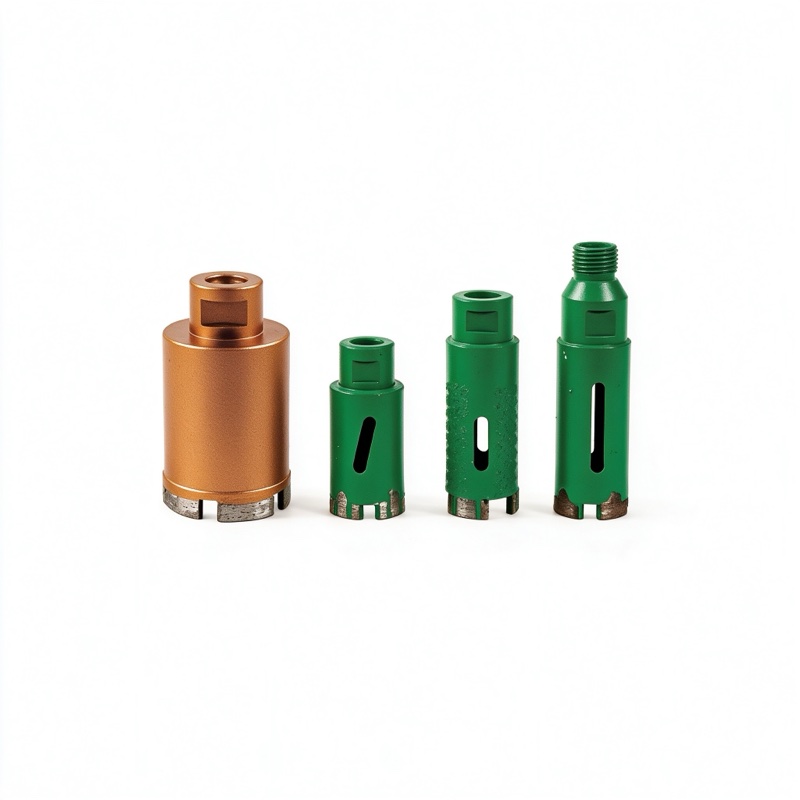
Sandstone and limestone are soft, porous sedimentary rocks that cut fast but clog and glaze ordinary diamond bits. Use a hard-bond segmented core bit or a diamond stone hole saw with a wide gullet, moderate RPM, and wet cooling to flush sand out of the cut. Avoid hard-bond bits intended for granite; they will not cut these rocks efficiently, and avoid soft-bond bits that wear away in minutes.
Granite is hard and dense, so diamond bits need a soft bond that wears quickly to expose fresh grit. Sandstone and limestone are the opposite: they are soft, abrasive, and often porous. A soft bond designed for granite wears away almost instantly on sandstone, dumping diamond grit and collapsing the segment. A hard bond, designed to resist wear, lasts far longer on soft sedimentary stone.
Both rocks also have natural bedding planes and fossils that cause chipping when the bit breaks through. Limestone in particular can contain flint nodules, which are hard and abrasive and wear segments unpredictably. Expect slower, uneven cuts in fossiliferous limestone; the bit is fighting hard spots in a soft matrix.
| Stone | Bond | Rim style | Cooling |
|---|---|---|---|
| Soft sandstone | Hard | Turbo segmented | Wet preferred |
| Hard sandstone (gritty) | Medium-hard | Segmented wide gullet | Wet |
| Limestone (dense) | Medium-hard | Continuous or turbo | Wet |
| Fossiliferous limestone | Medium | Turbo segmented | Wet |
| Travertine | Hard | Continuous rim | Wet, gentle feed |
Avoid using a universal or granite-rated bit on sandstone. It will either glaze (if too hard) or wear instantly (if too soft). If you only drill these rocks occasionally, a multi-purpose hard-bond segment is the safest compromise; for production work, invest in a sedimentary-stone-specific barrel from the same range as segmented diamond core drills.
Start at moderate RPM, 800-1500 for holes under 2 inches, dropping to 400-800 for larger diameters. Feed gently. Sandstone cuts fast, and pressing hard will bury the segment in the rock and clog the gullet with sand. Pull the bit back every 10-15 seconds to let water flush the cuttings out. If you hear a smooth, even crunch, the bit is cutting well; a high-pitched whine means the bit is glazing.
Keep the cut wet. Wet drilling flushes sand slurry, keeps the segments from loading, and prevents silica dust. Dry drilling sandstone creates enormous amounts of fine respirable dust and quickly clogs the bit. On a facade or wall, use a shroud and vacuum; on a floor or bench, use a ring dam.
Wet drilling is strongly preferred on sandstone and limestone. The rock is porous, and dry drilling pulls fine dust deep into the surface, which is hard to wipe off and leaves a dusty ring around the hole. Wet cutting flushes the slurry away as it forms and keeps the stone looking clean. If you must drill dry indoors, use a vacuum shroud and a damp rag to wipe the surface immediately after the cut.
On historic or dressed limestone facades, water runoff can carry dissolved minerals down the face and stain the stone. Use a ring dam, a wet/dry vacuum, and a squeegee to keep the water contained. Never let slurry run down the facade; dried cement paste etches limestone and is almost impossible to remove without repointing.
Glazing happens when the bond is too hard and the diamond never releases. The barrel spins, heats up, and polishes smooth. Fix it by cutting a scrap of concrete or soft brick for 10 seconds to open the segments. Clogging happens when sand packs into the gullet; pull the bit out, flush with water, and resume at lighter feed. Premature wear means the bond is too soft for the stone and the segments are dropping off before the diamond wears out; switch to a harder bond.
Sedimentary stone slurry is fine and gritty. Rinse the barrel immediately after use, because dried sand acts like sandpaper on the shank thread and makes the bit hard to remove from the drill. Store the bit upright in a rack so the thin steel barrel does not bend. Do not stack other tools on top; a bent barrel cuts oval holes and wears segments on one side.
A granite-rated soft-bond bit will wear too fast on sandstone. Use a hard-bond bit designed for soft, abrasive stone instead.
No, it cuts fast. The challenge is controlling dust, flushing sand, and matching the bond so the bit does not wear out in minutes.
Yes. Limestone slurry is fine and dusty, and dry drilling clogs the segments. Wet cutting is faster and safer.
800-1500 RPM for small holes, 400-800 for holes over 3 inches. Higher RPM risks heat and clogging in porous stone.
Sandstone and limestone reward a bit chosen for soft, abrasive stone rather than a one-size-fits-all diamond barrel. Match the bond, keep the cut wet, and pull back to flush, and you will get clean, fast holes without clogging or premature wear.
Written and reviewed by JOY TECH — an SGS & BV audited, CE/RoHS certified diamond tools manufacturer founded in 2004, exporting to 50+ countries.
Our factory and QMS are audited by SGS and Bureau Veritas. Products meet CE/RoHS requirements and every piece is 100% inspected before packing.
Verified Certificates
