Average response time: under 24 hours
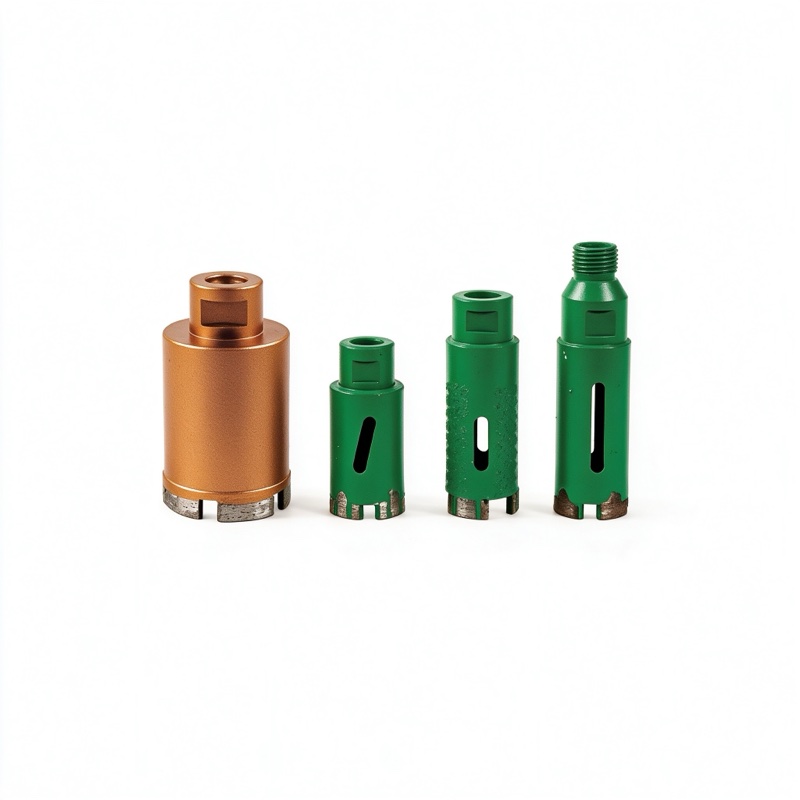
To drill through natural stone veneer or cultured stone cladding without cracking it, use a thin-walled continuous-rim diamond core bit running wet at 1000-1800 RPM, starting at a 45-degree angle to avoid walking. A continuous-rim diamond stone hole saw cuts clean 10-35 mm anchor holes through granite, limestone, slate, and manufactured veneer. Veneer is thin (20-40 mm) and backed by mortar, so drill slowly, keep water flowing, and back the panel with a wooden block on breakthrough to prevent spalling. Never use a hammer drill on stone veneer; the impact cracks the face.
Natural stone veneer is cut thin (20-40 mm) from granite, limestone, sandstone, or slate, and adhered to a wall with mortar. Manufactured veneer is a concrete-based product colored to look like stone. Both are thin, brittle, and backed by a soft mortar bed. A hammer drill's impact fractures the stone face, sending a crack running across the panel. A regular masonry bit wanders and chips the edge. Only a sharp, continuously cutting diamond bit produces a clean hole.
Veneer is also a finish surface. A chipped hole on a visible wall is visible forever. Take the time to mask the area, mark the center, and drill from the outside face, not from behind. Drilling from the back spalls the front face.
Veneer penetrations are mostly for wall light fixtures, security cameras, rail brackets, hose bibs, and electrical outlets. The hole must pass through the veneer and the mortar bed into the backup wall (concrete, block, or wood studs). Common anchor diameters are 10-16 mm; larger penetrations for conduits run 25-50 mm.
| Application | Hole diameter | Bit type | RPM wet |
|---|---|---|---|
| Wall light / camera | 10-12 mm | Continuous rim core | 1500-2000 |
| Rail bracket / hose bib | 12-16 mm | Continuous rim core | 1200-1800 |
| Electrical outlet box | 25-35 mm | Continuous rim hole saw | 1000-1500 |
| Conduit through wall | 35-50 mm | Continuous rim hole saw | 800-1200 |
Mark the center with a pencil and apply masking tape to keep the bit from skittering. Tilt the drill to 45 degrees and nick the edge of the circle with the diamond rim. Slowly bring the drill upright. Feed with light pressure; the bit should cut without grinding. Keep water flowing through a drip bottle or a water valve adapter to cool the rim and suppress dust.
When the bit reaches the mortar bed behind the veneer, the sound changes and feed gets easier. Continue through the mortar into the backup wall. If the backup is concrete or block, the same diamond bit will cut it; if the backup is wood studs, switch to a wood bit once through the masonry to avoid dulling the diamond on wood.
On breakthrough, reduce feed to a feather. The veneer's back edge spalls easily, so a piece of plywood taped to the back of the wall (if accessible) or a slow, light feed prevents chips. For an exterior wall, you cannot access the back, so extra-slow breakthrough is the only protection.
Once the hole is drilled, choose the anchor carefully. A wedge anchor expanded against the veneer can split the thin stone. Use a sleeve anchor set into the backup wall, with a washer that distributes load across the veneer face. For heavy brackets, use a through-bolt with a backing plate on the interior side, so the veneer carries no tension load on its own.
Seal the hole after mounting. Exterior veneer penetrations are entry points for water. Run a bead of silicone around the fixture base or flange, and caulk the annulus. A long-shank hole saw reaches through thick veneer plus mortar plus backup without the chuck touching the stone face.
Using a hammer drill is the number one mistake on stone veneer. The impact cracks the panel, and the crack is invisible until it propagates months later. Running the bit dry glazes the rim and burns the stone edge, leaving a white hazy ring. Pressing too hard fractures the veneer around the hole. If the bit slows, back off, add water, and let the diamonds work.
No. Masonry bits wander and chip the face. Use a continuous-rim diamond stone hole saw, wet.
Rotary only. Hammer mode cracks veneer. Let the diamond rim cut without impact.
Use a drip bottle rather than a hose, and wipe slurry off the stone immediately with a damp sponge. Some limestone and sandstone blotch when wet; test on a hidden spot first.
A sleeve or expansion anchor set into the backup wall, with a wide washer on the veneer face. Avoid wedge anchors that expand directly against the stone.
Drilling stone veneer is a precision wet job. Use a continuous-rim diamond stone hole saw, start at an angle, feed gently, and seal the penetration. The fixture will mount cleanly without cracking the cladding.
Written and reviewed by JOY TECH — an SGS & BV audited, CE/RoHS certified diamond tools manufacturer founded in 2004, exporting to 50+ countries.
Our factory and QMS are audited by SGS and Bureau Veritas. Products meet CE/RoHS requirements and every piece is 100% inspected before packing.
Verified Certificates
