If a core bit jams in concrete, immediately release feed pressure and switch the drill to reverse while gently pulling. Do not keep pushing forward; that wedges the barrel deeper. Sticking usually comes from losing alignment, drilling too deep without clearing the core, or hitting rebar that locks the segment. Use the rig stand, maintain water, and withdraw in short, rocking motions.
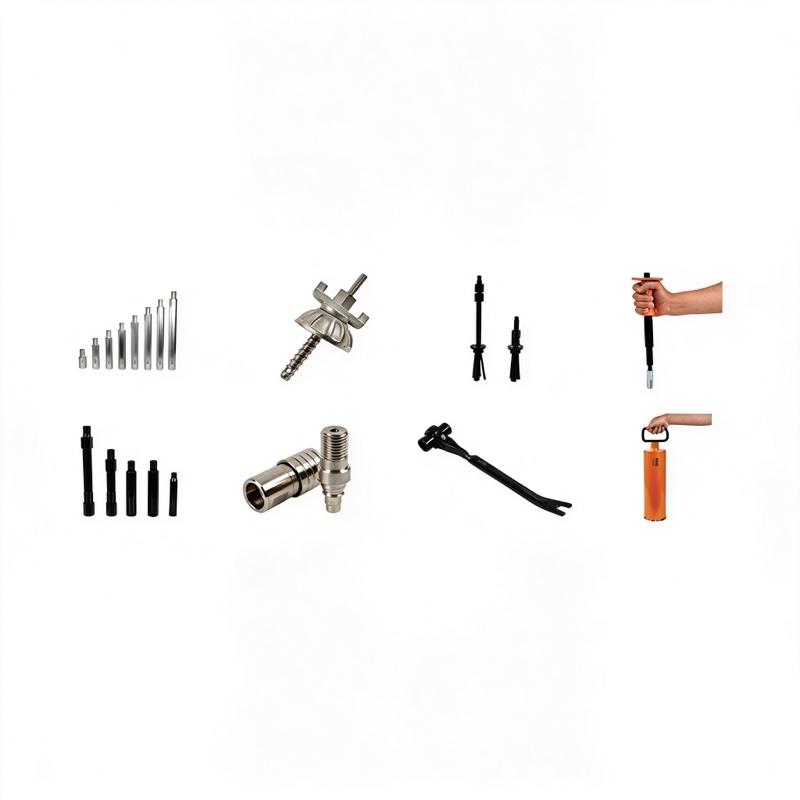
The most common cause is the concrete core inside the barrel jamming against the side wall, especially in deep holes or cracked slabs. Hitting rebar sideways can wedge the segments, and an unguided hand-held drill wanders, tilting the barrel so it binds. Keeping proper coring accessories like a guide rig in place prevents most jams. When removal fails, an adapter lets you switch tools without damaging the barrel.
Use a drill stand or vacuum rig for holes over 75 mm. Pull the bit out every 50-100 mm to clear the core and swarf. Keep water flowing; dry drilling generates heat that welds the barrel to the hole wall. Confirm the hole is straight from the start so the barrel does not bind on a wandering wall.
If reverse does not free it, do not apply extreme leverage that snaps the shank. Loosen around the jam by carefully chipping concrete near the segment, or drill relief holes on either side. As a last resort, cut the barrel with a reciprocating saw around the segment.
Withdraw the bit every 50-100 mm in deep coring to break and clear the core inside the barrel. A long core that jams against the hole wall is the number-one cause of stuck barrels. Keep water flowing to lubricate the barrel wall and flush swarf before it packs solid.
If reverse does not free the bit, do not crank the drill to maximum torque; you will snap the shank and leave a barrel embedded in the wall. Release the rig, work around the jam with relief holes, and chip carefully. Patience beats brute force here.
A properly anchored rig resists twist and reduces binding. Anchor the stand to the slab before deep holes so the bit is guided, not freehand. Guided holes bind far less than hand-held ones.
Stop forward feed, reverse gently, flush water. Guided rigs and periodic core-clearing prevent jams.
When the bit jams: release forward feed, switch to reverse, pull gently. If it holds, flush water and rock the barrel slightly. Do not crank maximum torque; you will snap the shank. As a last resort, chip concrete away from the segment or drill relief holes alongside.
Use a rig stand, withdraw every 50-100 mm to clear the core, and keep water flowing. Guided, cleared holes almost never bind; hand-held deep holes do.
If reverse does not free the bit, stop. Cranking max torque snaps the shank and leaves a barrel embedded in the wall. Chip concrete away from the segment, drill relief holes, and be patient. Rig-anchored guided holes bind far less than hand-held ones.
An anchored rig resists twist and reduces binding. Anchor to the slab before deep holes. Guided holes rarely jam; hand-held deep holes often do.
Withdraw every 50-100 mm to break and clear the core inside the barrel. A long jammed core is the most common cause of a stuck barrel in deep holes.
On a jam, switch to reverse at low speed and pull. Do not crank torque; snapped shanks are expensive. Flush water and rock slightly to free the barrel.
Anchor the rig stand to the slab before deep holes. A guided, anchored bit resists twist and binds far less than a hand-held one. Guided holes rarely jam; freehand deep holes often do.
A: No. Hammering distorts the barrel and damages the spindle. Use reverse and rocking.
A: Rebar can catch segments; slow feed and water prevent binding when steel is detected.
A: Yes, longer barrels flex and bind; use a rig and withdraw periodically to clear cores.
A stuck core bit is solved by stopping forward pressure, reversing gently, and flushing water. Prevention with a guide rig and regular core clearing is far easier. Contact JOY TECH for rigid core barrels, stands, and adapters that reduce jams.
