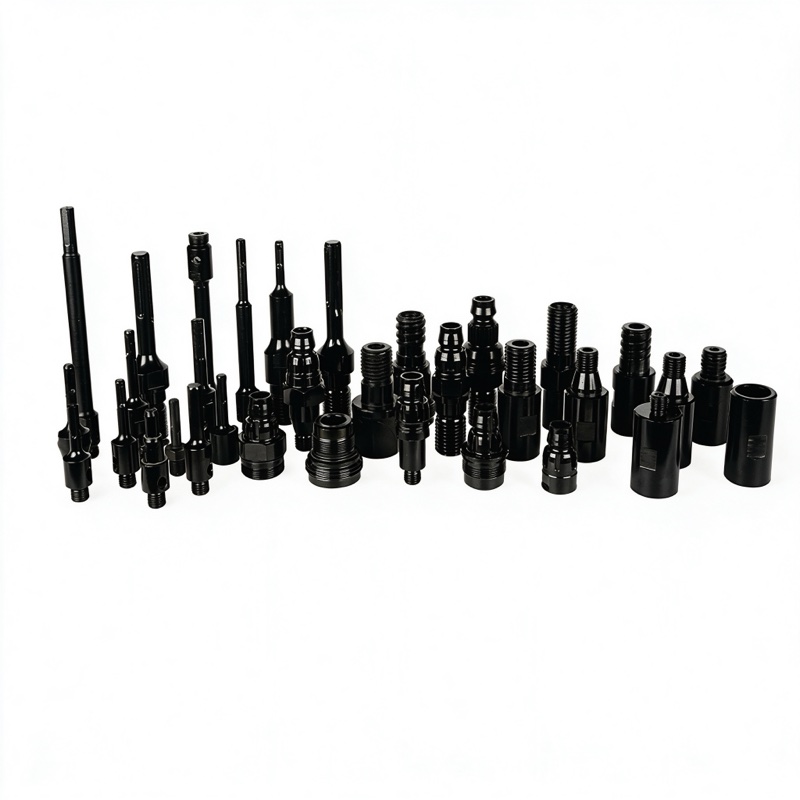
Core bits connect to your drill spindle by standardized threads. 5/8-11 UNC is the smaller thread used on hand-held drills and small bits up to about 160 mm. 1-1/4-7 UNC is the larger, stiffer thread used on rig-mounted core drills for holes over 150 mm and deeper drilling. They are not compatible directly; you need a thread exchange adapter to mix between machines and bits.
In 5/8-11, the 5/8 inch is the thread diameter and 11 is the threads per inch. In 1-1/4-7, the 1-1/4 inch diameter is coarser at 7 threads per inch, giving more strength for torque. Our diamond core drill bits are offered in both threads to match regional rig standards.
| Thread | Typical use | Bit size range |
|---|---|---|
| 5/8-11 UNC | Hand-held drills, small rigs | 25-160 mm |
| 1-1/4-7 UNC | Rig-mounted core drills | 100-500 mm |
| M male / F female | Extensions and adapters | Both |
Bits and extensions come with male or female threads. Always confirm which end your spindle has. Mismatched male-to-male or female-to-female connections need the correct coupling. Threads are usually right-hand, but some small dry bits use left-hand threads to self-tighten; check before forcing.
An adapter between 5/8-11 and 1-1/4-7 is fine for occasional use, but it adds a weak point. For daily production coring, buy bits in the thread your machine already uses rather than relying on adapters. Never cross-thread or force a tight connection; clean threads with a wire brush and hand-start every time.
Never cross-thread a core bit. Clean the spindle and bit threads with a wire brush, start them by hand turning two or three turns before using the wrench. Cross-threaded connections bind, seize, and can snap under torque. A minute spent threading by hand saves a seized bit and a damaged spindle.
Some small dry core bits use left-hand threads so the rotation self-tightens. If your bit will not turn on clockwise, check the marking before forcing it. Mixing thread hands is a common cause of stripped connections on job sites.
When adding extension rods, confirm each coupling is fully seated before drilling. Loose couplings back off under vibration and can unscrew mid-hole. Hand-tighten with the wrench and check after the first few centimeters of depth.
Match 5/8-11 to hand rigs and 1-1/4-7 to big rigs. Adapters bridge gaps but are a weak point on heavy torque.
| Thread | Diameter | Threads/in | Typical rig |
|---|---|---|---|
| 5/8-11 | 15.9 mm | 11 | Hand-held drills |
| 1-1/4-7 | 31.8 mm | 7 | Rig coring machines |
Adapters exist between the two, but they add length and a potential weak point. Buy bits in the thread your rig uses for daily work; keep one adapter only for occasional cross-use.
Wire-brush both threads before every connection. Concrete slurry packed in threads causes false tightness that backs off under torque. Hand-start every bit to avoid cross-threading.
Never run the drill to start threading. Clean the threads, hand-turn the bit on two or three turns, then wrench-tighten. Cross-threaded connections seize and snap. This ten-second habit prevents most on-site thread failures.
Confirm every coupling seats fully. Vibration can back loose connections off. Hand-start and wrench-tighten, then check after the first centimeters of depth.
Some small dry bits use left-hand threads to self-tighten. If it will not turn clockwise, check the marking before forcing. Mixing thread hands strips connections fast.
Brush threads clean before every connection. Slurry causes false tightness that backs off under torque. Hand-start every bit to avoid cross-threading the spindle.
Most rig threads are right-hand. Some small dry bits use left-hand threads to self-tighten. If a bit will not run on clockwise, check the marking before forcing the connection. Cross-threading is a common and avoidable field error.
Keep one exchange adapter on the truck for occasional cross-use, but buy bits in your rig's native thread for daily work. Adapters add length and a weak point under high torque; they are a bridge, not a solution.
When in doubt about which thread your machine uses, check the spindle end or the original bit before ordering. A wrong thread discovered on site costs a day. Keep the adapter, but size the job bits to your actual equipment.
A: Yes, with the correct male-female adapter, but avoid it for large-diameter deep holes where torque is high.
A: Dirt, damaged threads, or the wrong hand. Clean and inspect; never force cross-threads.
A: Some European rigs use 1/2 gas or other standards; confirm your spindle before ordering.
Match the core bit thread to your spindle: 5/8-11 for hand-held work, 1-1/4-7 for rig-mounted deep coring. Adapters bridge the gap but are a compromise. Contact JOY TECH for bits and exchange adapters in both thread standards.
