Average response time: under 24 hours
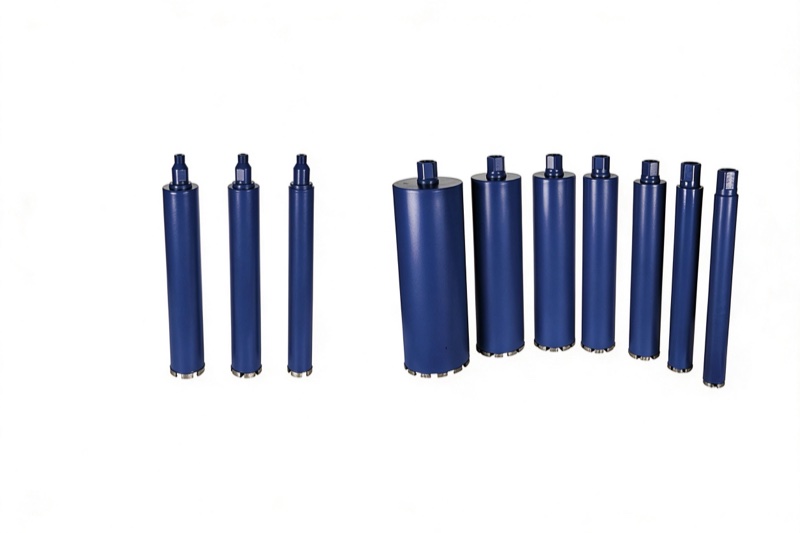
Choose a core drill bit diameter that is slightly larger than what passes through the hole. For pipe, conduit and cable, allow clearance of 5 to 10mm beyond the pipe outside diameter; for anchors, use the bit size the anchor specification requires, which is usually 1 to 2mm larger than the bolt. Common sizes are 16, 20, 25, 32, 40, 50, 65, 80, 100, 125, 150 and 200mm. Measure the object that must fit, add clearance, then pick the nearest standard bit size. For the right tooling on this job, see threaded core drill bits.
A core bit cuts the outside diameter of the hole. A 100mm bit leaves a 100mm hole and removes a 100mm plug. The inside diameter of the bit is smaller by the wall thickness, which matters only if you are cutting a precise plug to keep. For installation holes, always think in outside diameter and clearance: the pipe, sleeve or conduit must pass through freely, with room for sealant if required.
When in doubt, size up one standard step: a slightly large hole is easy to fill with mortar or caulk, while a tight hole means chipping and rework.
Core bits cut to the depth of their barrel length, commonly 350 to 450mm. If you must drill deeper than one barrel, use an extension. Before drilling in structural concrete, check for rebar with a scanner: a diamond core bit will cut through rebar, but it slows dramatically and may damage the bit if the steel is thick. In rebar-heavy walls, consider a smaller pilot hole or a rebar-cutter bit. Always drill perpendicular to the surface so the hole stays round and the plug releases cleanly.
Match the bit to the machine: small bits up to 32mm run on a rotary hammer or handheld drill, mid sizes 40 to 80mm run on a handheld core rig, and 100mm and above need a stand-mounted or rig-mounted core drill for control and safety. Use wet core bits for hard concrete and deep holes, and dry bits for shallow holes in block and soft concrete. The segment core drill series covers the common trade range.
A: Use a 60mm bit for a snug fit, or 65mm if you need room for sealant or insulation around the pipe.
A: Yes, diamond core bits cut rebar, but slowly and with extra stress. Scan first, and slow the feed when the bit hits steel.
A: Handheld core bits commonly start at 16mm. Below that, use a standard twist or masonry drill instead of a core bit.
Choosing a core bit is simple once you think in outside diameter plus clearance. Measure what passes through, add 5 to 15mm depending on the use, and pick the nearest standard size. Match the bit to the machine and the concrete hardness, and every hole comes out clean, round and ready.
Written and reviewed by JOY TECH — an SGS & BV audited, CE/RoHS certified diamond tools manufacturer founded in 2004, exporting to 50+ countries.
Our factory and QMS are audited by SGS and Bureau Veritas. Products meet CE/RoHS requirements and every piece is 100% inspected before packing.
Verified Certificates
