Average response time: under 24 hours
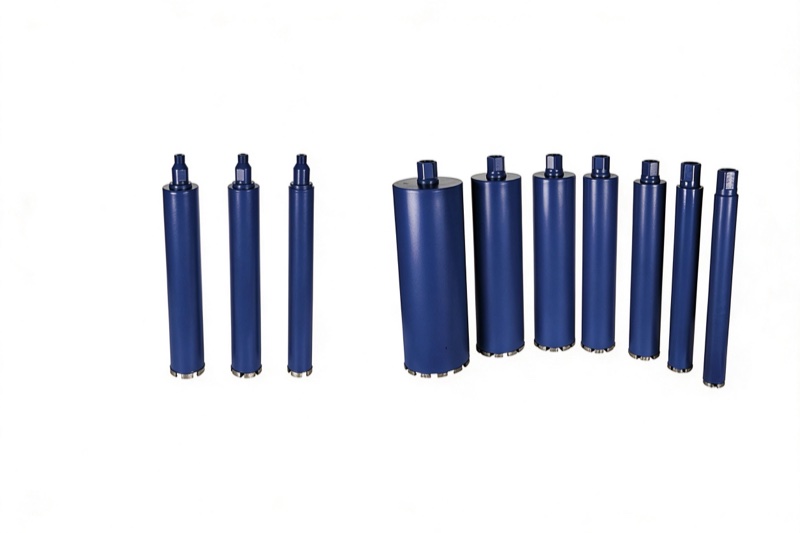
Choose a core drill bit diameter by measuring the pipe, conduit, or anchor that must pass through the hole, then add clearance: about 4-6 mm for pipes and conduits, and match the anchor manufacturer's specified hole size exactly for expansion anchors. Core bits are sized by outside diameter, so the hole is slightly larger than the bit label. Common sizes run from 20 mm to 350 mm for handheld and stand-mounted coring.
The hole must clear the largest thing passing through it. Measure the outside diameter of the pipe or conduit with a caliper, and add clearance for tolerance, insulation, and movement: 4-6 mm is typical for plumbing, 2-4 mm for electrical conduits. For anchors, never guess: expansion anchors specify an exact hole diameter and depth in the manufacturer's data sheet, and drilling oversize can make the anchor fail. For bolts with sleeves, the hole diameter is usually the bolt diameter plus 2-4 mm.
Core bits are sold by outside diameter, and the cut hole matches that diameter. A 100 mm bit cuts a 100 mm hole. Metric sizes (mm) are standard on most new equipment; imperial sizes (inches) still appear on older kits: 1 in = 25.4 mm, so a 1 in bit cuts about 25 mm. When a size lands between metric and imperial, use the nearest size that gives enough clearance, and always check the actual cutting diameter stamped on the bit barrel rather than trusting the label.
| Job | Typical core size |
|---|---|
| Electrical conduit, 20 mm | 25 mm |
| Plumbing pipe, 32 mm | 40 mm |
| Soil stack, 110 mm | 120-130 mm |
| Anchor bolt, M12 | 14-16 mm |
| HVAC duct, 200 mm | 220-250 mm |
Core bits also come in barrel lengths, typically 150-400 mm, and the barrel must be long enough to reach through the wall or slab plus the depth of the anchor recess. A 350 mm bit through a 200 mm wall leaves room for the core to travel and for the pilot to guide. For walls thicker than the barrel, cut from both sides or use an extension. Check that the arbor or thread connection matches your machine, and that the machine has enough power and RPM for the bit diameter: larger bits need more torque.
Handheld core drills suit bits up to about 100-150 mm. Larger diameters need a stand-mounted rig or a two-speed machine with a water feed. The bit's recommended speed drops as diameter grows: a 25 mm bit runs fast, a 150 mm bit runs slow, and forcing a big bit at high speed burns the segments. Use a diamond core drill bit rated wet for reinforced concrete; dry-rated bits are for masonry and soft block only.
Stock the sizes you use most rather than one of everything: typical contractors keep 25, 40, 65, 100, and 150 mm. Buy from a supplier that offers the full range so you can add sizes as jobs come in. Check the segment height and bond match your concrete hardness, and keep the pilot bit compatible with the core bit range. If you cut daily, buy a spare of your most common size; a dull core bit stops the whole job while it is re-tipped or replaced.
For accurate holes, use diamond core drill bits rated for the concrete and the machine you are running.
For reinforced concrete, a wet-rated core drill bit keeps the cut cool and the hole clean.
Written and reviewed by JOY TECH — an SGS & BV audited, CE/RoHS certified diamond tools manufacturer founded in 2004, exporting to 50+ countries.
Our factory and QMS are audited by SGS and Bureau Veritas. Products meet CE/RoHS requirements and every piece is 100% inspected before packing.
Verified Certificates
