Average response time: under 24 hours
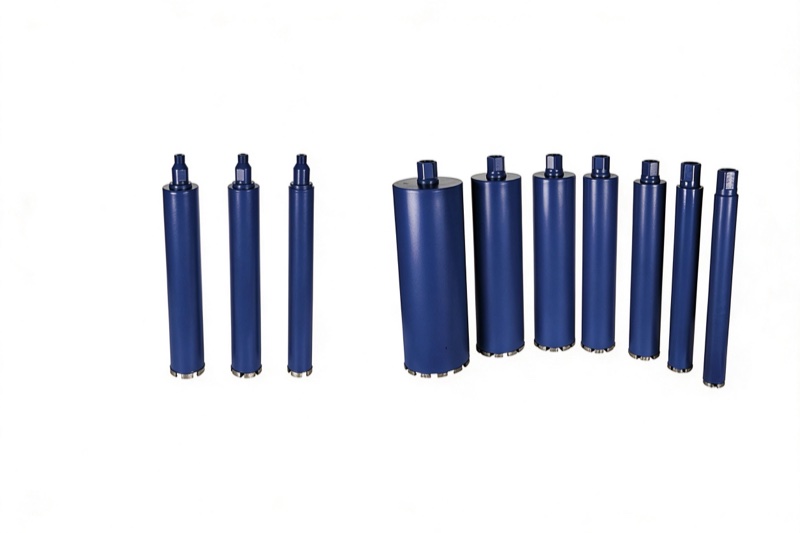
Quick Answer: A diamond core drill's depth is limited by the barrel length and the machine's feed travel, with typical barrels reaching 300 to 450 mm in one pass. For thicker walls you re-position or use extension barrels, and for full-wall cores you drill from both sides to meet in the middle.
Three things set the depth: the barrel length, the drill rig's feed stroke, and the motor's power to turn a long, friction-loaded barrel. Most handheld core drills with a feed stand cover about 300 mm in one setup, and floor-mounted rigs reach deeper with extension tubes. The bit must also clear its own dust or slurry; a plugged barrel stops cutting long before the barrel length runs out.
Match the barrel to the job: a 300 mm barrel handles most residential walls, a 450 mm barrel suits thicker retaining walls, and extension barrels join on for slabs over a metre. A segmented core drill with a threaded connection accepts extensions cleanly, and a continuous-threaded tube keeps the bore straight over long runs. For deep holes, withdraw the barrel regularly and flush the cuttings so the bit keeps cutting at full contact.
For walls thicker than the barrel, drill a pilot hole through first with a long pilot bit, then core from each face toward the center. The pilot keeps the two cores aligned. Mark the center on both sides with the same datum, drill the first side to its barrel depth, then flip the rig and core the second side until the holes join. A laser line or spirit level on the rig keeps the angle true. wet core drill bit so the two bores meet.
Feed slowly at the start of each core, keep steady pressure, and never force a stalled barrel; the diamonds glaze and the barrel can jam. Watch for rebar in deep walls and use a rebar-rated bit. Anchor the rig firmly so a deep core cannot pull the machine sideways, and keep hands clear of the rotating barrel. Water flow must reach the cutting face for the full depth, so use a water swivel and check the outlet at the bit tip.
Only with extensions and a rigid stand, and even then the motor may struggle. A floor-mounted or stand-mounted core rig is the safe choice for walls over 450 mm.
Cutting speed drops sharply and the motor labors while the barrel barely advances. Stop, withdraw, and flush the barrel; on dry cores, the dust pack blocks the diamonds.
Core depth follows barrel length, rig travel, and motor power, so match the equipment to the wall, use extensions or two-side drilling for thick sections, and keep the cutting face flushed. Straight, full-depth cores need a rigid rig, an aligned pilot, and steady feed control.
Written and reviewed by JOY TECH — an SGS & BV audited, CE/RoHS certified diamond tools manufacturer founded in 2004, exporting to 50+ countries.
Our factory and QMS are audited by SGS and Bureau Veritas. Products meet CE/RoHS requirements and every piece is 100% inspected before packing.
Verified Certificates
