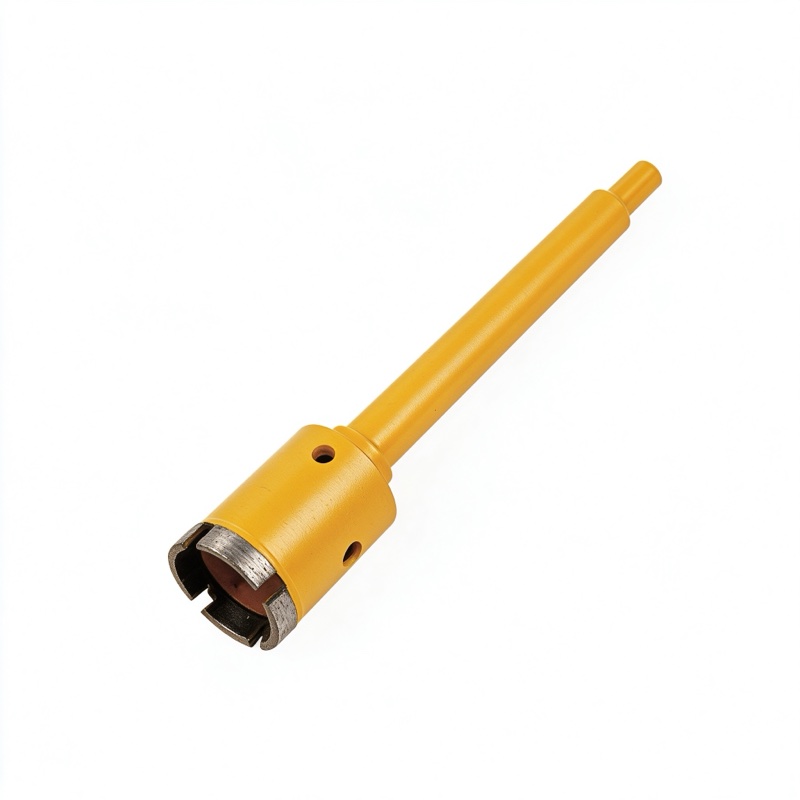
Core drill RPM must drop as bit diameter grows, to keep rim speed in the safe cutting window of about 5-10 m per second. A 25 mm bit runs near 1500 RPM, a 100 mm bit around 500-800 RPM, and a 200 mm bit at 250-400 RPM. Running a large bit too fast overheats and glazes segments; running a small bit too slow rubs instead of cuts.
Rim speed depends on both diameter and RPM. The outer diamond segments contact the concrete at that rim speed. Our wet core bits and dry core bits perform best when the drill is set to the recommended band for that barrel size.
| Bit diameter | Recommended RPM (concrete) |
|---|---|
| 25-50 mm | 1200-1500 |
| 50-100 mm | 700-1000 |
| 100-150 mm | 450-700 |
| 150-250 mm | 250-450 |
| 250-450 mm | 150-250 |
Too fast generates friction heat, glazes the segment, and accelerates diamond loss. The bit may smoke and lose cutting ability. Too slow, and the bit rubs rather than shears; the operator pushes harder, causing wobble and jamming.
Hard dense concrete and rebar want the lower end of the RPM range with steady feed. Soft abrasive concrete tolerates the upper range. If your drill has only one speed, choose bits within a diameter band that matches that speed, or use a gear-reduction rig.
A hand-held two-speed drill covers small diameters well, but once you pass 150 mm you need a gear-reduced rig that holds low RPM and high torque. Trying to push a large bit with a high-RPM drill overheats segments and shakes the hole out of true. Match the rig's speed range to your most common bit diameter.
Electric drills drop RPM under load naturally; that is normal. What matters is that the bit keeps cutting at a sane rim speed. If it stalls, you are feeding too hard or the bit is glazed, not that the tool is underpowered.
Start at low speed to break in, then dial to the band for your diameter. Do not exceed the bit's printed max RPM. A small chart taped to the rig listing diameter-to-RPM saves guesswork on site.
Larger bit, slower RPM. Keep rim speed in the cutting window and slow feed for steel.
| Bit diameter | RPM (concrete) |
|---|---|
| 25-50 mm | 1200-1500 |
| 50-100 mm | 700-1000 |
| 100-150 mm | 450-700 |
| 150-250 mm | 250-450 |
| 250-450 mm | 150-250 |
Tape this table to the rig. Running large bits too fast is the single most common cause of glazing; running small bits too slow causes rubbing.
Electric drills naturally drop RPM under load. That is normal. What matters is steady rim speed; if the drill stalls, reduce feed or dress the bit rather than forcing.
Print the diameter-to-RPM table and tape it to the rig. It removes guesswork on site. Remember that rim speed matters more than the number on the dial; larger bits need slower RPM to stay in the cutting window.
Start slow to break in, then set the band for your diameter. Never exceed the printed max RPM. The chart on the rig removes guesswork.
Hand drills cover small bits; gear rigs handle large diameters at low RPM and high torque. Match the rig to your most common hole size rather than forcing a big bit on a small drill.
Large bits need gear-reduced low-speed rigs. A high-speed hand drill on a big bit overheats segments. Choose the rig for your most common diameter.
Electric drills naturally drop RPM under load; that is normal. What matters is steady rim speed. If the drill stalls, reduce feed or dress the bit rather than forcing through.
Break a new bit in at low speed for the first few centimeters, then dial to the recommended band. Never exceed the printed maximum RPM. Keep the chart on the rig for fast reference.
Remember that rim speed, not the dial number, is what matters. Larger bits need slower RPM to stay in the cutting window. If unsure, start slower and work up rather than overspeeding a new bit.
A: Keep RPM the same and reduce feed; slowing RPM alone does not help steel cutting.
A: That is normal slip; keep firm, steady feed and ensure the drill has enough torque for the diameter.
A: No. Above the recommended band, heat and glazing slow penetration and shorten life.
Match RPM to bit diameter, keep rim speed in the cutting window, and slow feed for rebar. A variable-speed rig pays for itself in longer bit life. Contact JOY TECH for core bits sized to your drill's RPM range.
