Average response time: under 24 hours
To cut a pipe stub flush with concrete, score a light line around the pipe with a cut-off wheel, then cut 1-2 mm below the finished slab surface using a handheld cut-off saw or an angle grinder with a metal cut-off wheel. Support the pipe so it does not flex, cut in short bursts, and never pry or twist the blade. For PVC and HDPE pipe, let the blade spin rather than pressing hard; for copper and steel, use a bimetal or abrasive wheel and deburr afterward. A flush cut that leaves a tiny recess below the surface is better than one that leaves a proud stub you will grind down later.
The most common failure is not a bad cut on the pipe itself, it is damage to the slab around it. When the blade binds in the pipe, the grinder twists in your hands and the side load travels into the concrete edge. That torque chips the paste, cracks thin toppings, and pulls the aggregate out around the pipe collar. The fix is mechanical support before the cut: clamp the pipe above the cut, or have a helper hold it steady, so the pipe and blade do not move as a unit while the wheel bites.
PVC and HDPE melt when the blade is pushed too hard or dulls. The melt rolls back over the cut and leaves a ragged lip that is hard to clean. Copper and steel, by contrast, cut cleanly but throw hot chips that can melt the top sealer if you are careless. "In both cases the root cause is the same: a dull wheel or a feed rate that is too fast for the material, so back off the pressure and let the abrasive do the cutting. On a buried pipe, expose enough length to grip it with a clamp before you start, because a pipe that twists in the slab will crack the collar and the surrounding paste."
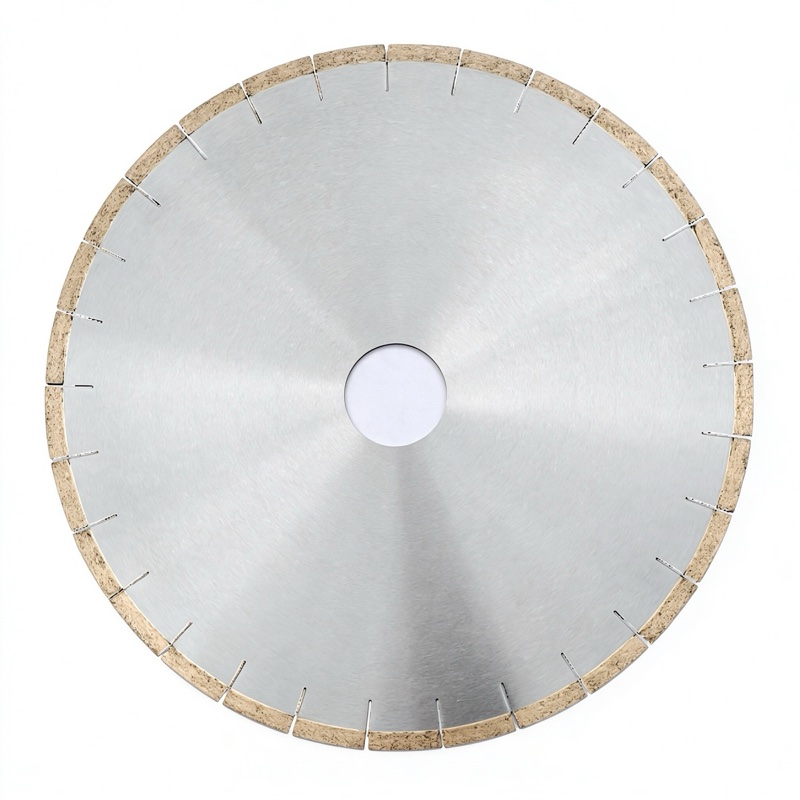
A 300 mm handheld cut-off saw with an HF-welded diamond blade cuts the surrounding concrete edge cleanly when you are also trimming the slab around the pipe. For pipe-only cuts, a cut-off saw is overkill and its weight makes control hard at floor level. Use it when you are already grinding or sawing the slab and need one tool for both the concrete edge and the pipe stub.
"A 125 or 180 mm angle grinder with a thin metal cut-off wheel is the default for stub work." A 1 mm thick wheel cuts steel and copper with little burr, and a 1.5 mm diamond blade cuts PVC and HDPE without melting. Keep the wheel at a shallow angle, never lean into the cut, and let the abrasive do the work. Browse the diamond saw blade range for thin-kerf blades that suit tight spaces around pipe collars.
Cutting 1-2 mm below the surface is the standard recess for a stub that will be capped or covered later. Cutting exactly flush leaves zero tolerance, and any grinding pass afterward will round the pipe edge. Cutting more than 5 mm below wastes material and leaves a gap that a cover plate will not fill. For drains and floor outlets, follow the fitting manufacturer recess; for electrical conduit, cut flush with the box rim rather than the slab. Measure twice on a live job, because a recess that is too deep means the fitting will not screw home.
Tape a strip of masking paper around the pipe collar before you cut, and hold a small vacuum nozzle near the wheel to catch hot chips. If the slab is a polished or sealed topping, cut only with the guard closed and keep the grinder moving. Never let the wheel dwell on the concrete edge; a one-second dwell is enough to discolor or melt a sealer. For epoxy toppings, wait until the coating has fully cured before cutting, or you will pull the film away from the concrete.
If the stub is in a live slab under load, or if you are not sure whether the pipe contains pressure lines or electrical conduit, stop and inspect before cutting. When you need a blade that handles both concrete edge trimming and pipe cutting on the same job, contact the JOY TECH team for a thin-kerf blade recommendation matched to your saw diameter.
Written and reviewed by JOY TECH — an SGS & BV audited, CE/RoHS certified diamond tools manufacturer founded in 2004, exporting to 50+ countries.
Our factory and QMS are audited by SGS and Bureau Veritas. Products meet CE/RoHS requirements and every piece is 100% inspected before packing.
Verified Certificates
