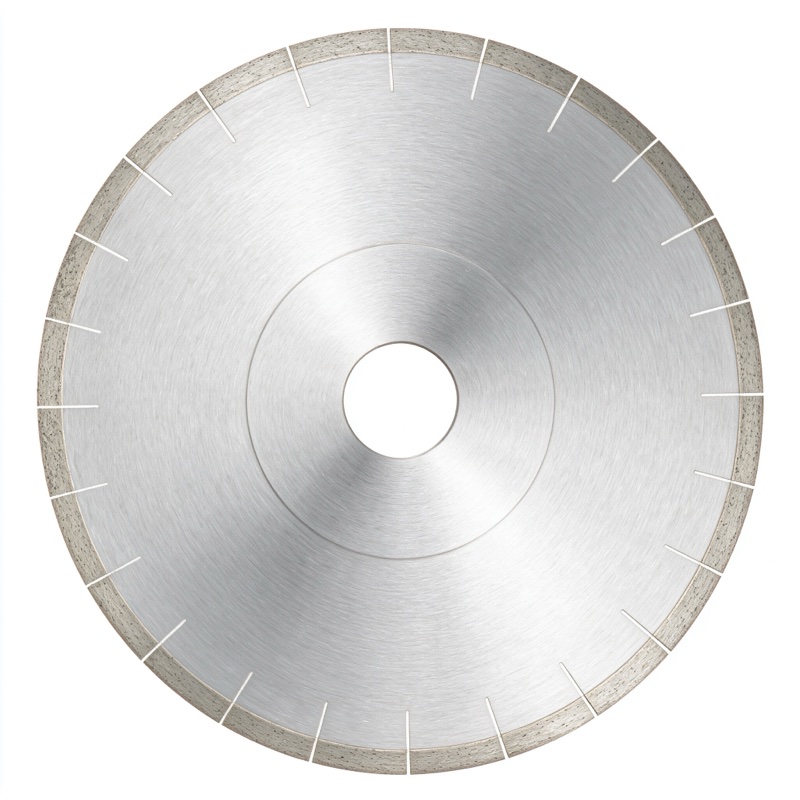
For engineered stone (quartz) use a continuous-rim quartz blade with water; for acrylic solid surface use a carbide-tipped or fine diamond blade at controlled speed to avoid melting the resin. The key difference: quartz needs diamond, while solid surface is cut best with tools that keep heat low so the material doesn't melt or chip.
Engineered quartz (90% quartz + resin) is hard and brittle — it needs a diamond blade with a smooth rim and wet cutting to prevent chipping. Acrylic solid surface (like Corian-style sheets) is soft and melts — it needs a fine blade at lower RPM so friction doesn't melt the edge, plus a carbide or fine-grit diamond blade to leave a smooth edge.
Our Quartz Saw Blade (Artificial Quartz) is tuned for this material.
It will cut, but the coarse diamond grit tends to chip acrylic edges. A fine-tooth carbide blade is better for solid surface.
Too much friction at high RPM. Slow the blade, feed faster in a single pass, and use a sharp blade designed for plastic.
You can for small trims with a dry-rated quartz blade, but wet cutting prevents micro-chips and resin burn on the edge.
Match the tool to the material: diamond blades with water for engineered quartz, fine carbide or diamond at low RPM for acrylic solid surface. Cut cool, support the sheet, and finish edges with routing. JOY TECH's quartz blades handle engineered stone; for acrylic, use a plastic-rated blade at controlled speed.
