Average response time: under 24 hours
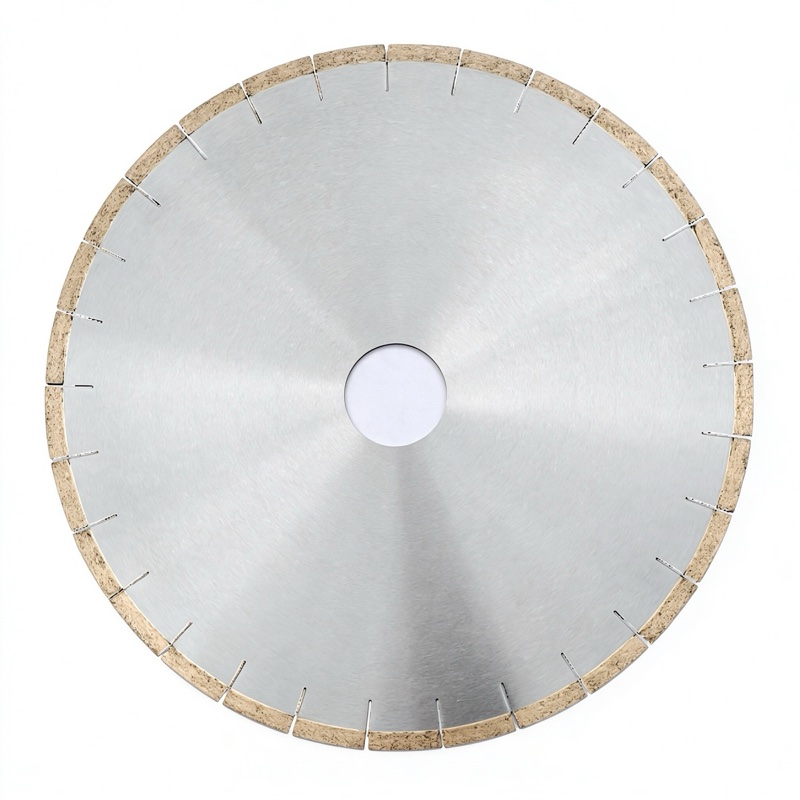
When air and concrete drop below 5°C, the paste hardens and abrasive resistance falls, so switch to a harder-bond diamond blade, reduce your feed rate by about 25 percent, and run water at a lower flow to avoid freezing at the kerf. Let the saw idle for 30-60 seconds before cutting and take a shallow trial pass to bring the core and blade up to temperature. A cold blade glazes quickly because the diamonds cannot break free from the hard, dense paste; the fix is a harder bond that holds the diamonds longer, not more pressure on the saw.
Fresh concrete cured in cold weather reaches a higher paste density because the cement hydrates slowly and the surface stays tight. That dense paste wears the bond more slowly, so a blade that cut normally in summer starts to glaze. The diamonds become smooth instead of exposing fresh cutting edges, and the saw bogges down with smoke and a burning smell. A harder-bond blade keeps the diamonds in place longer until the matrix wears enough to release them.
Do not cut concrete that is still frozen through. The saw will chatter on the icy surface and the water you feed into the kerf will refreeze inside the cut, wedging the blade. If the slab surface is frozen but the interior is not, wait until midday when the sun has warmed the top layer, or tent the area and thaw it before you start. Cutting frozen concrete also voids most saw-cut control-joint warranties, so it is a false economy on a production slab.
For cold, dense concrete, move one bond grade harder than your summer choice. A summer general-purpose blade that glazes at 8°C will run cleanly on a hard-bond laser-welded blade rated for dense concrete and block. The harder matrix holds the diamond grit through the dense paste, and the grit self-sharpens as the bond wears slowly. If you are cutting abrasive concrete that still abrades fast in winter, keep the softer bond; the rule applies to dense, high-strength mixes only.
Check that the blade has at least 4 mm of segment height before winter work. A worn blade under 2 mm height cannot shed heat in cold conditions, and the thin core warps faster under thermal shock. The water slots must be open and free of mud; a clogged slot traps cold water and warps the core side to side. Clean the slots with a slotting tool at the start of each shift.
Winter saws need a warm-up cycle. Start the engine, let it idle, and run the blade on a scrap piece for 10 seconds before touching the slab. Set the water flow to the minimum that keeps the kerf slurry wet, because excess water freezes on the saw rail and under your feet. Use warm water from a tank if possible, and add a small amount of antifreeze rated for concrete saw cooling systems, never automotive coolant that contaminates the slab. For the right blade spec on cold mixes, compare the HF-welded winter blade against your summer blade before ordering.
Reduce feed rate by about 25 percent in cold weather. A blade that self-sharpens at summer speed needs a slower feed in dense paste, or it will glaze. Keep the saw straight and avoid side pressure; a cold blade is more brittle and the core can crack if you force a corner. Take shallower passes and run the cut in one direction rather than reversing mid-kerf, because reversing drags cold slurry back over the blade and builds up glaze. A slow, steady cut outperforms a fast, forced cut on every winter slab. Stop and reposition the saw rather than dragging the blade through a corner, because side load on a cold core is the fastest way to crack it.
If you are cutting heated floors, fresh cold-weather pours, or exposed high-strength pavements, match the blade to the mix rather than guessing. Contact the JOY TECH team with your concrete strength, ambient temperature range, and blade diameter for a winter bond recommendation that prevents glazing and freeze wedging.
Written and reviewed by JOY TECH — an SGS & BV audited, CE/RoHS certified diamond tools manufacturer founded in 2004, exporting to 50+ countries.
Our factory and QMS are audited by SGS and Bureau Veritas. Products meet CE/RoHS requirements and every piece is 100% inspected before packing.
Verified Certificates
