Average response time: under 24 hours
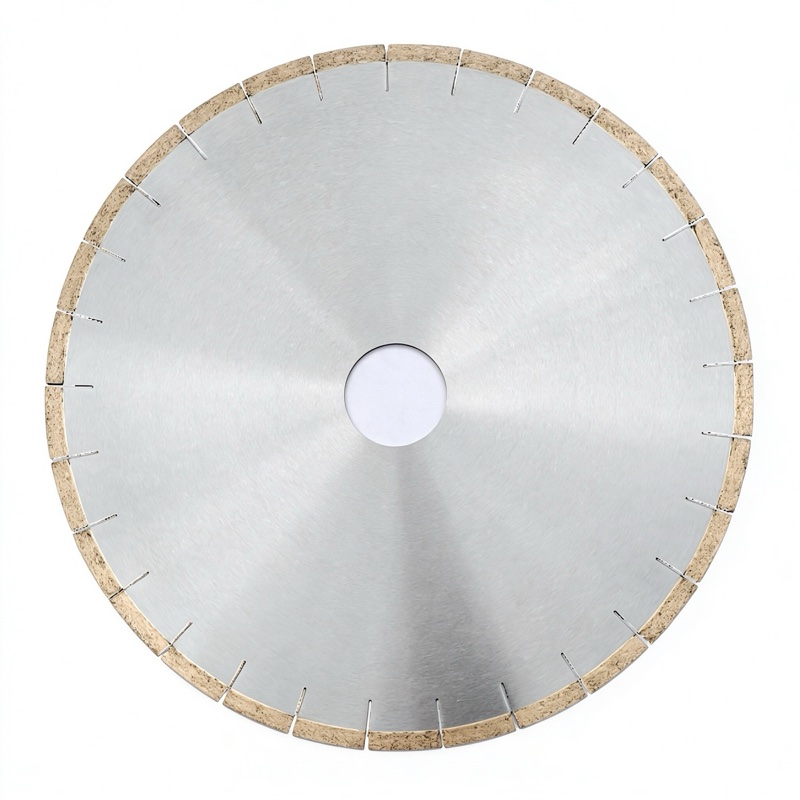
To cut concrete pavement without cracking the adjacent slabs, saw on the existing control joint whenever one exists, cut early within 6 to 24 hours of finishing, and set the cut depth to one quarter to one third of the slab thickness. Use a walk-behind saw with a laser-welded blade, keep the saw moving at a steady pace, and do not cut deeper than one third of the thickness in a single pass. Most adjacent-slab damage comes from cutting too late, too deep, or off the joint, which lets drying shrinkage cracks wander into the slabs next to the cut.
Fresh concrete shrinks as it cures, and the slab will crack wherever internal stress finds the weakest plane. A saw cut creates that weak plane on purpose, so the crack runs straight down the joint instead of wandering randomly across the pavement. If you cut off the joint line, the crack can run into the neighboring slab, producing a random crack well away from the saw cut. If you cut too late, the shrinkage crack has already formed before the saw cut is made, and the saw just opens it up after the damage is done. Timing and placement are the two variables you control; the blade is only as good as the cut line.
A saw forced through a deep cut vibrates the neighboring slab. Vibration can open micro-cracks at the base of an adjacent joint or loosen the bond between the slab and the base. On thin pavement, this shows up as a mirror crack along the face next to the cut. It is avoidable by cutting shallow passes and by keeping the saw moving steadily instead of forcing the blade.
Where you cut matters more than how sharp the blade is:
For normal weather, saw within 6 to 24 hours after finishing, depending on temperature. In hot, dry weather, start at 4 to 6 hours. The telltale sign that you can cut is that the saw cut leaves clean aggregate edges instead of raveling paste. If the cut starts to ravel, wait 30 to 60 minutes. If you see shrinkage cracks appearing before the saw, you are already late; cut anyway, but expect some random cracks that no blade will prevent.
Set the total cut depth to one quarter to one third of the slab thickness. For a 200 mm slab, that means 50 to 65 mm of cut depth. Do not cut to full slab thickness, because the deeper cut locks the saw in the kerf and amplifies side load. For deeper cuts, run the saw in two passes: first pass to half depth, second pass to final depth. On walk-behind saws, keep the cut speed at about 2 to 4 meters per minute for 450 mm blades; faster than that and the segment overheats, slower than that and the saw dwells in the cut and vibrates the adjacent slab.
Before you start, snap a chalk line exactly on the joint and re-snap it if it smudges. Cut with the chalk line on the right side of the blade so you can see it while you walk. On long joints, drive a nail at each end and stretch a string line as a backup, because chalk wears off a wet slab fast. Operators who cut by eye rather than by line drift 5 to 10 mm over 10 meters, and that drift is what puts the cut off the joint and opens cracks in the next slab.
Pavement blades need to cut fast, stay straight, and stand up to aggregate. The JOY CA-LW laser-welded blade is a standard choice for general concrete pavement: laser-welded segments, a hard bond for silica aggregate, and a core stiff enough to resist side load. For heavy traffic pavements with hard aggregate, the JOY CA-HF high-frequency welded blade carries a taller segment that lasts longer across long joint runs. Match the blade diameter to the slab thickness; a 450 mm blade is the default for 180 to 220 mm pavement.
Damage to adjacent slabs does not always show up the day of the cut. Flush the kerf with water to remove slurry, because dried slurry left in the joint can prevent sealant bonding later. Inspect the edge of the neighboring slab the next day for mirror cracks or spalls, and again at one week when drying shrinkage stress is highest. If you see a crack running off the joint into the adjacent slab, it almost always means the cut was placed off the joint or made too late. For future pours, move the cut line back to the joint, cut earlier, and keep depth per pass shallow. The diamond saw blade catalog lists blades by pavement application and recommended cut depth; pick the one matched to your slab thickness and aggregate, and the adjacent slabs will stay intact.
Written and reviewed by JOY TECH — an SGS & BV audited, CE/RoHS certified diamond tools manufacturer founded in 2004, exporting to 50+ countries.
Our factory and QMS are audited by SGS and Bureau Veritas. Products meet CE/RoHS requirements and every piece is 100% inspected before packing.
Verified Certificates
