Average response time: under 24 hours
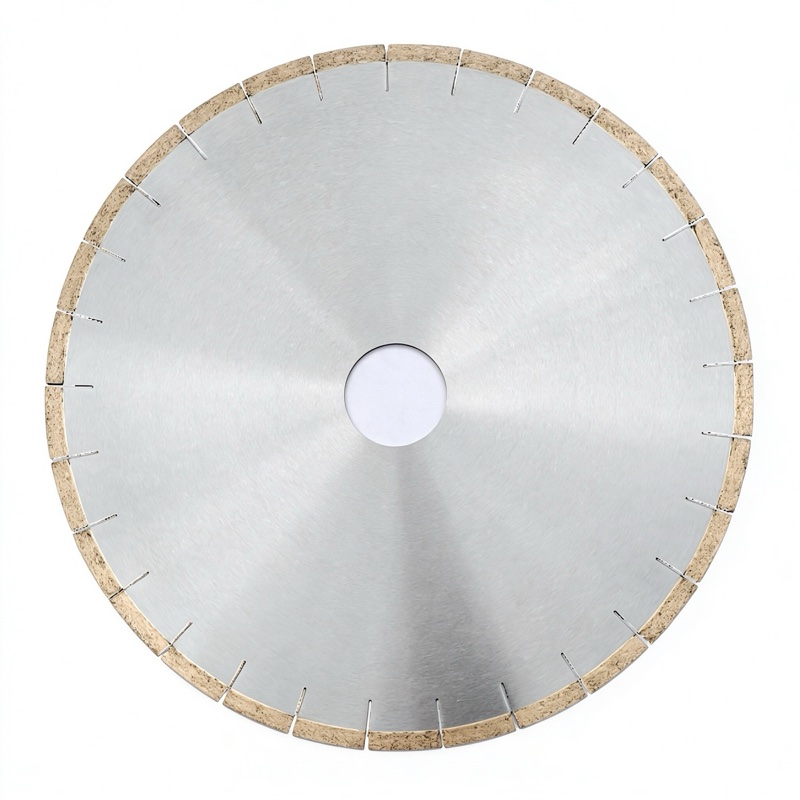
To cut a concrete walkway cleanly, snap a chalk line, score it shallow first, then run a 350-450 mm diamond blade at full depth in two or three passes. Use a laser-welded segmented blade for general concrete, keep the blade wet, and walk the saw forward without forcing it. The key to avoiding spalled edges is a shallow score cut followed by a deep cut, never twisting the blade mid-pass or pushing it sideways off the line.
Spalling is the small chips and craters that break out along the cut line, especially on the top surface. It happens for three reasons: the blade bond is too soft for the aggregate, the saw is pushed sideways while cutting, or the blade enters the concrete at an angle rather than straight down. On an existing walkway, the top surface is usually a thin cement paste layer over coarser aggregate. Once the blade breaks that paste, loose aggregate chips pop out and leave a ragged edge.
A clean cut, by contrast, looks like a saw kerf with sharp, intact paste on both sides. This matters when you are cutting an expansion joint, removing a damaged section, or fitting a new path slab next to an old one. A ragged edge means patching and grinding later; a clean cut means the two slabs sit flush and the joint stays neat for years.
A 350 mm or 400 mm segmented blade is the default for walkway work. The segments are laser welded to the steel core, which lets them handle hard aggregate and occasional rebar without losing segments. For most residential and commercial sidewalks, a general-purpose blade like the JOY CA-LW laser-welded blade gives a smooth kerf and long life. Match the blade diameter to your saw: 350 mm blades fit most handheld cut-off saws, while 450 mm blades need a walk-behind floor saw for deeper slabs.
When the edge must be visually clean along a garden path, a pool deck, or a front entry, a straight-slot blade reduces chipping because the straight slots pull heat out faster and keep the blade straighter. These blades were originally designed for stone but work well on dense, hard-broomed walkway slabs where segmented blades tend to ride up and chip the surface. Browse the full diamond saw blade lineup to compare segment heights and core thickness before you commit.
Follow this order and you will get a clean edge every time:
The score cut is the single most important step. It establishes a clean kerf that the deeper passes follow, and it prevents the blade from wandering into uncut concrete and chipping the edge. If you skip the score, the first deep pass will always ride a little off the line and the edge will be rough.
Walkway slabs are typically 100 to 150 mm thick. A 350 mm blade with a 25.4 mm arbor cuts about 125 mm deep, so a 150 mm slab needs two deep passes or a 450 mm blade. Do not try to cut the full depth in one pass: the blade binds, overheats, and can crack at the arbor. Feed pressure should be light to moderate; the weight of the saw does most of the work. If you push the saw faster than the blade can cut, the blade glazes and the edge chips.
A good rule of thumb is that the blade should cut at about 0.5 to 1 meter per minute through reinforced concrete. If the cut goes much faster, the aggregate is easy and you can move up a size; if it slows down, you have hit rebar or a hard aggregate pocket, and you should pull back slightly rather than force the saw forward.
The most common walkway cutting mistakes are:
Another subtle mistake is cutting control joints too late. New concrete shrinks as it cures, and if you wait more than 24 hours after pouring, random cracking will already have started. For fresh walkways, cut control joints within 6 to 12 hours after finishing, before the concrete hardens fully.
Set the blade so it projects just below the slab thickness plus a few millimeters; a blade that is too deep increases side load and wobble. Check that the blade bolt is torqued to the manufacturer spec and that the arbor washer is clean. Wear hearing protection, eye protection, and boots with good grip on wet concrete. Use a water feed that delivers about 4 to 8 liters per minute; more water does not help and makes a slippery mess.
If you are cutting a long run, plan for blade changes. A general-purpose blade typically lasts 300 to 600 running meters of reinforced walkway before it starts to cut slowly. Keep a spare blade on site, and change it before performance drops; a worn blade is the most common cause of wandering and chipping.
Written and reviewed by JOY TECH — an SGS & BV audited, CE/RoHS certified diamond tools manufacturer founded in 2004, exporting to 50+ countries.
Our factory and QMS are audited by SGS and Bureau Veritas. Products meet CE/RoHS requirements and every piece is 100% inspected before packing.
Verified Certificates
