Average response time: under 24 hours
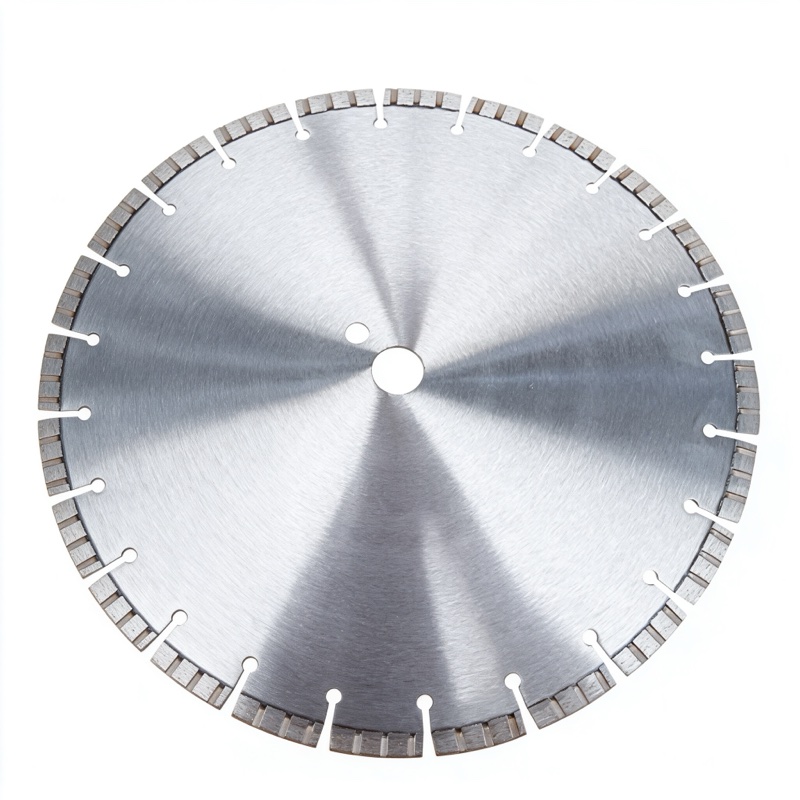
Quick Answer: To cut reinforced concrete, use a laser-welded segmented diamond blade, cut with water, and feed slowly and steadily so the segments grind through the steel instead of grabbing it. Plan the cut to avoid steel where possible, and expect blade wear to be faster than on plain concrete.
Reinforced concrete usually contains rebar bars, welded wire mesh, or both. Steel is much harder on a blade than aggregate. Before you cut, use a rebar detector or scan the slab to locate the bars, so you can either cut between them or know exactly where the blade will hit steel.
Cutting blind through rebar risks segment loss and blade damage. A few minutes of scanning saves the cost of a blade.
When you shop the diamond saw blade catalog, look for the laser-welded and rebar-rated options rather than economy blades.
Do not wobble the blade sideways to widen the kerf. That bends the steel core and is the fastest way to ruin a reinforced-concrete cut.
Where you can, position joints and openings to avoid rebar. Move a penetration, add a control joint, or shift the saw line to reduce steel contact. When the cut must pass through bars, cut those sections slower and with lighter pressure rather than powering through.
Yes, a laser-welded segmented blade grinds through rebar, but it wears faster and needs lighter feed than plain concrete cutting.
Steel friction generates heat faster than aggregate friction. Without water, the blade core overheats and the segments loosen. Use water or at least a dust shroud and periodic cooling.
For clean edges, saw. For demolition, a hydraulic breaker or saw-and-break is faster. Sawing gives you a straight, reusable opening.
Scan for steel, choose a laser-welded blade, cut wet, and feed gently through the bars. That routine keeps reinforced concrete cuts straight, safe, and far easier on your saw blades.
Written and reviewed by JOY TECH — an SGS & BV audited, CE/RoHS certified diamond tools manufacturer founded in 2004, exporting to 50+ countries.
Our factory and QMS are audited by SGS and Bureau Veritas. Products meet CE/RoHS requirements and every piece is 100% inspected before packing.
Verified Certificates
