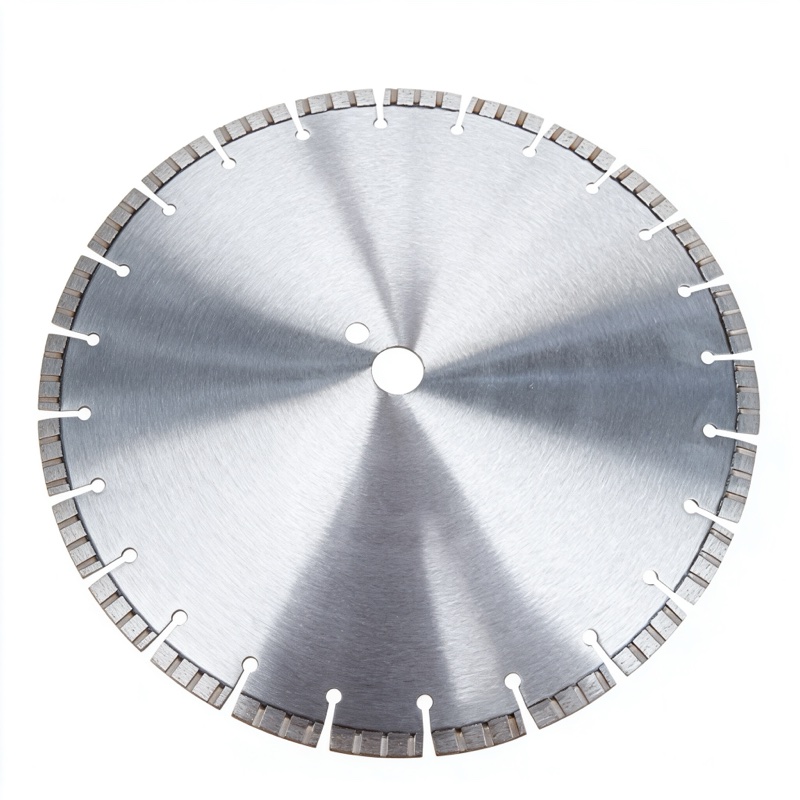
Use an asphalt-specific, laser-welded segmented blade (300–600mm) with open gullets on a walk-behind or handheld saw, cutting dry. Open gullets clear bitumen, and the asphalt bond keeps the rim sharp in the abrasive, sticky material — this is the fastest way to square off pothole patches and cut crack sealant joints.
Asphalt is abrasive (sand and aggregate) and sticky (bitumen). A concrete blade will overheat, glaze and smear. An asphalt blade uses a softer bond that wears to expose fresh diamond and deep gullets that eject the bitumen slurry instead of letting it load the rim.
The Concrete and Asphalt Saw Blade (Laser Welded) is designed for this duty; the HF-welded version is an economical option for lighter work.
You can for a few cuts, but it will glaze quickly in the sticky bitumen. An asphalt blade cuts faster and lasts much longer.
Dry. Water + bitumen = slurry that smears over the rim and slows the cut dramatically.
Match the blade diameter to the depth — a 350mm blade cuts about 120mm. For full-depth removal, cut the outline and break out the rest with a breaker.
Fast asphalt repair cutting needs an open-gullet, laser-welded asphalt blade run dry. Score the patch outline, break out the center, and the blade stays sharp cut after cut. JOY TECH's asphalt blades cover handheld and walk-behind saws.
