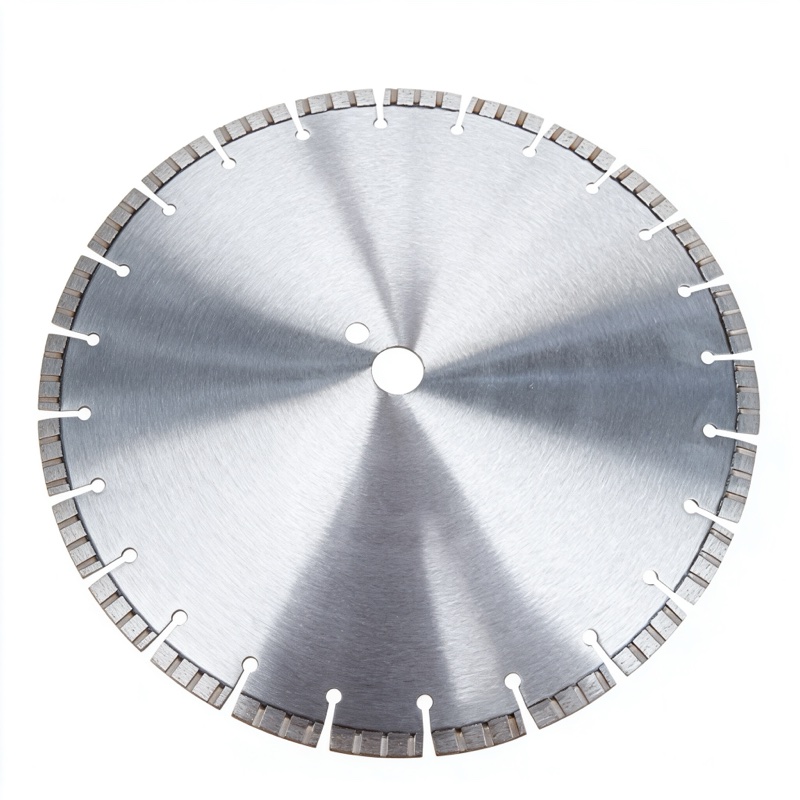
Use a laser-welded, medium-hard bond diamond blade with open gullets to cut rubber membrane and asphalt together — the rubber is abrasive and clogs tight rims, so a segmented blade with wide slots clears it best. Cut dry for asphalt repair work, and replace the blade sooner than for clean concrete because rubber and bitumen wear the bond fast.
Rubber membrane stretches and clogs, bitumen smears, and the aggregate in asphalt is abrasive. A blade that works on plain concrete will overheat and glaze when the rubber wraps around the rim. You need a blade designed for asphalt that tolerates occasional membrane contact.
The Concrete and Asphalt Saw Blade (Laser Welded) is built for exactly this mix of asphalt and rubber/bitumen debris.
It will cut it, but the rubber clogs narrow rims and overheats the blade. An open-gullet asphalt blade clears the rubber much better.
Dry is standard for asphalt. Water creates bitumen slurry that smears over the blade and the cut line.
Much shorter than on clean concrete — expect roughly half the life. Buy a dedicated asphalt blade and factor in faster wear.
Rubber-over-asphalt cutting needs an open-gullet, laser-welded asphalt blade that clears debris instead of clogging. Cut dry, use short passes, and treat the blade as a wear item. JOY TECH's laser-welded asphalt blades handle this dual-material work.
