Average response time: under 24 hours
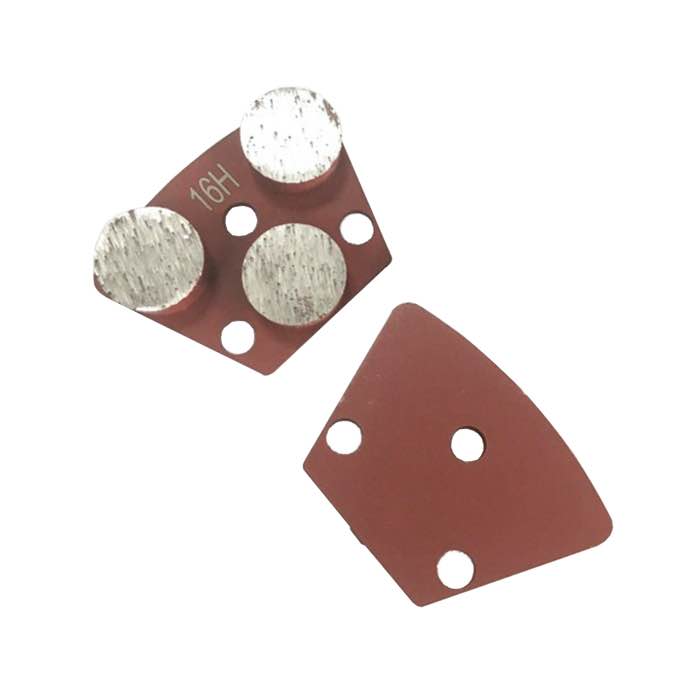
Use a soft bond diamond disc on hard, dense concrete, and a hard bond disc on soft, abrasive concrete. The rule is counterintuitive: hard concrete wears the bond slowly, so you want a soft bond that refreshes itself, and soft, sandy concrete wears the bond fast, so you want a hard bond that lasts. If your disc glazes over and stops cutting, it is too hard; if it wears down in a few hours and looks rounded, it is too soft. Test the slab with a nail or a hardened scratch before you pick a disc, and change bond rather than forcing pressure.
A diamond grinding segment is a block of metal powder with industrial diamond grains embedded in it. As you grind, the concrete should abrade the bond away at exactly the rate the diamonds wear out. When a diamond is blunt, fresh bond should wear past it and drop it off, exposing a new sharp diamond below. Bond hardness controls how fast that matrix wears.
A soft bond wears quickly, so new diamonds appear often and the disc cuts aggressively on material that does not wear metal. A hard bond wears slowly, so the diamonds stay locked in longer and survive on material that would eat through a soft segment in an hour. Get the match wrong and one of two failure modes follows: glazing or rapid wear.
When the bond is too hard for the concrete, the blunt diamonds are never released. They polish themselves smooth against the slab, the segment face shines, and the disc skates instead of biting. The motor sounds easy, the floor pattern disappears, and you push harder without result. This is the most common mistake on old, power-troweled, dense floors. A glazed disc leaves a light, scratch-free burnish where it should leave a clear grind pattern.
When the bond is too soft, sandy or soft concrete abrades the matrix faster than the diamonds wear. The segment shrinks, the diamonds fall out early, and you burn through a set of discs in a fraction of the expected life. The disc cuts well at first, but it looks rounded and half gone after a day on soft sand-wash concrete. The triple round segment trapezoid disc from JOY TECH ships in soft, medium, and hard bonds so you can tune one machine to different floors on the same day.
Do not guess the bond from looking at the floor. A quick scratch test tells you what you are dealing with:
A few working rules: hard troweled warehouse floors, sealed overlays, and polished substrates want a soft bond. Sidewalks, driveways, outdoor pours, and exposed-aggregate slabs want a hard bond. Medium floors take the medium bond that most trapezoid lines ship as default.
If you want a more repeatable test, use a concrete hardness tester or a Schmidt hammer. A reading above 30 on a normal slab means hard concrete, below 20 means soft concrete. Between 20 and 30, start with the medium bond and adjust after ten minutes. The numbers matter less than the scratch test for day-to-day work, but they are useful when you are pricing a job or ordering a full set of discs.
Start on a 1-square-metre test area with the bond you think is right. Watch the segment face for five minutes. If it stays bright and cuts steadily, you are set. If it shines and slows, switch to a softer bond. If it wears fast, step to a harder one. For edge grinders and tight corners, the double S segment trapezoid disc follows the same bond logic, and the full grinding category lists the bond grades against the common concrete hardness ranges. When in doubt, carry one soft and one hard set; swapping trapezoid discs takes under a minute.
A heavy planetary grinder wears bond faster than a single-head handheld, so you may step one bond grade harder than the chart suggests. A 650 mm planetary on a hard warehouse floor will open a soft bond too fast; a 250 mm handheld on the same floor will not open it at all. Check the wear rate on the first set and adjust the next order accordingly. Machine weight is the silent variable that turns a correct chart recommendation into a glazed disc on site.
Three mistakes show up on every job. First, pushing down hard to make a glazed disc cut; extra pressure only glazes it faster and can crack the diamonds. Second, running a hard bond on a polished warehouse floor because the disc was left over from an outdoor driveway job. Third, dressing a glazed disc for longer than a minute; a dressing block opens the face for a moment, but if the bond is wrong it will glaze again on the next pass.
Never dress a glazed disc and walk away; treat dressing as a diagnostic, not a fix. If the disc shines again within a few passes, the bond is wrong for the slab and you must change grade. The cost of one extra set of discs is small compared with a whole day spent fighting a glazing problem on the wrong bond.
Scratch the floor, match the bond, and test a square metre before committing the whole job. Hard dense concrete takes a soft bond; soft abrasive concrete takes a hard bond; and when the segment face shines or wears out in hours, you know immediately which way to move. Keep both grades on the truck and the grinder stays productive all day.
Written and reviewed by JOY TECH — an SGS & BV audited, CE/RoHS certified diamond tools manufacturer founded in 2004, exporting to 50+ countries.
Our factory and QMS are audited by SGS and Bureau Veritas. Products meet CE/RoHS requirements and every piece is 100% inspected before packing.
Verified Certificates
