Average response time: under 24 hours
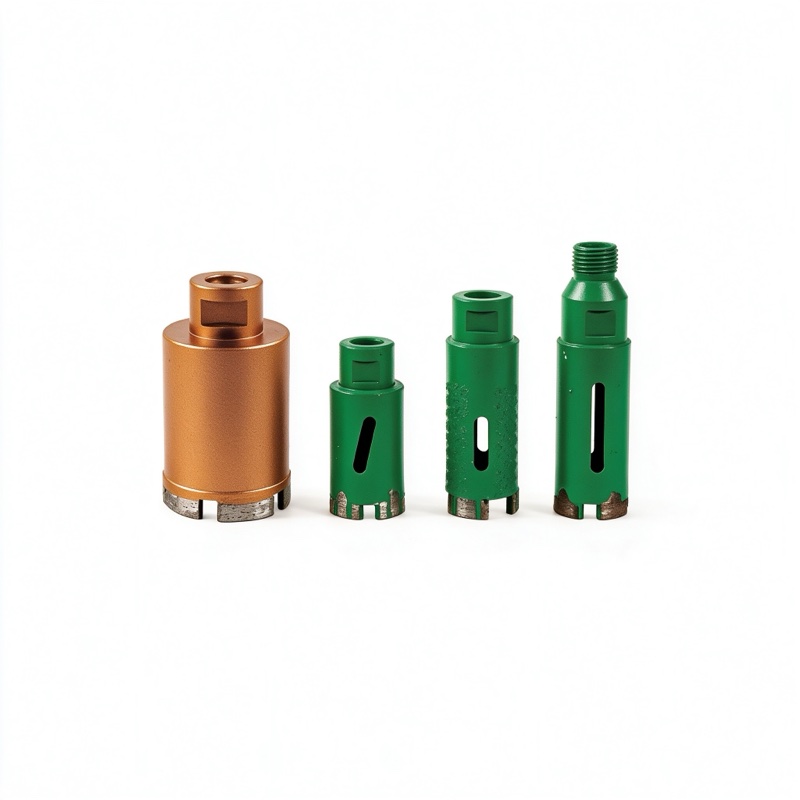
For precision stone and composite work in dental, jewelry, or medical laboratories, use small-diameter diamond core drills in the 3-12 mm range, mounted on a high-speed rotary handpiece or a bench drill at 5000-15000 RPM with constant water or mist coolant. A small diamond stone hole saw cuts clean holes in zirconia, porcelain, wax models, and natural stone without chipping the edges. These are not the same core bits used on concrete; they use electroplated or sintered diamond on thin-walled steel tubing, sized for handpieces and lab spindles. JOY TECH supplies a range of small diamond core drills for precision stone and composite work.
Dental and medical labs drill zirconia crowns, porcelain frameworks, PMMA models, and investment castings. Jewelry and lapidary work drills natural stone, amber, and glass. The diameters are tiny (1-10 mm), tolerances are tight (0.05 mm), and the workpiece is small. A concrete core bit would crush the part. Instead, the lab uses a thin-walled diamond tube, often electroplated with diamond grit on the outside and inner edge, running at high speed with coolant.
The common thread with construction diamond tooling is the diamond bond. Lab bits use a nickel electroplated bond to hold diamond grit on a thin stainless tube, because the workpiece is soft and the bond needs to release grit quickly. Sintered metal bonds are used on harder ceramics like zirconia, where higher heat and pressure call for a more durable bond.
Lab spindles come in several standards. Dental lab handpieces run 2.35 mm shanks (3/32 inch). Bench drill presses and Dremel-style rotaries use 1/8 inch or 6 mm shanks. CNC milling spindles use ER collets. Confirm the shank before ordering; a bit that does not fit the spindle is useless.
| Workpiece | Diameter | Speed | Coolant |
|---|---|---|---|
| Zirconia / porcelain | 1-6 mm | 10000-15000 RPM | Water mist |
| Natural stone / jade | 3-12 mm | 5000-10000 RPM | Water drip |
| Glass / shell | 3-10 mm | 3000-8000 RPM | Water bath |
| PMMA / wax | 2-8 mm | 5000-12000 RPM | Dry or air |
Small diamond bits walk easily on smooth surfaces. Mark the center with a pencil, apply masking tape, and start the drill at a very shallow angle to nick the surface. Once the rim engages, bring the drill upright and feed with the lightest pressure. Let the diamonds do the cutting; pressing hard fractures the thin wall of the bit and cracks the workpiece.
Coolant is essential on zirconia and porcelain. Heat causes thermal shock, which looks like a crack running out from the hole. A water mist or a drip from a small bottle keeps the edge cool. For glass, drill half-submerged in a water bath; the water supports the underside and prevents chipping on breakthrough.
For precision drilling that needs depth control, mount the bit in a drill press with a depth stop rather than a handheld handpiece. A long-shank small hole saw reaches through thicker stone or model resin without the chuck touching the workpiece.
Small lab bits are fragile. A bent shank or a flattened tip means the bit is ruined. Store bits in a rack, not loose in a drawer. Clean them with a small brush after each use, because dried slurry builds up inside the thin tube and blocks the cut. If a bit starts to slow, run it briefly on a soft stone or rubber block to expose fresh diamonds, or retire it.
Typical life depends on the workpiece. An electroplated bit cuts 20-50 holes in zirconia before the grit wears; a sintered bit lasts longer but is more expensive. On wax or PMMA, bits last hundreds of holes.
JOY Tech's core drilling range is built around construction and stone fabrication, but the same diamond-bond expertise applies to small precision tooling. If your lab needs a custom diameter, a specific shank, or a sintered bond for zirconia, contact the team with a drawing of the required bit. We can match shank length, wall thickness, and diamond grit to your spindle and workpiece. For stone fabrication shops doing countertops and cladding, the stone hole saw range covers the 20-75 mm range that connects directly to lab and fab workflows.
No. Concrete bits are too large, too aggressive, and have thick walls that will crack a small ceramic workpiece. Use a thin-walled electroplated or sintered diamond lab bit.
Typically 5000-15000 RPM depending on diameter. Smaller bits run faster; larger bits run slower. Always keep coolant flowing.
Use masking tape over the mark and start at a 45-degree angle to nick the surface. Once the rim engages, straighten the drill and feed lightly.
Yes. Send a drawing with diameter, depth, shank size, and workpiece material, and the JOY Tech engineering team can quote a matching tool.
Precision lab drilling needs thin-walled, small-diameter diamond bits matched to the spindle and workpiece. Use the right shank, run at the correct RPM, keep coolant flowing, and the result is a clean, chip-free hole in zirconia, stone, or glass.
Written and reviewed by JOY TECH — an SGS & BV audited, CE/RoHS certified diamond tools manufacturer founded in 2004, exporting to 50+ countries.
Our factory and QMS are audited by SGS and Bureau Veritas. Products meet CE/RoHS requirements and every piece is 100% inspected before packing.
Verified Certificates
