Average response time: under 24 hours
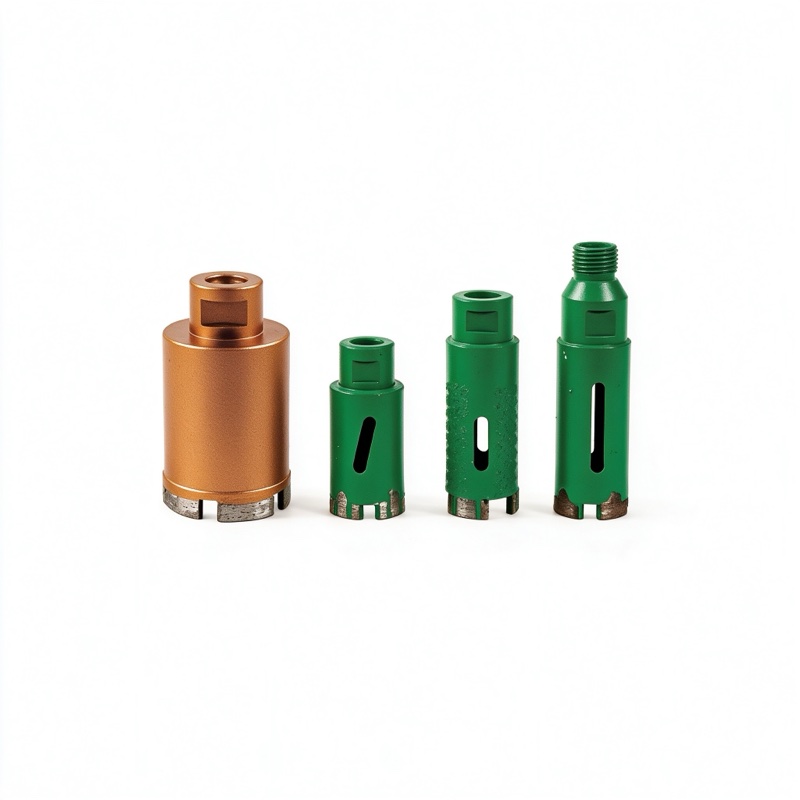
To drill marble or granite without chipping the polished edges, use a continuous-rim diamond hole saw running wet at 800-1800 RPM depending on diameter. A stone hole saw with a continuous diamond rim is the right choice: segmented crowns are for concrete and leave a scalloped edge that ruins polished stone. Start at a 45-degree angle to nick the surface, straighten the drill, and feed gently with constant water cooling. Marble is softer and scratches easily, so keep RPM lower and avoid any sideways pressure; granite needs the continuous rim and a steady hand to prevent micro-cracks.
Concrete core bits use separated segments because concrete is abrasive and needs gaps to clear slurry. On polished stone, those gaps leave a scalloped rim that catches the light and looks like a row of small chips. A continuous rim diamond hole saw cuts a smooth annular groove that matches the polished surface. The bond is also different: stone bits use a soft bond that exposes fresh diamonds quickly, because stone does not abrade the bond the way concrete does.
Marble is calcium-based and relatively soft (Mohs 3-4). It cuts fast but scratches easily and heats up quickly, turning the polished edge cloudy. Granite is quartz-based (Mohs 6-7) and cuts more slowly but polishes well. Engineered quartz and sintered surfaces behave like granite but with even higher abrasion, requiring a harder bond.
Stone drilling covers countertop faucet holes, sink overflow openings, cooktop cutouts, wall cladding anchor holes, and monument stone openings. Common diameters run from 8 mm for vent holes up to 75 mm for faucet and sprayer openings. Larger sink cutouts are routed with a diamond router bit, not a core drill.
| Application | Diameter | Bit type | RPM wet |
|---|---|---|---|
| Vent / overflow | 8-12 mm | Continuous rim core | 1500-2000 |
| Faucet / sprayer | 35-50 mm | Continuous rim hole saw | 800-1200 |
| Soap dispenser / air gap | 25-28 mm | Continuous rim hole saw | 1000-1500 |
| Cladding anchor | 10-16 mm | Diamond core, long shank | 1200-1800 |
| Monument opening | 50-75 mm | Continuous rim core | 600-1000 |
Dry drilling polished stone is the fastest way to glaze the diamond rim and burn the edge. Water keeps the stone cool, washes slurry away, and lets the soft bond wear at the correct rate. On installed countertops, use a drip bottle or a water valve adapter on the drill to control flow without flooding the cabinet below. On loose slabs, set the stone on a wet sponge in a tray to catch water and support the underside.
For deep drilling through thick cladding or architectural stone, a long-shank hole saw reaches the full thickness without bottoming out the barrel. Keep the shank lubricated with water; dry shank friction heats the stone and causes hazing.
Mark the center and apply masking tape. Start the drill at 45 degrees and nick the edge of the circle with the rim. Slowly bring the drill upright, keeping the bit on the mark. Feed only enough pressure to maintain a steady wet slurry; do not lean on the drill. When the pilot or rim breaks through, reduce feed to a feather.
On marble, any sideways movement scratches the polished face. Use a drill with a side handle and hold it steady with both hands. On granite, if the bit stops cutting, stop and let it cool; do not keep pressing, which fractures the slab around the hole.
Chipping happens on breakthrough. To protect the polished face, drill from the top until the pilot breaks through, then flip the slab if possible and finish from the back. On installed countertops where you cannot flip, tape a piece of plywood or MDF over the underside, or drill from the top with very light feed as the crown exits. A backer board supports the stone fibers and prevents the edge from spalling.
After drilling, rinse the hole and inspect the edge. A light haze around the opening usually polishes out with a fine diamond pad. A white burned ring means the bit ran dry or too fast, and cannot be repaired without resanding the area.
It will cut, but leaves a scalloped edge that ruins the polished finish. Use a continuous-rim stone hole saw.
About 800-1200 RPM wet. Higher RPM overheats the bond and glazes the bit.
Use a sharp continuous rim bit, keep water flowing, and avoid any sideways pressure. Tape the surface before marking and polishing afterward if needed.
A quality continuous-rim saw cuts 50-100 holes in typical granite, 100-200 in marble, when used wet. Hard black granite or engineered quartz halves life.
Drilling marble and granite is a precision wet job. Use a continuous-rim diamond stone hole saw, start at an angle, feed gently, and protect the polished face on breakthrough. The result is a clean, round hole that matches the slab's finish.
Written and reviewed by JOY TECH — an SGS & BV audited, CE/RoHS certified diamond tools manufacturer founded in 2004, exporting to 50+ countries.
Our factory and QMS are audited by SGS and Bureau Veritas. Products meet CE/RoHS requirements and every piece is 100% inspected before packing.
Verified Certificates
