Average response time: under 24 hours
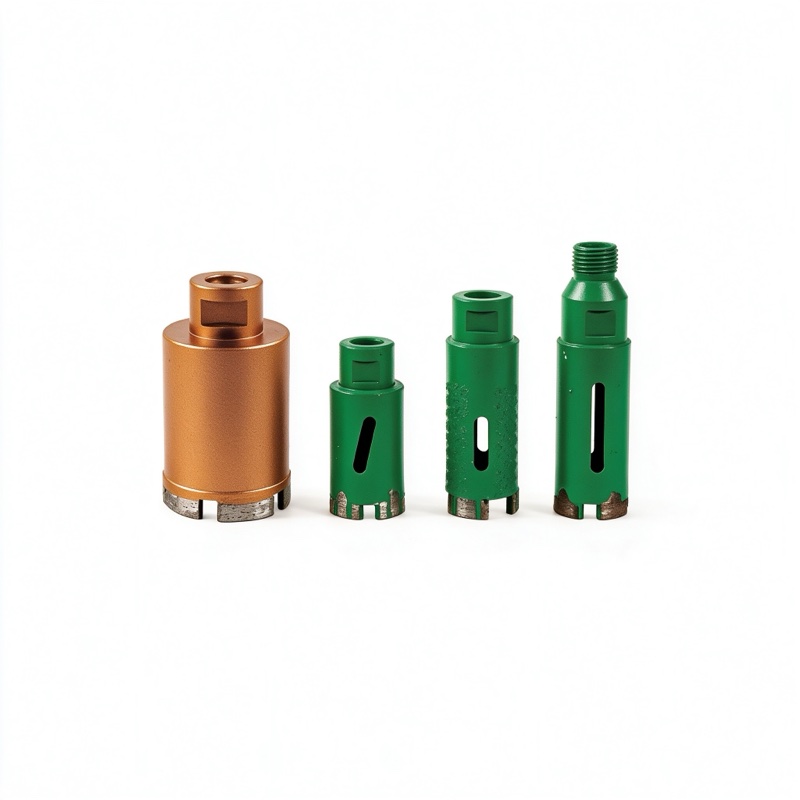
Terrazzo is a composite of marble, granite, or glass chips bound in cement or epoxy, poured over a concrete slab and polished. A standard carbide masonry bit will glaze over quickly and chip the brittle surface. Use a wet or dry diamond core bit with a soft-to-medium bond, low RPM, and steady feed to cut a clean circular hole for floor drains, plumbing penetrations, or railing posts.
Terrazzo varies widely: cementitious terrazzo is hard and abrasive, epoxy terrazzo is more brittle but cuts smoothly, and polymer-modified terrazzo sits in between. The aggregate chips (often marble or recycled glass) are sharp and wear a carbide bit almost instantly. Diamond segments, by contrast, expose fresh grit as they wear and keep cutting through both the binder and the aggregate.
Drilling dry on epoxy terrazzo is risky because the binder melts at low temperatures and re-glazes the bit. Whenever possible, drill wet with a continuous rim or segmented diamond core bit fed by a water valve adapter on the drill rig. Wet cutting also suppresses silica dust and keeps the polished floor from heat-checking.
Selecting the bond is more important than the diamond count. Hard terrazzo (cementitious, high Portland content) needs a soft bond so the matrix wears quickly and exposes fresh diamond. Soft epoxy terrazzo needs a harder bond to avoid premature segment loss. A universal medium-bond segment works for most commercial floors, and a continuous-rim bit leaves the cleanest edge on polished surfaces.
| Terrazzo type | Bond | Rim style | Wet or dry |
|---|---|---|---|
| Cementitious (hard) | Soft | Turbo segmented | Wet preferred |
| Epoxy (soft, brittle) | Medium-hard | Continuous rim | Wet only |
| Polymer modified | Medium | Segmented or turbo | Wet or lightly dry |
| Thin epoxy over tile | Hard | Continuous rim | Wet only |
Start with a pilot hole or a core bit guide ring to keep the drill from walking. Terrazzo is slippery when polished, and a wandering bit will scratch the surface permanently. Begin at a 45-degree angle to score a shallow groove, then level the drill to vertical once the cut is established. Keep the RPM between 800 and 1500 for holes up to 4 inches; drop to 400-800 for larger diameters.
Feed gently. Let the bit cut; do not force it. If you hear a high-pitched whine or see black smoke, the bit is glazing or overheating. Pull back, add more water, and let the bit cool. When you break through the underside of the slab, ease the feed to zero because the remaining aggregate can chip out on exit.
Once the core drops, the hole edge is usually sharp and slightly feathered. Use a hand stone or a chamfer bit at low speed to break the edge so tiles or trim sit flat. If the terrazzo is polished, expect a light scratch ring around the hole from the rig base. A hand polish with a marble powder and a felt pad restores the shine and hides the cut. For a drain penetration, the flange will cover the ring anyway, but for railing posts, a clean edge matters visually.
Clean slurry off the surface immediately. Dried terrazzo slurry is fine cement paste that etches the polished surface if left for more than an hour. Keep a wet mop on hand and rinse the area twice after the cut. On epoxy terrazzo, avoid acidic cleaners, which dull the binder and leave a cloudy patch around the penetration.
For repeated penetrations in a renovation project, a handheld core rig with a vacuum stand or a drill-mounted core barrel (see core drill accessories) keeps the hole vertical and reduces operator fatigue.
If you need more than a handful of penetrations across a large terrazzo floor, hiring a coring contractor is usually faster than renting. They bring a rig, a water recovery system, and a crew that can knock out a dozen holes in a day. Ask to see photos of past terrazzo cuts; a good job shows a clean edge with no radial cracks and no staining around the hole. Avoid contractors who want to drill dry; on terrazzo, dry cutting is a sign of inexperience.
You can, but the bit will glaze and wear out in minutes, and the hole will chip badly. A diamond core bit is the cost-effective choice for any hole larger than 1/2 inch.
Wet drilling is strongly recommended, especially on epoxy terrazzo. Dry cutting is acceptable on short, small holes in cementitious terrazzo with a turbo segment and a vacuum.
Use a centering guide, start at an angle, and keep a wet rag under the drill base. Masking tape around the hole also prevents the pilot bit from skittering.
Small holes (under 2 inches) run 1000-1500 RPM; medium holes (2-4 inches) run 600-1000; large holes (over 4 inches) run 300-600 RPM.
Terrazzo drilling rewards patience and the right diamond segment. Match the bond to the binder, keep the cut wet, and let the bit do the work, and you will get clean, chip-free penetrations that protect the polished floor.
Written and reviewed by JOY TECH — an SGS & BV audited, CE/RoHS certified diamond tools manufacturer founded in 2004, exporting to 50+ countries.
Our factory and QMS are audited by SGS and Bureau Veritas. Products meet CE/RoHS requirements and every piece is 100% inspected before packing.
Verified Certificates
