Average response time: under 24 hours
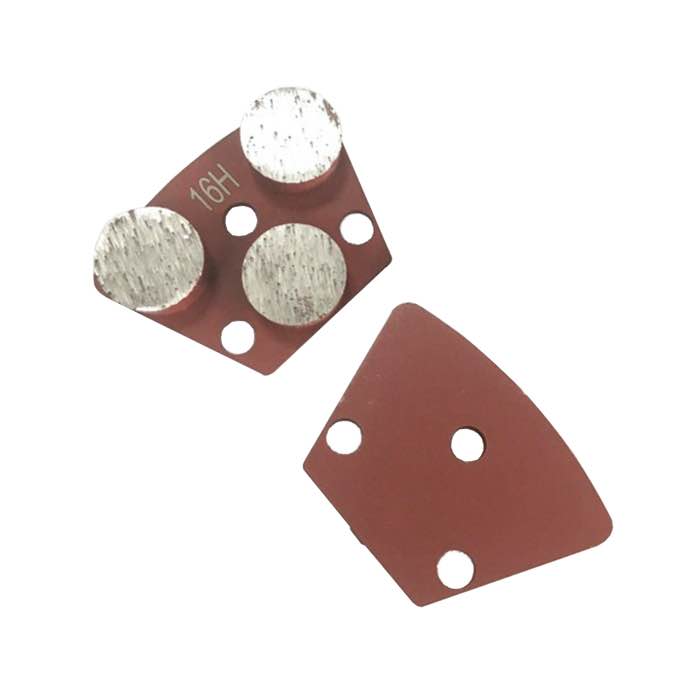
Start with a 16/18 or 30/40 grit diamond cup wheel for aggressive stock removal on raw concrete, then step to 60/80 grit for cleanup and 120 grit for polish prep. Grit number runs opposite to coarseness: 16 grit bites hard but leaves deep scratches, 120 grit is fine but slow. Match the grit to the bond: hard concrete needs a softer bond, soft concrete needs a harder bond. If the wheel glazes and stops cutting, you are either running the wrong grit for the material or the bond is too hard for the slab. Plan on three to five grit stages for a typical floor rather than trying to finish in a single pass.
Grit is the size of the diamond grains embedded in the metal bond. A 16 grit wheel uses large diamonds that cut aggressively but leave deep scratches in the slab. A 120 grit wheel uses much smaller diamonds that cut gently and leave a near-polished surface. You will not jump from 16 to 120 in one step; each step in grit number must remove the scratches left by the previous wheel, otherwise the old marks show through the final finish.
A standard concrete grinding sequence runs 16/18, 30/40, 60/80, 120, 200, 400, 800 before you move to resin polishing pads. On a slab that just needs a cleanup rather than a full polish, you can stop at 60 or 120. On a slab that needs to remove a coating or level high spots, you may start at 16 grit and stay there for several passes before moving up. Never skip more than one grit stage; the scratch pattern from a coarse grit will show through every finer pass until it is fully ground out.
A 16/18 grit wheel is for removing thick coatings, leveling high spots, and chewing through rough concrete. The JOY TP-S2 double-S segment disc in a 16/18 grit will open up a floor fast, but it leaves scratches that only the next grit can remove. Do not use this stage on a slab that will be finished to a high gloss; it is purely a stock-removal pass.
30/40 grit is the workhorse stage for most concrete grinding jobs. It removes the deep scratches left by 16 grit, levels the floor, and leaves a surface that is ready for 60/80. The JOY TP-R3 triple-round-segment disc is commonly run in this grit for daily production on warehouses, garages and retail floors.
60/80 grit cleans out the 30/40 scratch pattern and leaves a surface ready for a sealer or a thin coating. 120 grit takes the floor one step further, removing the last visible scratches and preparing the slab for resin polishing pads. Stop at 120 if the floor will be covered with tile, carpet or epoxy; move to 200 and beyond only if you want a polished concrete look. On a garage slab that will stay bare, 60/80 is usually enough to give the sealer a tooth without wasting time on finer stages.
A hard bond on hard concrete will glaze because the diamonds cannot wear out fast enough to expose new ones. A soft bond on soft concrete will wear out in minutes. If you are unsure of the slab hardness, run a small test patch first: grind a 300 mm square at the planned grit, check the cut rate, and look at the wheel face after two minutes. If the wheel looks shiny and polished, step to a softer bond. If the segment height drops visibly, step to a harder bond. Getting the bond right matters more than picking the perfect grit number; match the wheel to the slab hardness before you commit to a full set of discs.
Most cup wheel work on construction sites is dry, because wet grinding requires a water feed on the grinder and creates slurry that has to be cleaned up. Dry grinding cuts faster but throws more dust and runs hotter, which speeds up glazing. If you are working on a hard mix that keeps glazing, a wet pass at the same grit will open the diamonds and extend wheel life by 30 to 50 percent. Wet grinding also leaves a flatter surface, which matters if you are prepping for an epoxy coating rather than just grinding off a high spot. On indoor jobs, the dust control alone is reason enough to run wet.
If you are working on a large slab or a mix with hard aggregate that glazes standard wheels, confirm the grit and bond with the supplier before you buy a full set. The team at JOY TECH support can match the wheel to your machine class and your slab hardness so the first day of grinding goes without surprises. Buying the wrong grit stage by stage costs more than buying the right set up front.
Written and reviewed by JOY TECH — an SGS & BV audited, CE/RoHS certified diamond tools manufacturer founded in 2004, exporting to 50+ countries.
Our factory and QMS are audited by SGS and Bureau Veritas. Products meet CE/RoHS requirements and every piece is 100% inspected before packing.
Verified Certificates
