Average response time: under 24 hours
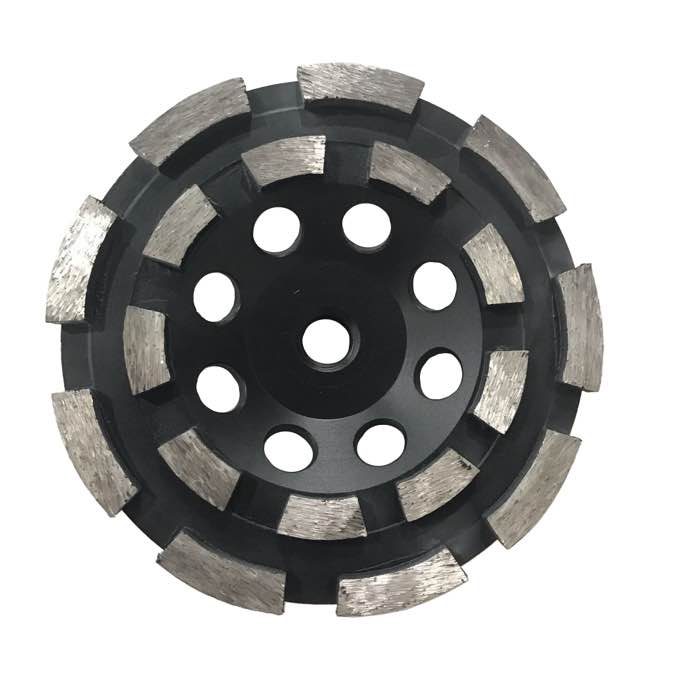
Dry grinding gives the best productivity and natural bond wear, while wet grinding gives the best dust control and a cooler, glazing-free cut. On fresh or very abrasive concrete, wet use roughly halves airborne dust and extends segment life; on hard old concrete, dry grinding with a HEPA extractor keeps the bond ablating naturally, so segments wear at their normal rate. Most contractors run dry for speed and switch to wet only when dust cannot be contained.
Dry grinding relies on the friction of concrete to wear the metal bond at the right rate, exposing fresh diamonds. Advantages: no slurry, fastest removal, clean job site with a vacuum connected, and no drying time afterward. Downsides: fine silica dust demands a HEPA extractor at all times, segments can glaze on very hard concrete, and excessive heat can discolor the wheel or burn the surface.
Water cools the segments, flushes swarf away and keeps the diamonds cutting. Advantages: near-zero airborne dust, reduced glazing on hard concrete, longer wheel life on abrasive aggregates, and a clean result on sensitive floors. Downsides: slurry must be collected and disposed of, the machine needs a water-fed shroud, and the slab must dry fully before any further coating.
| Factor | Dry grinding | Wet grinding |
|---|---|---|
| Segment wear rate | Normal bond ablation; predictable life | Cooler segments, slower wear on abrasive concrete |
| Glazing on hard concrete | Common if the bond is too hard | Rare — water keeps diamonds exposed |
| Dust control | Requires a HEPA extractor | Excellent on its own |
| Productivity | Highest | Slightly slower due to slurry handling |
| Recommended wheels | Segmented cups such as the double-row cup wheel and 6-segment cup wheel | Same wheels with a water-fed shroud; turbo cups like the JOY-CW-T1 turbo cup wheel flush well |
A: Most sintered diamond cup wheels are rated wet or dry — check the wheel marking before use. Never run an ordinary abrasive wheel wet. Our diamond cup wheels work in both modes; just add a water-fed shroud for wet work.
A: Slightly. Water adds resistance and slurry handling, but it prevents glazing, so on hard concrete the effective cutting rate is often the same or better than dry.
A: Usually too little water. The wheel needs a steady flow, not an occasional splash. Increase the water feed and flush the surface between passes.
A: Yes, but let a wet wheel dry fully before running it dry. Trapped water in the flanges causes imbalance and rust marks on the next dry pass.
Dry for speed and predictable wheel life, wet for dust control and cool cutting. The method is set by your job site, not by the wheel. For diamond cup wheels rated for both wet and dry use, contact [email protected] — JOY TECH supplies angle-grinder and floor-grinder cup wheels in double-row, segmented and turbo designs, manufactured in our Xiamen factory.
Written and reviewed by JOY TECH — an SGS & BV audited, CE/RoHS certified diamond tools manufacturer founded in 2004, exporting to 50+ countries.
Our factory and QMS are audited by SGS and Bureau Veritas. Products meet CE/RoHS requirements and every piece is 100% inspected before packing.
Verified Certificates
