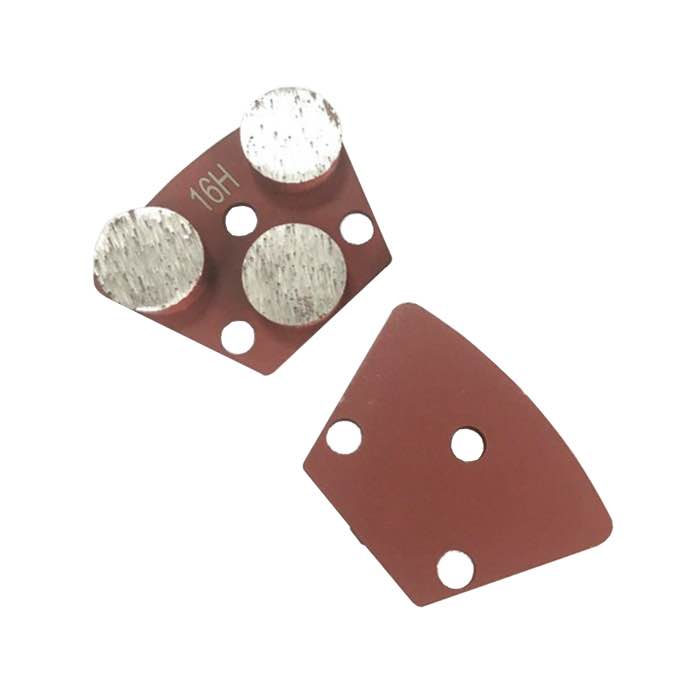
Use a hard-bond, high-diamond-concentration metal segment in 15 mm+ height for 6000+ PSI industrial slabs. Run at moderate RPM with steady down-pressure; soft residential bonds glaze and wear out on hard industrial concrete.
For 6000+ PSI industrial slabs, choose a hard metal bond with high diamond concentration and tall segments, run at moderate RPM with consistent down-pressure. Soft bonds that work on residential concrete glaze and wear out fast on hard industrial mixes.
Warehouses, distribution centers and plants often use 4000-8000 PSI concrete with hard aggregates, fly ash, and steel fibres. These floors resist abrasion but are tough on tooling. The wrong bond glazes, overheats or wears in a fraction of the expected hours.
| Slab type | Recommended bond | Typical segment |
|---|---|---|
| 3000-4000 PSI residential | Medium bond | 10-12 mm standard |
| 5000-6000 PSI commercial | Slightly hard bond | 12-15 mm |
| 6000+ PSI industrial | Hard bond, high concentration | 15 mm+ long life segments |
Run the machine in overlapping passes, keep tooling cool, and change plates in sets so scratch depth stays even. Long-life trapezoid segments are designed for high-PSI slabs and reduce changeover downtime across thousands of square meters. On coating removal over an industrial slab, use a PCD-coated tool first, then return to metal bond for flattening.
A: Only when the slab is already smooth and you are refining. On rough or ground-new concrete, skipping leaves a scratch pattern finer pads cannot resolve.
A: If segments glaze and stop cutting, the bond is too hard; if they wear flat in under half a set, it is too soft. Match bond to concrete hardness.
A: Dry grinding with a HEPA vacuum is standard on polished concrete jobs; wet grinding is mostly used for stone and edge work to control dust and heat.
A: Change the whole set together once segment height drops by half or the cut rate slows. Mixing new and worn plates causes uneven scratch patterns.
Choosing the right bond, grit and technique for your concrete job saves tooling cost and avoids rework. Match the tool to the slab, work in the correct grit sequence, and keep plates balanced — the floor will tell you when you are ready for the next step. Contact JOY TECH for tooling recommendations matched to your machine and concrete hardness.
