Average response time: under 24 hours
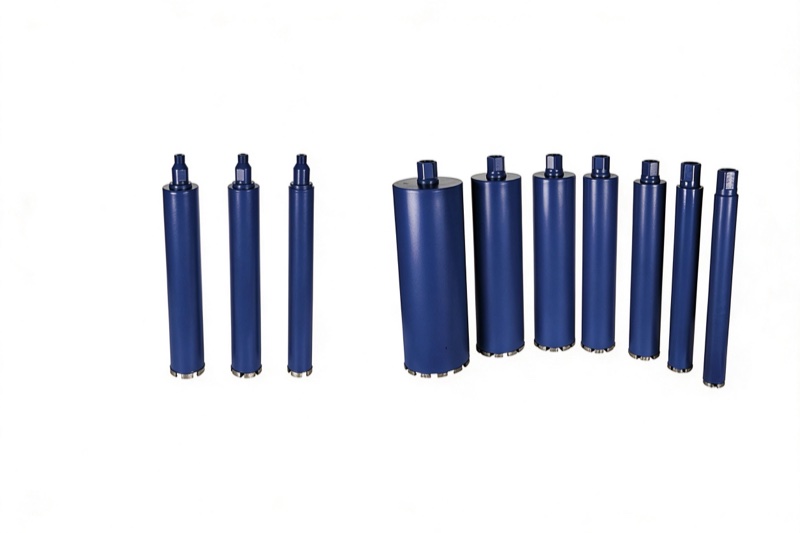
Drill small clean holes in concrete with a diamond hole saw running at 1500 to 3000 rpm for 25 mm holes and 800 to 1500 rpm for 50 mm holes, with water cooling, a pilot bit for centering, and a light feed. Start at a 45 degree angle to seat the rim, then level up. Never pry the saw sideways, never hammer it, and keep the hole depth under 100 mm per pass so cuttings do not bind. Clean edges come from sharp diamonds, steady pressure, and not crossing rebar.
A hammer drill with a carbide bit smashes concrete at the hole edge, leaving a crater 20 to 30 percent wider than the bit and a ragged ring of broken paste. A diamond hole saw cuts with a continuous rim or small segments, shearing the cement paste cleanly so the hole edge looks machined. That matters for anchor holes in finished floors, railing mounts, plumbing penetrations, and any hole the client will see. For diameters under 75 mm, the diamond hole saw is the only tool that produces a hole you do not have to patch.
Under 25 mm, a carbide twist bit is usually enough. Between 25 and 100 mm, a diamond hole saw or mini core bit is the right tool. Above 100 mm, step up to a full core rig. The sweet spot for diamond hole saws is 32 to 75 mm in slab, block, or brick, on a handheld drill or a small diamond rig.
The hardest part of a small hole is starting straight. A diamond hole saw with a pilot bit centers itself: drill with the pilot in the mark until the rim has bitten 3 to 5 mm, then remove the pilot if your tool allows. If the saw has no pilot, start at a 45 degree angle until you have a half-moon seat, then rotate the tool up to vertical. This prevents the saw from skating across the surface, which also ruins the edge.
On finished polished or painted floors, tape the cross mark with masking tape. The tape holds the surface paste from chipping at the rim and gives you a visible line. If the hole goes near a joint or an edge, stop 50 mm short and re-evaluate; holes too close to edges crack out.
Small hole saws spin fast; too slow and the diamonds glaze, too fast and they overheat. Use 3000 to 4500 rpm for 25 mm, 1500 to 3000 rpm for 50 mm, and 800 to 1500 rpm for 75 mm. A standard handheld drill in gear one is about 500 rpm, too slow for small holes; use gear two or a two-speed diamond rig. Feed lightly: the saw should pull itself in, not require leaning on the drill.
Wet cutting is cleaner and doubles rim life. If water is impractical, drill in 30-second bursts and pull the saw out to clear cuttings. For slab over 100 mm thick, stop at 50 mm depth, remove the core plug, then continue. Binding cuttings are the second most common cause of rim damage. Use a JOY CDS segmented core bit for medium to hard concrete where you need clean edges on 50 to 100 mm holes.
When the hole is through, do not jam a screwdriver into the kerf and lever the plug out. That chips the edge and bends the rim. Instead, break the plug from the back with a punch, or twist the saw gently left and right while pulling up. A core plug that refuses to come out usually means you have cut through into rebar or a void.
A small diamond hole saw walks on rebar and jumps. If you feel the drill grab, release the trigger immediately, do not hold on. Mark the slab with a rebar scanner before drilling finishes; if you must cross a bar, slow to half speed and feed very light. The rim will survive rebar if you go slow; it will not survive a grab.
A properly cut diamond hole has a rim of intact paste around both faces. Brush the hole out with a wire brush, blow it clean, and the anchor sets directly. For adhesive anchors, the hole must be free of dust; for wedge anchors, a clean saw-cut edge is enough. If the edge is chipped, the anchor still holds structurally but the floor looks finished only after patching. For production work where every hole has to be clean, size your diamond hole saw set to the diameters you cut most often, and keep two rims per size on the truck.
Small hole saws wear out faster than big core bits because the rim contact area is tiny. Plan to replace a 50 mm rim after roughly 15 to 20 meters of cut in medium concrete. If the rim stops biting, dress it on a brick for 10 seconds to expose fresh diamonds; if it still glazes, the bond is wrong for the mix. For multi-hole jobs in a finished floor, talk to our team about rims matched to your aggregate and drill rig.
Written and reviewed by JOY TECH — an SGS & BV audited, CE/RoHS certified diamond tools manufacturer founded in 2004, exporting to 50+ countries.
Our factory and QMS are audited by SGS and Bureau Veritas. Products meet CE/RoHS requirements and every piece is 100% inspected before packing.
Verified Certificates
