Average response time: under 24 hours
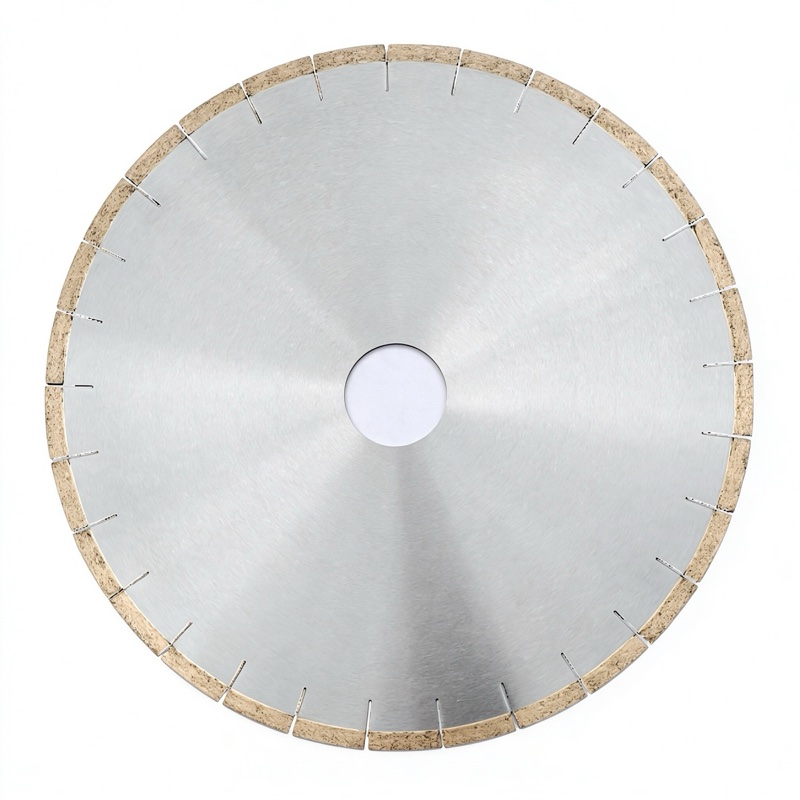
A new diamond saw blade should be broken in with a slow, light first pass through a soft abrasive material such as a cinder block, brick, or cutting a few shallow grooves in a less hard section of the slab. This exposes fresh diamond crystals on the rim and prevents the polished, glazed surface that causes a new blade to skate, overheat, and stop cutting. The process takes 30-60 seconds and adds hours of blade life.
Freshly manufactured diamond segments have a thin layer of bond material covering the diamond crystals. The diamonds are present but locked below the surface. On the first cut, the blade skates on this layer rather than engaging, and if the operator pushes hard, the heat polishes the bond and traps the diamonds forever. This is called glazing. A glazed blade spins cleanly, produces no dust, and cuts nothing.
Break-in is the controlled removal of that top bond layer so the first diamonds protrude and start cutting. Once the rim is open, the blade wears steadily: diamonds fracture and expose new ones as the bond erodes. A blade that was never broken in typically lasts 30-50% shorter than one dressed correctly.
The easiest method: find a soft cinder block, a red brick, or a piece of aerated concrete. Make 3-4 shallow passes at about half depth with light pressure. Let the blade cut for 5-10 seconds per pass, then lift and let it air-cool. You will see fine dust start to form; that is the sign the rim is opening.
If no soft scrap is available, start the real cut at reduced depth (about 30% of normal) and with light feed for the first 300-500 mm. Do not dive to full depth. After the opening pass, gradually increase depth over the next 1-2 m.
For wet-cut blades, run water during break-in. It carries away fine bond particles and prevents the polished layer from reforming. For dry-cut blades, run in short bursts and let the blade air-cool; do not keep it under load continuously.
A properly dressed blade produces a steady stream of dust or slurry, cuts without extra pressure, and does not emit a burning smell. If the blade still skates after a minute of light cutting, repeat the dressing pass on a softer material. Do not increase pressure to force it; that is the quickest way to glaze it permanently.
If a working blade suddenly stops cutting, it may have loaded up with fine slurry rather than worn out. Use a dressing stick (a soft abrasive brick sold for this purpose) or a piece of cinder block. Make 2-3 light passes, and the rim will open again. This is common when switching from hard aggregate to soft concrete, where fine paste loads the gaps between segments.
Do not dress a blade whose segments are worn to the backing plate. That blade is at end of life; dressing will not restore it.
Before break-in, confirm the blade is mounted correctly. The flanges must be clean, flat, and the correct size. A dirty or bent flange causes wobble, which rounds segments unevenly and mimics glazing. Run the saw idle for 30 seconds and watch the rim; it should spin without visible side-to-side runout. Any wobble over 1-2 mm means the blade, flange, or arbor needs attention.
These are the most forgiving. Break in for about 30 seconds on soft block, then cut normally.
These thinner, softer-bond blades glaze more easily. Use a lighter break-in and more water.
Tile and thin-stone turbo rims need a wet break-in on a soft ceramic or concrete piece. Dry break-in polishes the continuous edge almost instantly.
A blade that is broken in correctly will wear evenly across the segment face. Inspect the rim every few hours: segments should be flat and evenly worn, with no rounded leading edge. If one side wears faster, the saw alignment or cut angle is off. Small problems caught early save blades and time on site.
Written and reviewed by JOY TECH — an SGS & BV audited, CE/RoHS certified diamond tools manufacturer founded in 2004, exporting to 50+ countries.
Our factory and QMS are audited by SGS and Bureau Veritas. Products meet CE/RoHS requirements and every piece is 100% inspected before packing.
Verified Certificates
