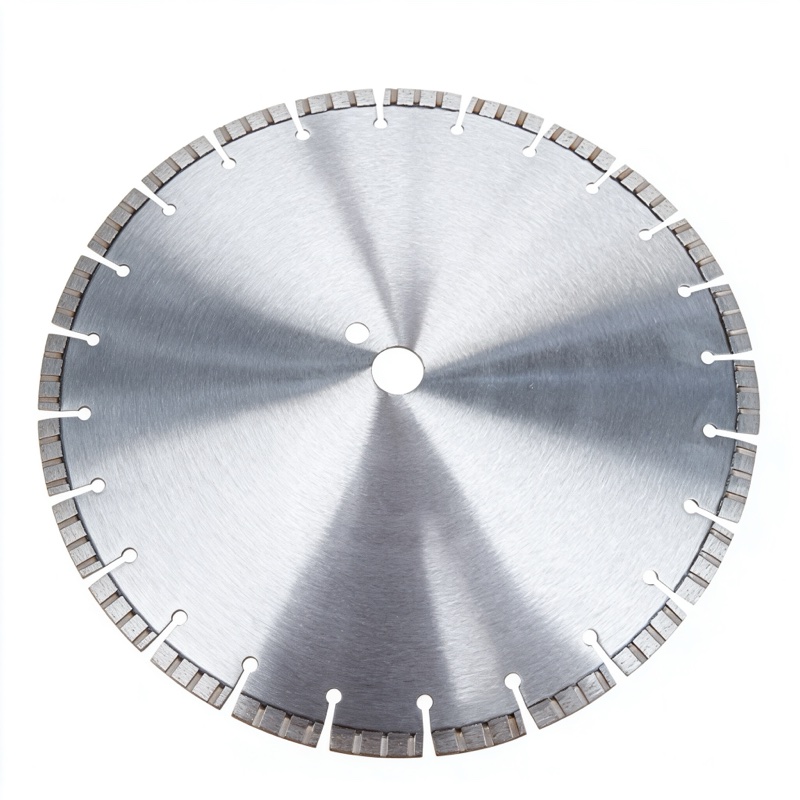
Running a diamond saw blade above its maximum rated RPM is the single most common cause of segment loss and blade failure. The safe RPM depends only on the blade diameter: the smaller the blade, the higher the RPM. Always set your saw to the speed printed on the blade core.
Diamond segments are attached to the steel core by laser weld or sintering. At too high a surface speed, the segment overheats, the bond softens, and the segment can detach. A thrown segment is a serious injury risk. Most blade failures on job sites are speed-related, not quality-related.
| Blade diameter | Recommended RPM |
|---|---|
| 4 in (115 mm) | 12,200 |
| 5 in (125 mm) | 11,500 |
| 7 in (180 mm) | 8,500 |
| 9 in (230 mm) | 6,600 |
| 12 in (300 mm) | 4,900 |
| 14 in (350 mm) | 4,300 |
| 18 in (450 mm) | 3,400 |
| 20 in (500 mm) | 3,000 |
| 24 in (600 mm) | 2,500 |
These values assume a standard 80 m/s peripheral speed. Always defer to the figure printed on your blade.
When you order from our diamond saw blades category, every blade ships with the max RPM clearly laser-marked on the core.
A: You exceed the rated speed by 40%. The blade will run hot, wear fast, and can lose segments. Do not do it.
A: No. The max RPM rating is mechanical, not thermal. Water cools the cut but does not let you exceed the speed limit.
A: Only with a properly matched reducer ring and only if the saw RPM matches the smaller blade. Never use an adapter to force a blade on.
Speed safety is non-negotiable. Tape the RPM chart inside your saw box, and teach new operators to read the figure on the blade core before every cut. Need help matching blade to saw? contact JOY TECH with your saw model. laser-welded concrete and asphalt saw blades
